The leaders of Britain, France and Germany held a call with U.S. President Donald Trump on Wednesday (10 December) to discuss Washington's latest peace efforts to end the war in Ukraine, in what they said was a "critical moment" in the process.
UK Prime Minister Sir Keir Starmer, French President Emmanuel Macron, and German Chancellor Friedrich Merz all agreed on the urgency of resolving the conflict.
Macron, arriving late for a public debate in western France, said he had just held a 40-minute discussion with Trump and his European colleagues to see how to move forward on "a subject that concerns all of us".
Separate statements from the so-called E3 powers said the leaders had commended the Trump administration's mediation efforts to achieve a robust and lasting peace in Ukraine, nearly four years after Russia launched its full-scale invasion.
"(The leaders) agreed that this is a critical moment for Ukraine, for its people and for the common security of the Euro-Atlantic region," the British readout said.
Trump told reporters that he had "pretty strong words" with the leaders, which he declined to detail and was urged to send U.S. representatives to a weekend meeting in Europe with Zelenskyy to discuss the way forward.
"We said before we go to a meeting we want to know some things," Trump said.
"They would like us to go to a meeting over the weekend in Europe, and we'll make a determination depending on what they come back with," he said.
"We are waiting to hear answers before we progress. We’re not spending any money in Ukraine. We’re selling basically missiles and other supplies to NATO, and NATO’s paying us. They distribute it to Ukraine, but we’re not spending money. We’re spending a lot of time and a lot of effort,” Trump added.
Trump's comments underline the ongoing tensions surrounding the level of financial and military support the U.S. will continue to provide, especially as the war continues into its second year.
Their latest call on Wednesday comes amid sharp remarks from President Donald Trump and growing uncertainty about the future of Western support.
The phone conversation also comes a day after President Trump was in interviewed by Politico, where he sharply criticised European leaders, calling them “weak” and suggesting that the United States could scale back its support for Ukraine in the future.
President Trump claimed that Ukraine is using the war as a way to avoid holding elections, according to Politico, adding to the growing discord between Washington and Kyiv over political strategies.
He complained that Zelenskyy has not held an election in Ukraine in years and that Ukraine is facing a "massive corruption situation."
In response, Zelenskyy countered by asserting that he is "ready" to hold elections as part of the long-term resolution.
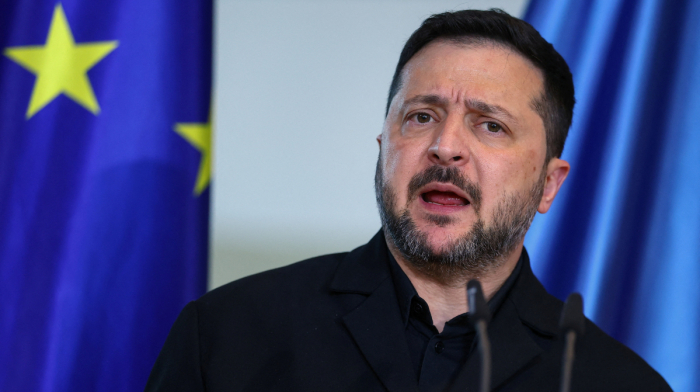
Meanwhile, Ukrainian President Volodymyr Zelenskyy provided an update on his government’s ongoing work on Ukraine's post-war reconstruction. He said he had discussed plans for rebuilding Ukraine with U.S. Treasury Secretary Scott Bessent and other senior American officials.
Zelenskyy emphasised the importance of the “Twenty Points” document, which outlines key steps for ending the war. He also noted that two additional documents, focusing on security guarantees and economic reconstruction, are being developed.
"The Twenty Points to end the war is a fundamental document," Zelenskyy said.
"We are working actively on it. The key steps must be workable. From this document, we are developing at least two more documents: one on security guarantees with the United States and another on reconstruction and joint investments. Today, we specifically worked on the economic document," Zelenskyy added.
As both sides continue to navigate the complexities of the war, the international community remains focused on securing a lasting peace agreement.








What is your opinion on this topic?
Leave the first comment