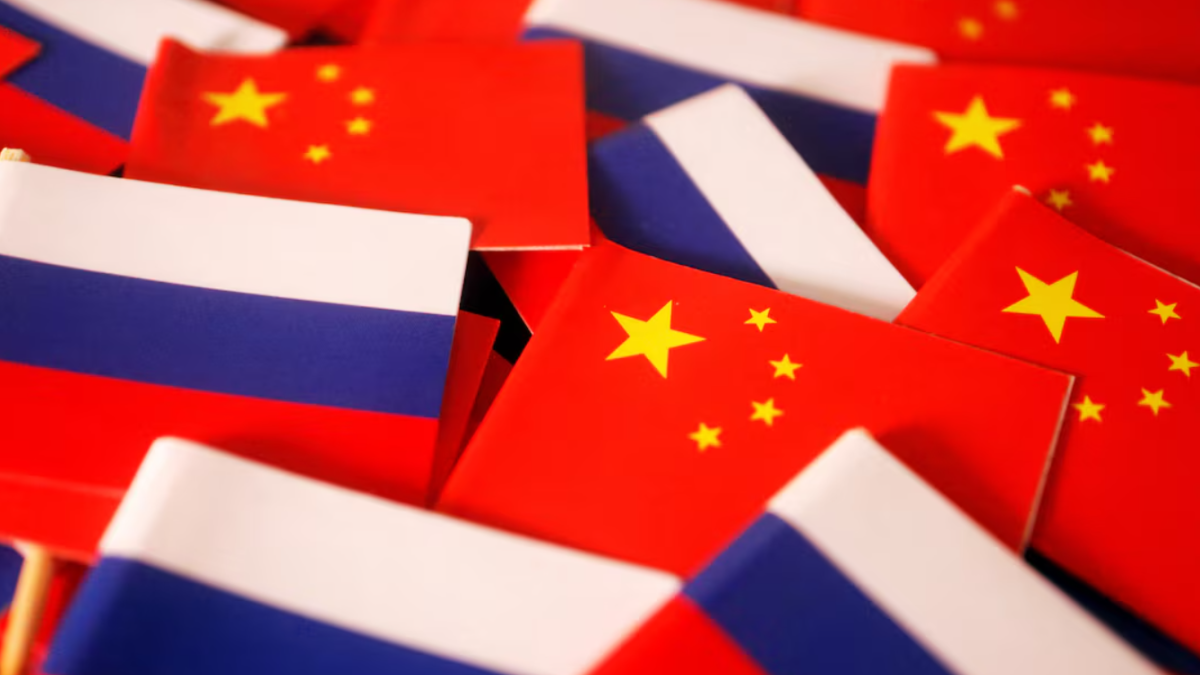
China and Russia have successfully concluded a joint strategic air patrol over the East China Sea and the Western Pacific under the framework of their annual military cooperation plan.
The latest patrol adds to a growing list of coordinated drills that have steadily expanded in scale, distance, and complexity since the initiative began in 2019..
The operation involved a sophisticated fleet of long-range strategic bombers, fighter jets, and early warning aircraft from both the People’s Liberation Army Air Force (PLAAF) and the Russian Aerospace Forces.
This latest patrol serves as a capstone to a year of expanded Sino-Russian military interoperability across multiple domains. The frequency and complexity of these exercises have drawn close scrutiny from Washington and its regional allies in Tokyo and Seoul.
The two militaries have said however the flight strictly followed international law and did not target any third country, framing it as part of a long-term schedule of cooperation.
In August, they also held their flagship naval drill, Joint Sea-2025, in the waters and airspace near Vladivostok. That exercise represented a significant step up in tactical complexity, featuring:
- Anti-submarine warfare operations;
- Air-defence and missile-interception training;
- Submarine-rescue missions;
- Coordinated maritime combat drills.
Following the conclusion of the active exercise phase, participating vessels embarked on a two-week joint maritime patrol through the Western Pacific, projecting power further into the ocean than in previous years.
These kinetic activities were accompanied by a third joint anti-missile drill held on Russian territory in early December, highlighting how their cooperation is now expanding into the sensitive fields of missile defence and strategic early warning.
While Beijing has consistently framed the operation as "routine" and "not directed at any third party," emphasising that the patrol enhances coordination and deepens strategic trust, international analysts view the timing differently.
The presence of strategic bombers in the East China Sea—a region fraught with territorial disputes involving Japan and Taiwan—is widely interpreted as a signal of deterrence against the United States’ strengthening alliances in the region. By integrating early warning systems and conducting joint patrols, China and Russia are demonstrating capability not just for separate operations, but for joint command and combat readiness in the event of a regional crisis.
The continuation of the "annual cooperation framework" suggests that despite geopolitical pressure from the West, the defence partnership between Beijing and Moscow is becoming a permanent fixture of the Indo-Pacific security architecture.















What is your opinion on this topic?
Leave the first comment