Beijing has launched a scathing diplomatic attack on Tokyo, accusing Japan of exploiting the Taiwan issue to destabilise the region, following a dangerous naval encounter involving fire-control radar locks in the Pacific.
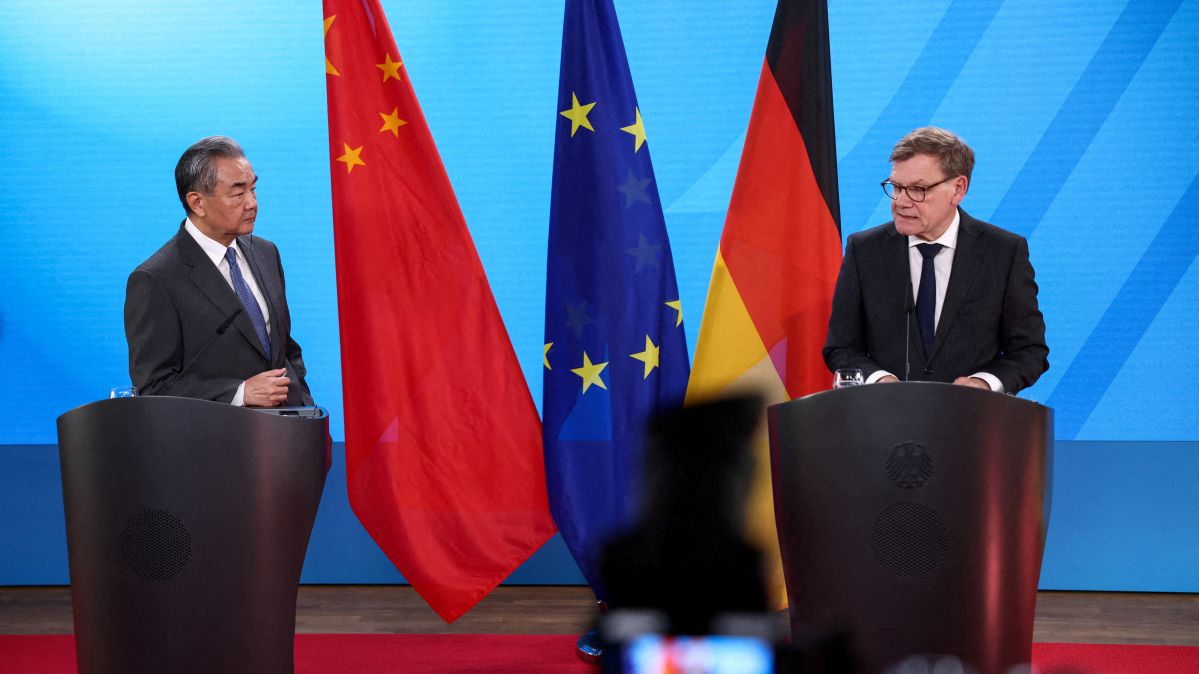
Speaking during a high-stakes meeting with German Foreign Minister Johann Wadephul in Beijing on Monday, Chinese Foreign Minister Wang Yi claimed Japan is threatening China militarily in a manner he described as "completely unacceptable". The rebuke follows accusations from Tokyo that Chinese fighter jets had locked their fire-control radar onto Japanese military aircraft—an action widely interpreted in defence circles as a final step before firing a weapon.
Japan has denounced the encounter as a hostile and dangerous act. However, China has retorted by blaming Japan for sending aircraft to repeatedly approach and disrupt the Chinese navy as it was conducting previously announced carrier-based flight training east of the Miyako Strait.
Strategic Tensions and the 'First Island Chain'
The location of the incident is significant. The Miyako Strait, situated between Okinawa and Miyako Island, is a critical chokepoint within the "First Island Chain" and serves as a primary gateway for the Chinese People's Liberation Army Navy (PLAN) to access the wider Pacific Ocean.
Relations between the two Asian powers have soured significantly in the past month since Japanese Prime Minister Sanae Takaichi warned that Japan could respond to any Chinese military action against Taiwan if it also threatened Japan's security. Takaichi, known for her hawkish stance on national security, has previously echoed the doctrine that "a Taiwan emergency is a Japanese emergency", a stance that infuriates Beijing.
Diplomatic Leverage and WWII Legacy
Wang’s choice of venue to air these grievances—a meeting with the German Foreign Minister—reflects Beijing’s intent to discourage European powers from aligning too closely with Washington and Tokyo on Indo-Pacific security.
Wang noted that given this year marks the 80th anniversary of the end of World War Two, Japan, "as a defeated nation", should have acted with greater caution regarding its military posture.
"Yet now, its current leader is trying to exploit the Taiwan question - the very territory Japan colonised for half a century, committing countless crimes against the Chinese people - to provoke trouble and threaten China militarily. This is completely unacceptable," Wang said, according to China's official Xinhua news agency.
Japan ran Taiwan as a colony from 1895 to 1945. At the end of the war, administration of the island was handed over to the Republic of China government, which then fled to the island in 1949 after losing a civil war on the mainland to Mao Zedong's communists.
The Sovereignty Dispute
Wang stated that Japan's "current leader recently made reckless remarks on hypothetical situations on Taiwan". He asserted that Taiwan's status as Chinese territory has been "unequivocally and irreversibly affirmed by a series of ironclad historical and legal facts".
However, Taiwan's government, which rejects Beijing's territorial claims, has repeatedly accused China of misrepresenting history, noting that the People's Republic of China did not exist in 1945 and has never governed the island. The Republic of China remains Taiwan's formal constitutional name.
Wang argued that as the People's Republic of China was the successor state to the Republic of China, it "naturally" enjoys sovereignty over Taiwan—a legal interpretation fiercely contested by Taipei.
Speaking in Taipei, Taiwan Foreign Ministry spokesperson Hsiao Kuang-wei said the island "absolutely was not" part of the People's Republic of China.
"Only Taiwan's democratically elected government can represent the 23 million people of Taiwan in the international community and in multilateral settings," he added.
Breakdown in Crisis Communication
The diplomatic spat has been exacerbated by a lack of direct communication during the crisis. Asked about Beijing's justification of its use of radar on Japan's military jets at the weekend, Chief Cabinet Secretary Minoru Kihara repeated Tokyo's stance disputing China's characterisation of the incident.
"The intermittent illumination of radar beams is a dangerous act that goes beyond what is safe and necessary," he told a news conference on Tuesday.
Kihara declined to confirm media reports that Beijing had failed to respond to Japan's urgent calls on a bilateral military hotline established in 2018 specifically to prevent such air and sea encounters from escalating into conflict. The silence on the hotline suggests a worrying freeze in crisis management mechanisms between the two neighbours.












What is your opinion on this topic?
Leave the first comment