Tens of millions of people in urgent need of help won't be getting much assistance next year. That's according to the United Nations which launched a $23 billion aid appeal on Monday (8 December) which is half of last year's request, acknowledging a plunge in donor funding.
The move comes at a time when humanitarian needs have never been greater.
UN Aid Chief Tom Fletcher revealed the steep drop in donor funding means agencies must focus on helping only the most urgent cases.
“It's the cuts ultimately that are forcing us into these tough, tough, brutal choices,” he told reporters.
“We are overstretched, underfunded, and under attack… And there is not enough water in the tank,” he added.
Fletcher also noted that humanitarian agencies face an increasingly dire scenario of hunger, disease, and record levels of violence.
“The appeal is laser-focused on saving lives where the shocks hit hardest - wars, climate disasters, earthquakes, epidemics, crop failures,” he said.
The reduced appeal comes after the UN had sought $47 billion for 2025.
Funding shortfalls by top Western donors, including the United States under President Donald Trump and Germany, have left the UN with only $12 billion raised so far.
Being considered the lowest in a decade, the raised funds cover just over a quarter of global humanitarian needs.
While the U.S. remains the top donor in 2025, its share has fallen from more than a third of total funding to 15.6% following aid cuts.
UN humanitarian work is overwhelmingly funded by voluntary donations from Western countries, with the United States historically the largest contributor.
Next year Fletcher said humanitarian groups faced a bleak scenario of growing hunger, spreading disease and record violence.
According to the organisation, the plan for 2026 prioritises 87 million people whose lives are considered most at risk, while roughly 250 million people globally require urgent assistance.
If sufficient funds are raised, the UN aims to help 135 million people at a projected cost of $33 billion.
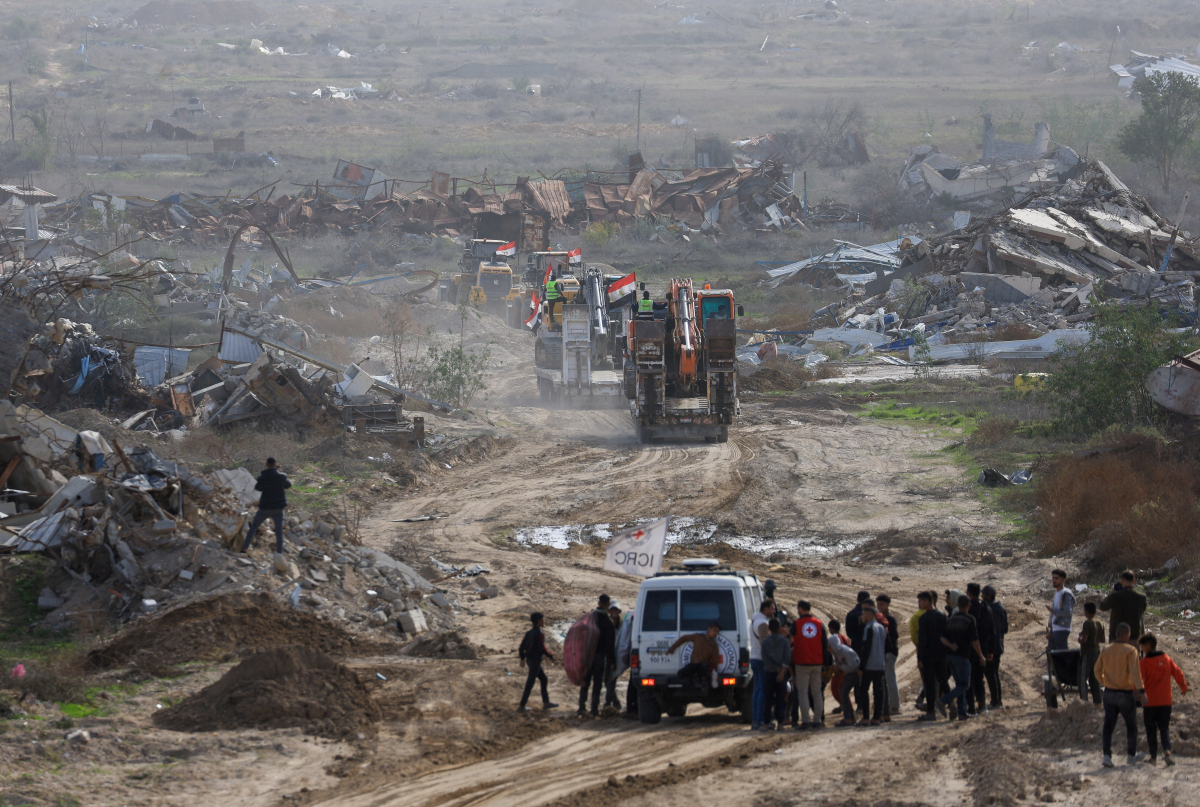
The largest single appeal ($4 billion) is for the occupied Palestinian territories, mostly for Gaza, which has been devastated by the two-year Israel-Hamas conflict. Reports show that nearly all of Gaza’s 2.3 million residents are homeless and rely on aid for survival.
The second priority is Sudan where the two-years war has devastated communities and deplaced millions of people, and also where climate change has impacted the country with deadly floods.
Within Sudan, approximately 4.57 million people have been internally displaced due to ongoing fighting. Around 1.1 million individuals have crossed into neighbouring countries, including the Central African Republic, Chad, Egypt, Ethiopia, and South Sudan according to the UN.
Approximately 15 million people, constituting 31% of the population, are acutely food insecure from October 2023 to February 2024, nearly double the figures from the previous year, according to the UN World Food Programme.
The third priority is Syria where humanitarian needs remain immense according to the agency. The UN's chief, Antonio Guterres has urged the international community to “stand firmly behind this Syrian-led, Syrian-owned transition.” He said that success depends on sustained funding for humanitarian appeals, removing barriers to reconstruction, and promoting economic development.
In Syria, according to UN Regional Information Centre for Western Europe, more than 8.1 million people are in need of protection, and more than 7.4 million remain internally displaced (IDP) – one of the largest IDP populations in the world.
A total of 9.1 million people are food insecure. Both maternal malnutrition and acute malnutrition in children under 5 are at global emergency thresholds say the UN World Food Programme.












What is your opinion on this topic?
Leave the first comment