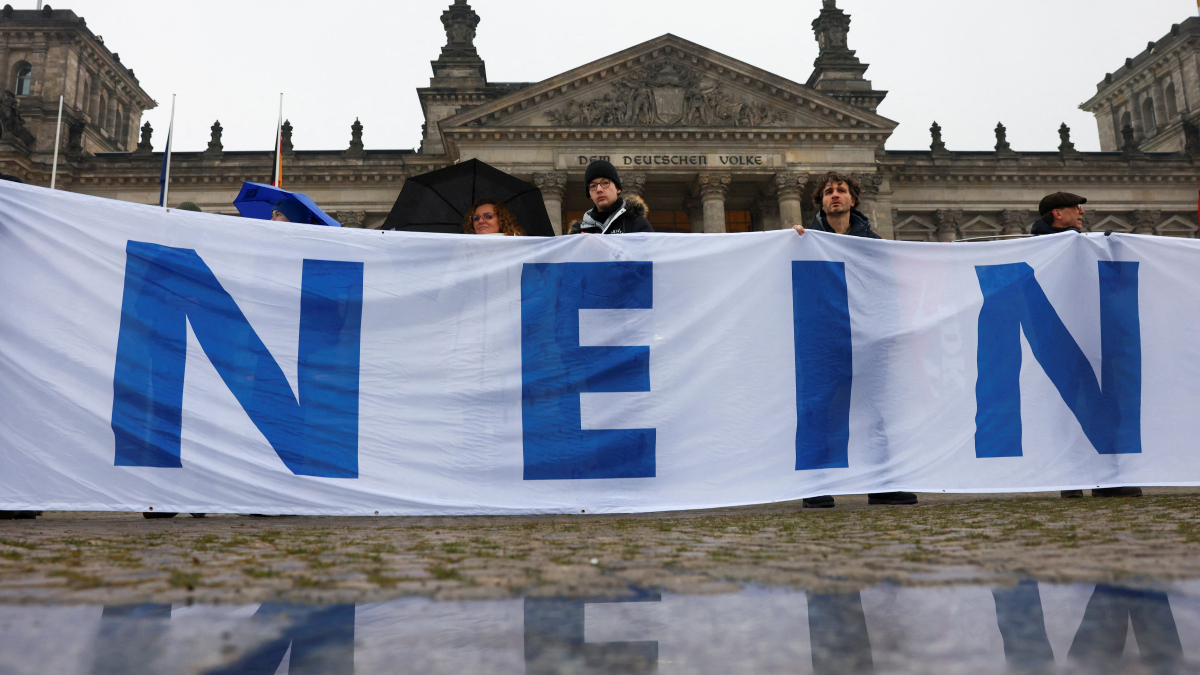
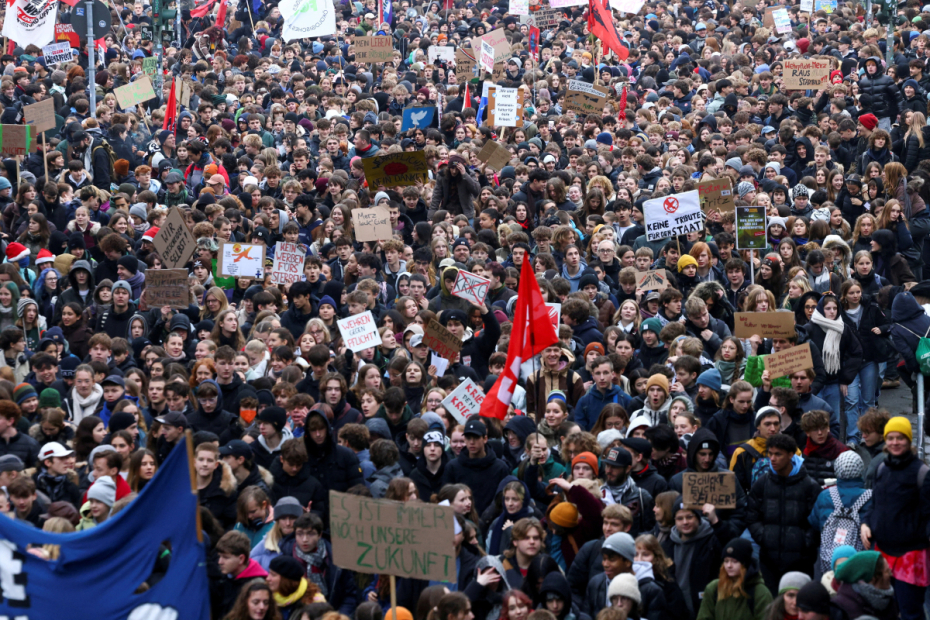
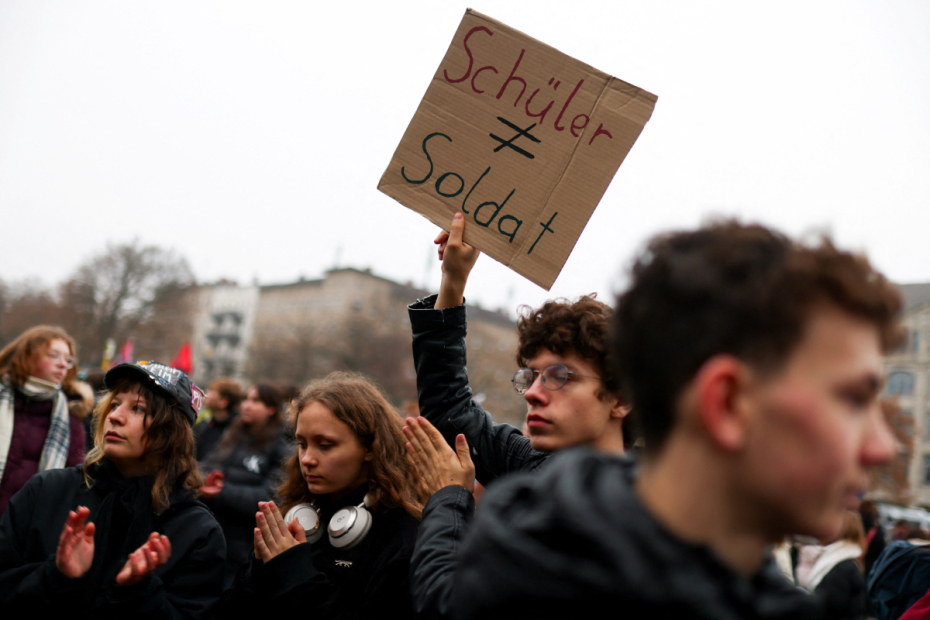
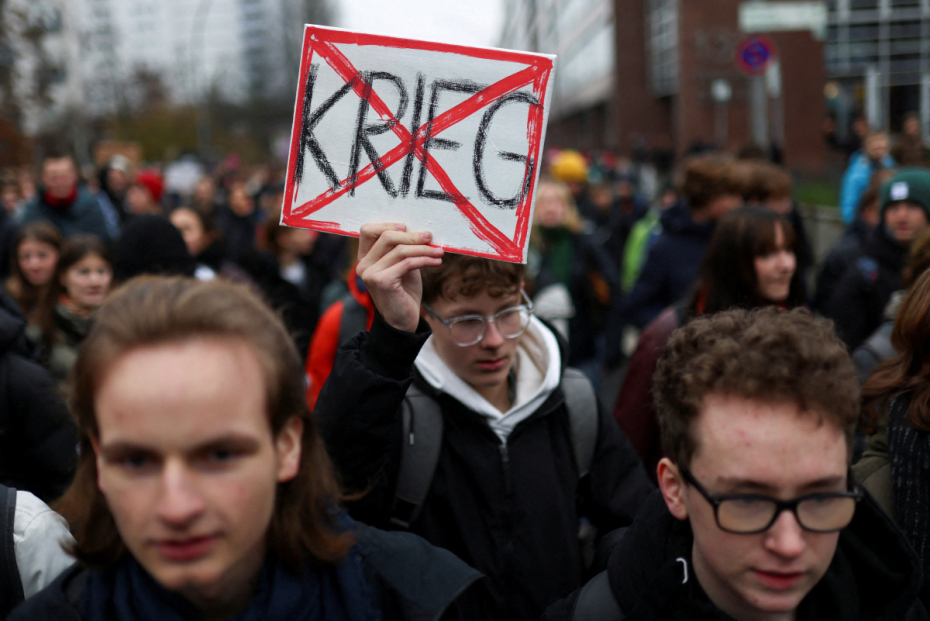
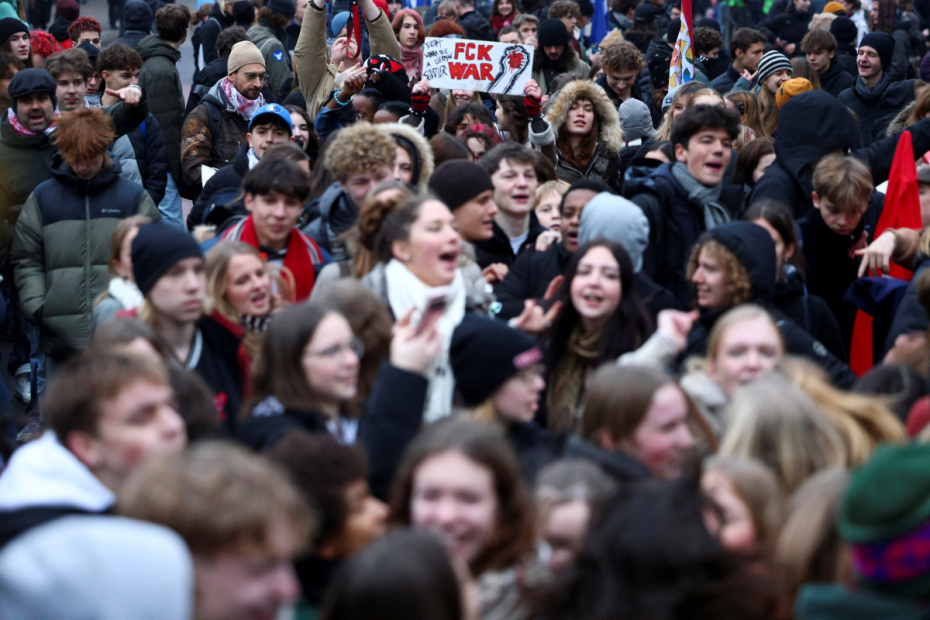
Thousands of students across Germany walked out of classrooms on Friday to protest a newly approved military service law.
The reform require all 18-year-old men to complete questionnaires and undergo mandatory medical screenings as part of efforts to bolster the country’s armed forces amid growing security concerns and NATO obligations.
Demonstrations were held in around 90 towns and cities, including Berlin, Hamburg, Cologne, Düsseldorf, Stuttgart, Münster and Bochum. In the capital, police said several thousand students gathered throughout the day, with early-morning estimates at around 800.
The Bundestag passed the reform by 323 votes to 272, with one abstention. The legislation now moves to the Bundesrat and is expected to take effect on 1 January 2026. Under the new rules, all men born on or after 1 January 2008 will be required to fill out a detailed questionnaire to assess fitness, qualifications and interest, followed by mandatory medical examinations. For women, participation remains voluntary.
While service itself remains voluntary, MPs confirmed that if recruitment goals are not met, parliament will be required to review the policy, potentially moving Germany toward demand-based conscription or, as a last resort, a general mandatory draft.
Youth backlash despite government reassurances
Education authorities in several states warned students they could face penalties for skipping school, including potential effects on year-end grades.
Defence Minister Boris Pistorius sought to calm concerns, insisting the new system stops short of drafting young men into military service. In a video message released the day before the vote, he said: “Everyone can protest. But if we want to preserve our way of life, we must be willing to defend it. Democracy cannot defend itself.”
The conservative-led coalition argues that the reform is essential to address chronic shortfalls in the Bundeswehr. Germany currently fields around 182,000 active soldiers and just under 50,000 reservists. To meet NATO readiness targets, the Defence Ministry aims to expand the force to 260,000 active troops and 200,000 reservists — a dramatic increase from today’s levels.
The Bundestag suspended conscription in 2011 under Angela Merkel’s government, believing a professional force better suited Germany’s post–Cold War priorities.
Political divides widen
Left-wing and far-right parties united in voting against the bill, albeit for different reasons. Die Linke argued the reform is “anything but voluntary,” pointing out that young men cannot refuse the screening process. The AfD rejected what it called superficial attempts to attract recruits through higher pay and perks, instead demanding appeals to patriotism.
Some conservative MPs have openly supported a full return to conscription, arguing that the geopolitical climate — particularly Russia’s war in Ukraine — requires stronger national defence.
The military service vote came on the same day that MPs approved a contentious pension reform package, prompting concerns among younger Germans that they are being asked to shoulder multiple burdens at once.



















What is your opinion on this topic?
Leave the first comment