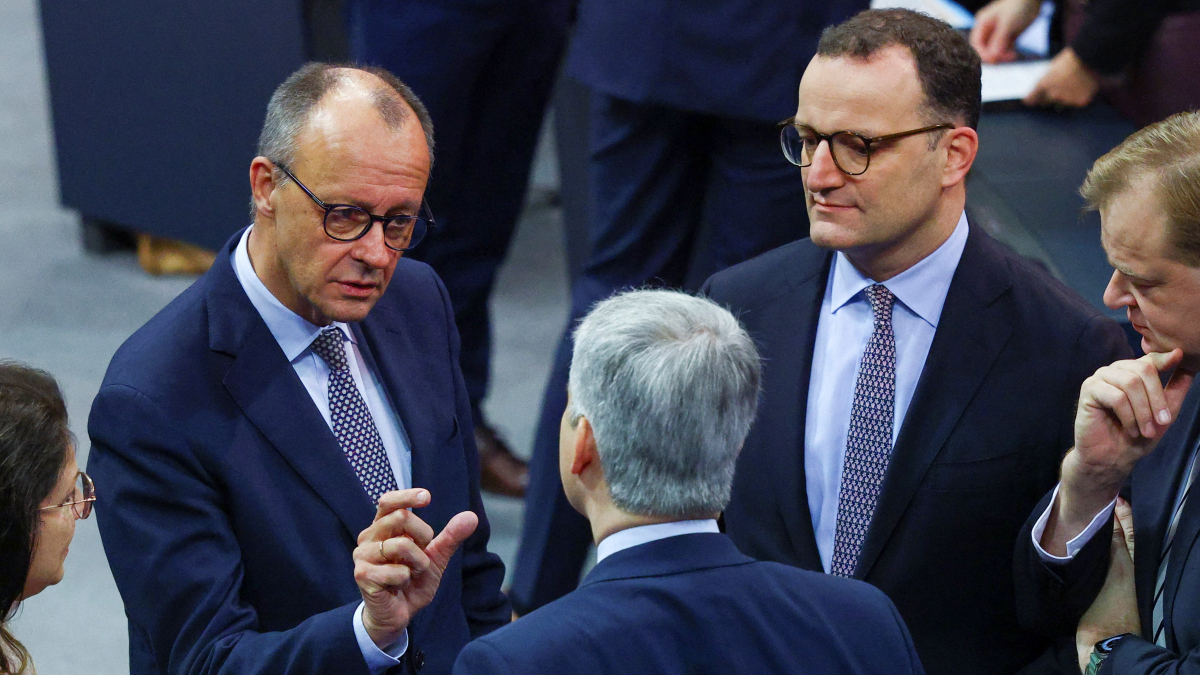
German Chancellor Friedrich Merz faces a significant challenge on Friday as parliament votes on a pensions bill that has sparked a revolt within his own conservative party.
The opposition from younger members of his party raised fears that the bill could be defeated, jeopardising the stability of the coalition. However, these concerns eased after the Left Party announced it would abstain from the vote. Despite this, the dispute has reignited doubts about Merz's ability to manage his party, potentially leaving him reliant on opposition support to pass the bill.
Merz leads a broad coalition of conservatives and the centre-left Social Democrats (SPD), which holds a slim majority of just 12 votes in parliament—enough, theoretically, to pass the legislation, which aims to maintain current pension levels. However, the conservatives' youth faction, with 18 votes, opposes the bill, arguing it perpetuates a financially unsustainable system that will burden younger generations. These members have yet to clarify how they will vote.
The Left Party's decision to abstain means fewer votes are needed for the bill to pass, ensuring its approval. Nevertheless, political analysts suggest that the infighting within the coalition has raised concerns about its ability to push through key legislation, following a series of missteps earlier this year.
If Merz is forced to rely on opposition support, it could further undermine confidence in his government’s ability to tackle major challenges, including the reform of Germany's struggling economy and the rebuilding of its underfunded military. Political scientist Johannes Hillje noted that even if the coalition wins the vote, its instability would persist, with the government's ability to form its own majority at risk.
Such an outcome could boost support for the far-right Alternative for Germany (AfD), which has surged to the top of nationwide polls in recent months and is expected to perform strongly in five state elections next year.
Merz Disappoints High Expectations
During the election campaign, Merz, who had never held government office before, criticised the infighting within the coalition led by his SPD predecessor, Olaf Scholz. Expectations were high after Merz secured a historic agreement for record infrastructure and defence spending before officially taking office, and made it clear that he aimed to restore Germany’s position as a major international player.
However, his coalition has proved unstable since day one, when he became the first chancellor in history to require a second round of votes to secure formal parliamentary approval. In the summer, Merz also failed to rally his conservatives behind the SPD’s chosen candidate for the constitutional court, leading to the failure of that vote.
“The government's image as ineffective, divided, and poorly managed is becoming increasingly entrenched,” said Jan Techau, a consultant at Eurasia Group.
Hillje argued that these setbacks highlighted a "failure of political craftsmanship" by both Merz and the conservatives' parliamentary leader, Jens Spahn, who could have negotiated better with dissenters within their own group.
While Merz has been praised internationally for his strong support of Ukraine, his popularity at home has fallen to around 25%, making him one of the least popular chancellors in recent memory. Meanwhile, combined support for the conservatives and SPD has dropped to 39% from 44.9% in February's election, according to the latest Forsa poll. The AfD, which overtook the conservatives in August, remains in the lead with 26%.


















What is your opinion on this topic?
Leave the first comment