Russian President Vladimir Putin and Indian Prime Minister Narendra Modi agreed on Friday to expand and diversify trade beyond oil and defence despite Western pressure on New Delhi to scale back its decades-old close ties with Moscow.
India, the world's top buyer of Russian arms and seaborne oil, has rolled out the red carpet for Putin during his two-day state visit, his first to New Delhi since Russia's invasion of Ukraine in 2022.
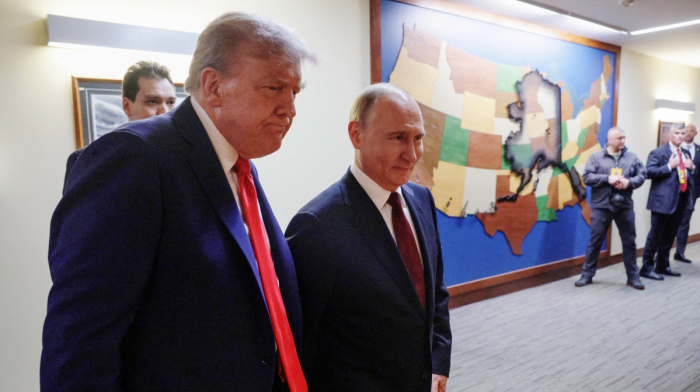
The trip coincides with New Delhi's talks with the U.S. on a trade deal to cut punitive tariffs imposed by President Donald Trump on its goods over India's purchases of Russian oil.
Russia has said it wants to import more Indian goods in an effort to grow trade to $100 billion by 2030. It has so far been skewed in Moscow's favour due to New Delhi's energy imports.
TIES HAVE 'STOOD TEST OF TIME', SAYS MODI
Describing India's enduring partnership with Russia as "a guiding star", Modi said: "Based on mutual respect and deep trust, these relations have always stood the test of time."
"...we have agreed on an economic cooperation programme for the period up to 2030. This will make our trade and investment more diversified, balanced, and sustainable," he told reporters, with Putin by his side.
Modi, who warmly embraced Putin on the airport tarmac when he arrived on Thursday, also reiterated India's support for a peaceful resolution to the war in Ukraine.
Putin said Russia would continue to ensure "uninterrupted fuel supplies" to India, signalling a defiant stance in the face of U.S. sanctions, and also flagged a project underway to build India’s largest nuclear power plant at Kudankulam.
21-GUN SALUTE WELCOME
A large business and government delegation has accompanied Putin. Among the deals signed, the two countries agreed to help Indians move to Russia for work, to set up a joint venture fertiliser plant in Russia, and boost cooperation in agriculture, healthcare and shipping.
They also agreed to reshape their defence ties to take account of New Delhi's push for self-reliance through joint research and development, as well as the production of advanced defence platforms.
PUTIN CHALLENGES WASHINGTON
In an interview with broadcaster India Today aired late on Thursday, Putin challenged U.S. pressure on India not to buy Russian fuel.
"If the U.S. has the right to buy our (nuclear) fuel, why shouldn't India have the same privilege?" he said, adding that he would discuss the matter with Trump.
Energy trade with India is "running smoothly" despite a minor dip in the first nine months of 2025, he said.
India has said Trump's tariffs are unjustified and unreasonable, noting continued U.S. trade with Moscow. The U.S. and European Union still import billions of dollars worth of Russian energy and commodities, ranging from liquefied natural gas to enriched uranium, despite economic sanctions.






What is your opinion on this topic?
Leave the first comment