A round table meeting of NATO foreign minsters has just begun in Brussels, where they're expected to speak about ongoing peace talks, as well as defence issues.
Speaking briefly to the press on arrival, NATO chief Mark Rutte says that while it's good the peace talks are ongoing, NATO has to make sure Ukraine is in the strongest possible position.
He says officials will discuss "keeping Ukraine as strong as possible in the fight today", but also "to be in the strongest possible position when peace talks really start to happen in a way where this could lead to results."
The meeting, one of only two formal ministerials on NATO’s annual calendar, was expected to showcase unity as allies review progress since the Hague Summit and begin preparing for the 2026 summit in Ankara.
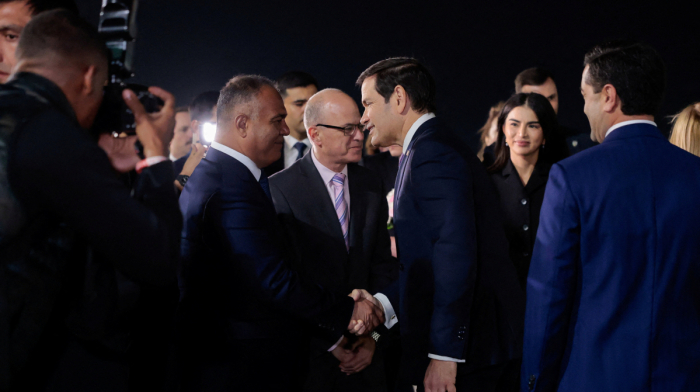
Instead, Rubio’s decision to skip the talks – a rarity for a U.S. secretary of state has fueled questions about Washington’s position under U.S. President Donald Trump.
With Deputy Secretary of State Christopher Landau attending in Rubio’s place, analysts say the U.S. absence will be impossible to ignore at a moment when the alliance is trying to coordinate military support and a political path forward for Kyiv.
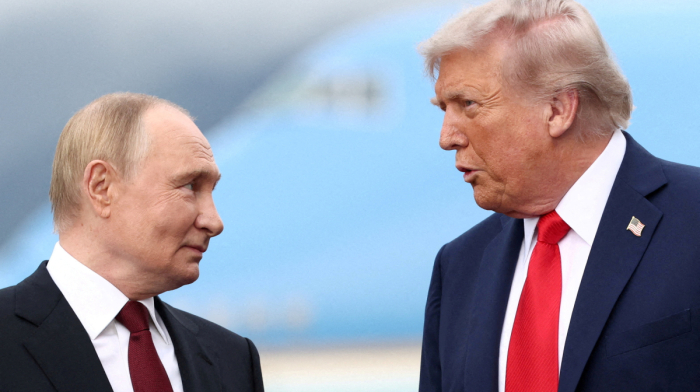
The meeting comes as the U.S. pushes allies to narrow differences on a peace proposal drafted with input from Washington and Moscow – a document that has triggered widespread criticism in Europe for appearing overly aligned with Russian demands.
Europe skeptical about peace plan
Much of Wednesday’s closed-door debate is expected to center on the peace plan, which European and Ukrainian officials have spent the past two weeks rewriting.
European leaders insist that only Ukraine can decide on its own territories, while Ukrainian President Volodymyr Zelenskyy says security guarantees and preserving sovereignty are top priorities.
The initial draft included language suggesting limitations on NATO expansion, caps on the size of the Ukrainian military and the de-facto recognition of Russian control over large swathes of Ukrainian territory – provisions that prompted sharp pushback from European capitals.
‘More aggressive’ posture on hybrid threats
The ministers will also discuss what NATO officials say is a surge in suspected Russian hybrid operations across Europe.
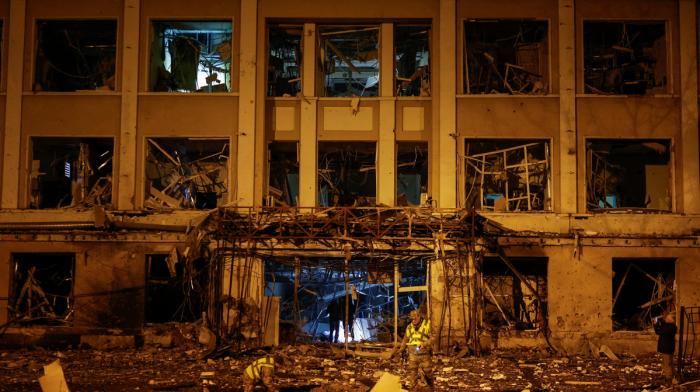
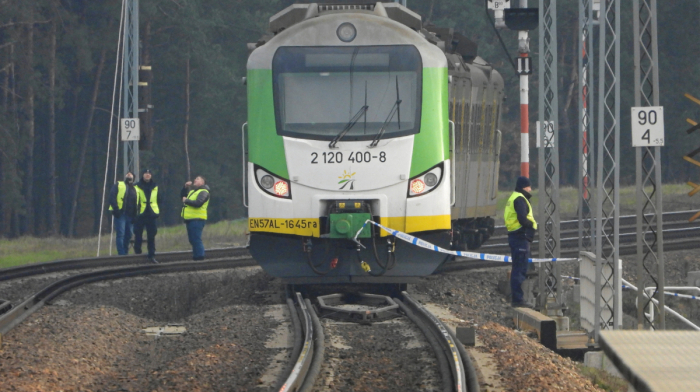
Recent months have seen drones allegedly linked to Russia violate airspace in Poland and Romania, unexplained drone disruptions at airports and military sites in Western Europe, and the sabotage of a key rail line between Warsaw and Kyiv in November.
The ministers are also expected to review Operation Eastern Sentry – a plan to bolster defences on the alliance’s eastern flank, which was activated after Poland claimed Russian drones violated its airspace in September.
Ukraine presses for more air defence support
Another key focus will be sustaining military support for Ukraine, including coordination through the NATO-Ukraine Council with Ukrainian Foreign Minister Andrii Sybiha and EU foreign policy chief Kaja Kallas.
Ukraine’s Defence Minister Denys Shmyhal met NATO Secretary General Mark Rutte in Brussels on Monday, urging additional air defence systems as Russian missile and drone barrages continue.










What is your opinion on this topic?
Leave the first comment