Britain said on Wednesday it had agreed to a deal with Vietnam to curb illegal migration in what it described as the strongest Hanoi had ever agreed with another country.
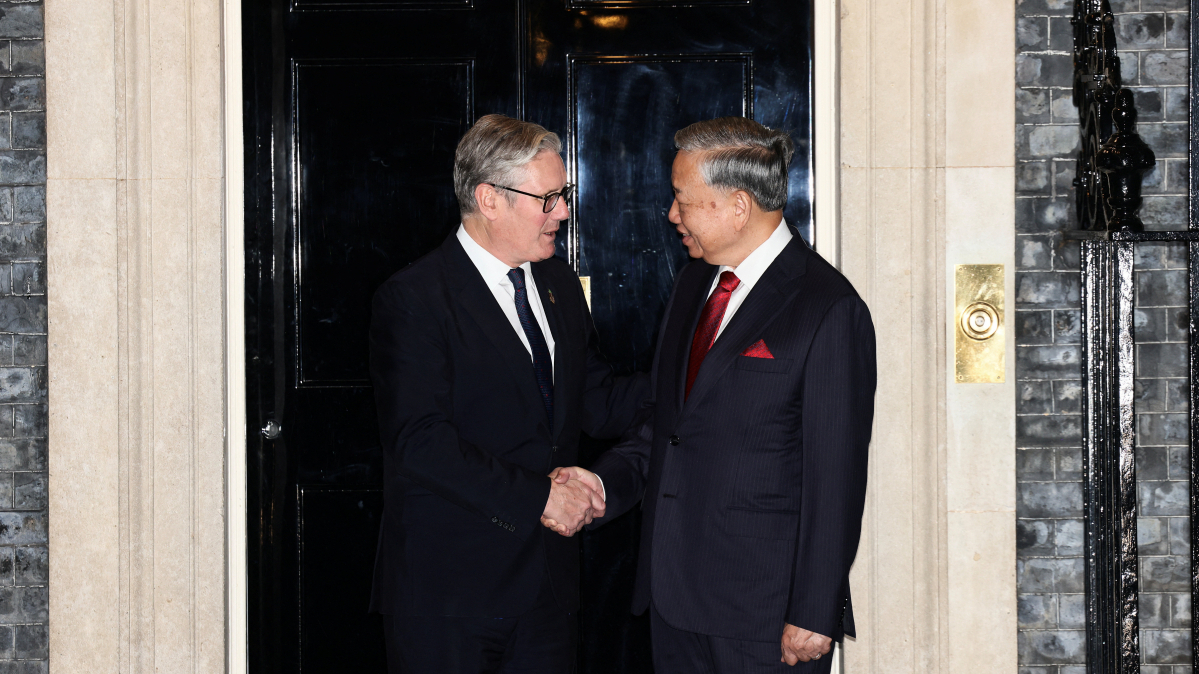
British Prime Minister Keir Starmer, under pressure to reduce the number of undocumented migrants reaching Britain to help arrest his government's plunge in opinion polls, struck the deal with Vietnamese Communist Party chief To Lam in London.
Vietnamese nationals were the most numerous among foreign migrants arriving in Britain by small boat from continental Europe in the six months to June 2024, accounting for 17% of all such arrivals in this period, according to official data.
According to the latest government data, small-boat arrivals accounted for 43,000 of the total of 48,000 irregular arrivals in the year ending June 2025.
The deal reached by Starmer and Lam aims to cut red tape and make it faster and easier to return migrants with no right to be in the United Kingdom, the British government said.
"The number of illegal arrivals from Vietnam has already been cut by half, but more can be done," Starmer said in a statement.
"Today's agreement shows that through international cooperation - not shouting from the sidelines – we can deliver for the UK and for working people."
Lam, Vietnam's paramount leader, has taken a central role in shaping foreign policy since becoming party chief last year, an effort previously led by the president and prime minister.
Starmer's Labour government has seen its popularity slide since it took office last year - partly due to an increasing public backlash over immigration. Under pressure from the surging populist Reform UK party, the government has pledged to slash the number of migrants who arrive illegally.
Polling shows immigration is one of British voters' main concerns after the high cost of living.
A joint declaration following the two leaders' meeting said the partnership would also strengthen political trust, economic cooperation and science and technology. It would also include sectors such as energy and education.
The two countries also agreed to boost maritime security cooperation and monitoring through training, technology transfer and port visits, urging peaceful settlement of disputes in the South China Sea, where Hanoi is often at odds with China over contested boundaries.
Before the leaders' meeting, the BBC said it was "deeply concerned" about the well-being of one of its Vietnamese journalists who has been unable to leave Vietnam for months. The broadcaster covers the country from Bangkok.
In the joint statement, Britain and Vietnam agreed to ensure respect for human rights.













What is your opinion on this topic?
Leave the first comment