The deadliest police operation in Brazil's history killed at least 132 people, officials said on Wednesday, after Rio de Janeiro residents lined a street with dozens of corpses collected overnight, a week ahead of global climate events in the city.
The tally from the Rio public defender's office was more than double the death toll released on Tuesday, when state authorities reported at least 64 dead, including four police officers. The raids were targeting a major drug gang, the state government said.
Rio Governor Claudio Castro said the initial tally had only counted bodies processed in the public morgue.
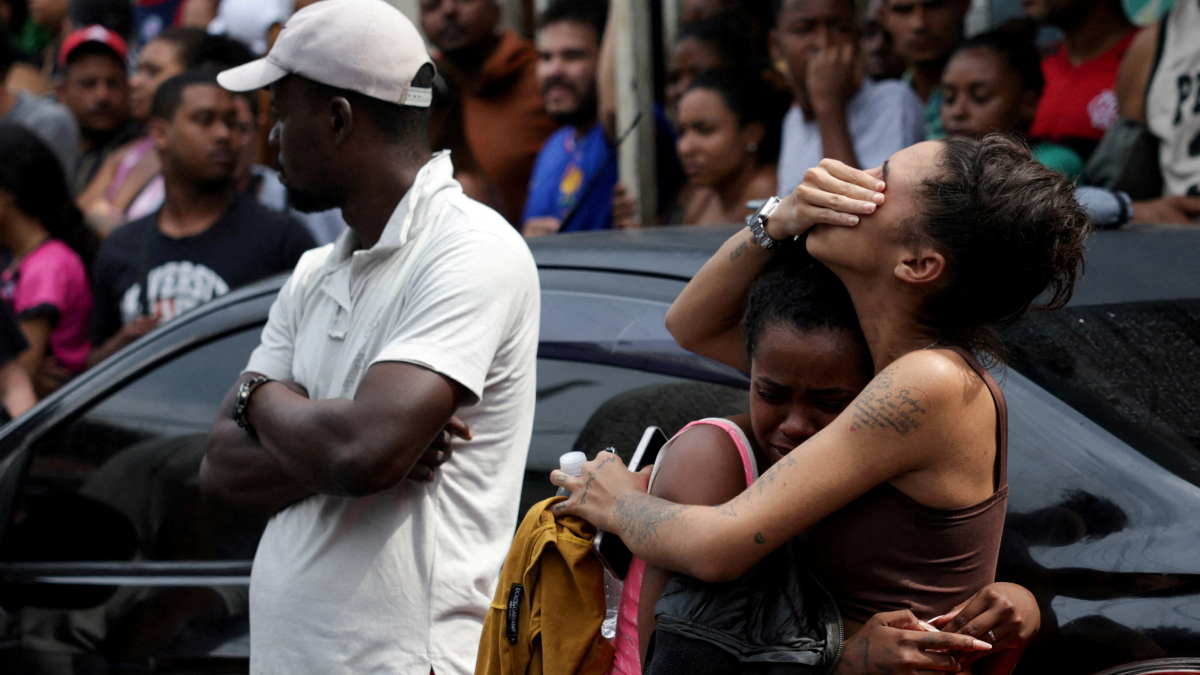
Penha residents who went looking for lost relatives had collected many of the corpses from a forested area behind their neighborhood, according to people at the scene, where more than 70 of the bodies were lined up in the middle of the street.
"I just want to take my son out of here and bury him," said Taua Brito, a mother of one of those killed, surrounded by weeping mourners and onlookers on either side of the long row of bodies, some of which were covered with sheets or bags.
Governor Castro said he was certain those dead from the operation were criminals, as much of the gunfire was in a wooded area. "I don't think anyone would be walking in the forest on the day of the conflict," he told reporters.
"The only real victims were the police officers," he said.
The police operation came days before Rio hosts global events related to the United Nations climate summit known as COP30, including the C40 global summit of mayors tackling climate change and British Prince William's Earthshot Prize..
Security forces in Rio have frequently carried out sweeping anti-gang operations ahead of international events, including the 2016 Olympics, the 2024 G20 summit and the BRICS summit in July.
Authorities said the raid was aimed at dismantling a major criminal network involved in drug trafficking and weapons smuggling, though specific details of the operation have not yet been made public.
The police have not released the names or affiliations of those killed.
Human rights organisations have repeatedly criticised the high civilian death tolls during Rio’s police raids, calling for accountability and the protection of favela communities.
Following the deadliest operation in Rio’s history, UN High Commissioner for Human Rights Volker Turk called for comprehensive and effective action. He emphasized that repeated operations resulting in many deaths—disproportionately affecting people of African descent—raise serious human rights concerns. The UN urged Brazil to break the cycle of extreme brutality, ensure law enforcement complies with international law and national standards regarding the use of force, and conduct prompt, independent, and effective investigations. Addressing systemic racism and ensuring accountability, the UN said, is crucial to restoring trust and preventing further impunity and violence.
Brazilian officials have not yet responded to new calls for an independent investigation into Tuesday’s events.
Brazilian officials have not yet responded to new calls for an independent investigation into Tuesday’s events.








What is your opinion on this topic?
Leave the first comment