Trump sees 'progress' in Israel-Lebanon talks as Hezbollah rejects ceasefire
U.S. President Donald Trump said he sees progress between Israel and Lebanon after talks with Netanyahu, while Hezbollah has rejected a new ceasefire ...
The Taliban-led government in Afghanistan seems to be adopting a balanced foreign policy as it engages with Western and regional powers in a new round of diplomatic outreach.
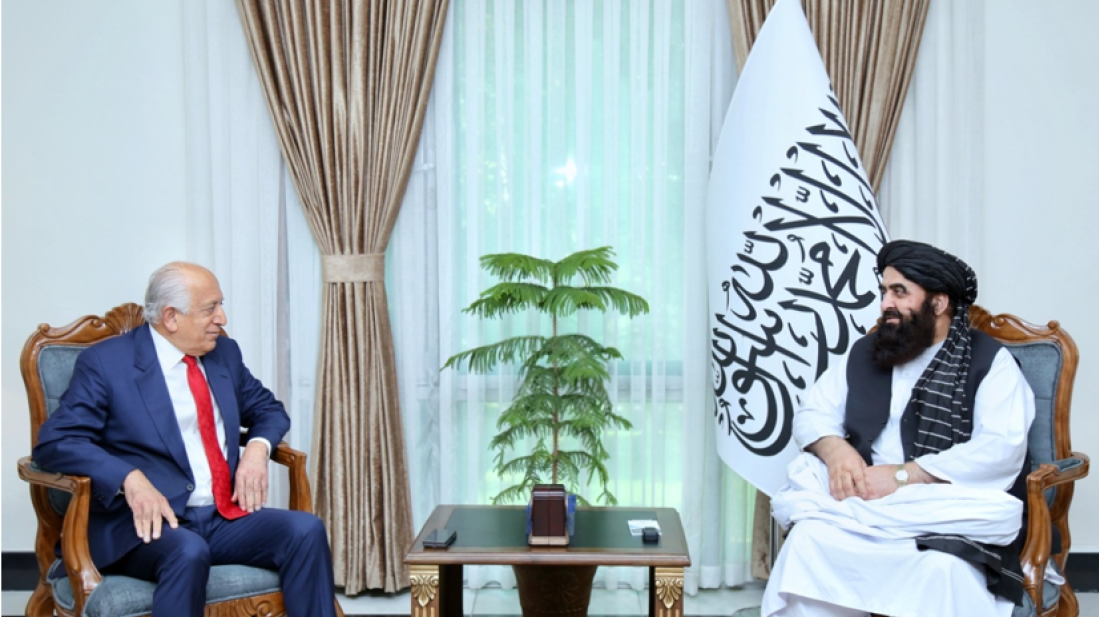
The Afghan Ministry of Foreign Affairs confirmed that Ambassador Zalmai Khalilzad, the former US special envoy for Afghan peace, has visited Kabul and held an informal meeting with Afghan Foreign Minister Amir Khan Muttaqi.
According to a statement issued by the Afghan foreign ministry, the discussion centred on enhancing bilateral relations between Afghanistan and the United States. Although the meeting between Ambassador Khalilzad and Minister Muttaqi has been described as “informal,” it signifies the ongoing engagement between Kabul and Washington despite the United States' lack of formal recognition of the Afghan government.
In a statement, Zia Ahmad Takal, the deputy spokesman at the Ministry of Foreign Affairs, said, “The informal meeting focused on comprehensive discussions aimed at developing and strengthening bilateral relations between Afghanistan and the United States.”
Meanwhile, in Moscow, Afghanistan’s ambassador Gul Hassan Hassan met with Zamir Kabulov, the Russian president's special envoy for Afghanistan. A statement from the Afghan Embassy in Russia said the two sides discussed “key regional developments, mechanisms for bringing Afghan workers to Russia, and the expansion of economic cooperation.”
The meeting also emphasised the importance of accelerating the implementation of joint projects and strengthening Kabul's and Moscow's mutual engagement.
These two meetings emphasise Kabul’s effort to maintain diplomatic balance, seeking dialogue with the United States and Russia at a time when global alignments are shifting. Afghan officials say this approach reflects their broader goal of pursuing an “independent and balanced foreign policy,” aimed at rebuilding Afghanistan’s international relations and boosting economic opportunities.
While the international community continues to urge the Taliban government to make progress on human rights and women’s education, analysts say Kabul’s recent diplomatic efforts reflect a pragmatic approach centred on strengthening economic cooperation and regional engagement.

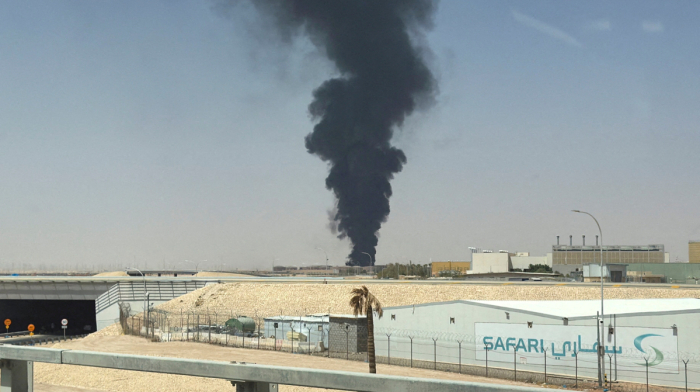
Iran’s Revolutionary Guards (IRGC) said in a statement that its Aerospace Force did not strike the Kuwait Airport passenger terminal on Wednesday, and that the destruction was instead caused by a failed U.S. Patriot missile.
Five Azerbaijani citizens have been killed and three others injured following drone attacks on two cargo vessels in the Sea of Azov, Azerbaijan's Foreign Ministry said on Friday.
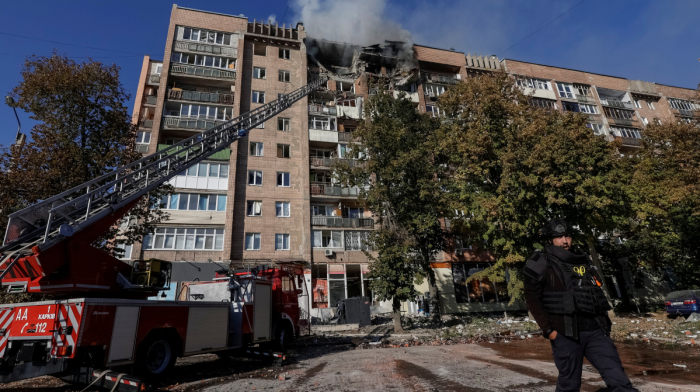
Israel and Lebanon have agreed to implement a ceasefire after U.S.-backed talks in Washington. The deal requires Hezbollah to halt attacks and withdraw from southern Lebanon, while both sides will resume direct talks later this month aimed at reaching a broader agreement.
Azerbaijan has strongly rejected allegations published by CNN claiming that its territory was used for Israeli military and intelligence operations against Iran, describing the report as entirely baseless and demanding a retraction.
As Armenia heads toward parliamentary elections on 7 June, the country's relationship with Azerbaijan is emerging as one of the defining issues of the campaign, with analysts and international observers highlighting the role of regional politics in shaping voters’ mindsets.
People across Gaza are facing a worsening humanitarian crisis, with millions struggling to access food, clean water, shelter and medical care as the conflict continues.
The next time a goal goes in during a Champions League final, fans around the world could watch it from every angle at once — frozen, rotated and replayed in ways that were impossible only a few years ago.
An ageing, poorly insured shadow armada now accounts for around one-sixth of the world's tanker fleet. Hidden by design and fraught with risk, it operates beyond conventional oversight. A maritime law expert explains how it works, who profits, and why much of the world looks the other way.
Azerbaijan has strongly rejected allegations published by CNN claiming that its territory was used for Israeli military and intelligence operations against Iran, describing the report as entirely baseless and demanding a retraction.
Turkish President Recep Tayyip Erdoğan hosted Nigerien President Abdourahamane Tchiani in Ankara on Thursday, underscoring Türkiye’s growing engagement with Africa’s Sahel region as geopolitical alliances continue to shift.
You can download the AnewZ application from Play Store and the App Store.
What is your opinion on this topic?
Leave the first comment