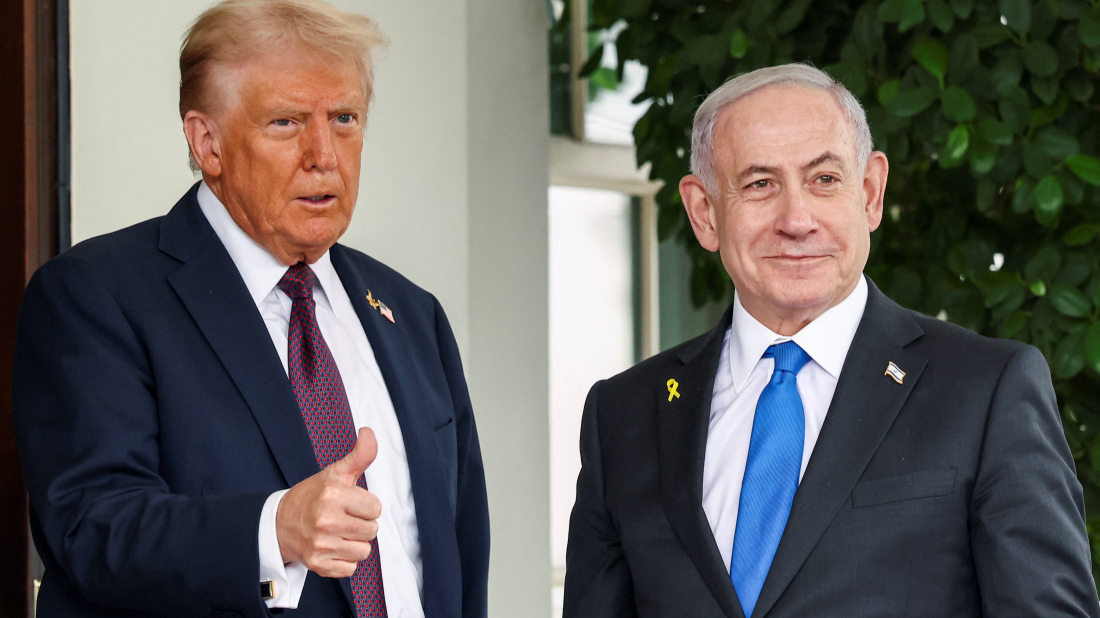
U.S. President Donald Trump hosted Israeli Prime Minister Benjamin Netanyahu for pivotal talks on Monday, urging him to support a peace proposal aimed at ending the nearly two-year-old war in Gaza.
Israeli Prime Minister Benjamin Netanyahu visited Washington on Monday for the fourth time since Donald Trump returned to office in January, aiming to strengthen Israel’s key alliance with the United States amid recent Western recognition of Palestinian statehood—moves both leaders have criticised as concessions to Hamas.
The White House unveiled a new 20-point peace plan for Gaza, calling for an immediate end to the fighting and the return of all hostages, living and deceased, within 72 hours of Israel’s public acceptance. Israeli forces would pull back to agreed lines, and in exchange, Israel would release 250 Palestinians serving life sentences and 1,700 Gazans detained since 7 October 2023.
Standing alongside Netanyahu, U.S. President Donald Trump said Israel and its partners were “beyond very close” to an agreement that could not only end the war in Gaza but also pave the way for wider regional peace involving Arab states. Trump said it is now up to Hamas to accept the plan.
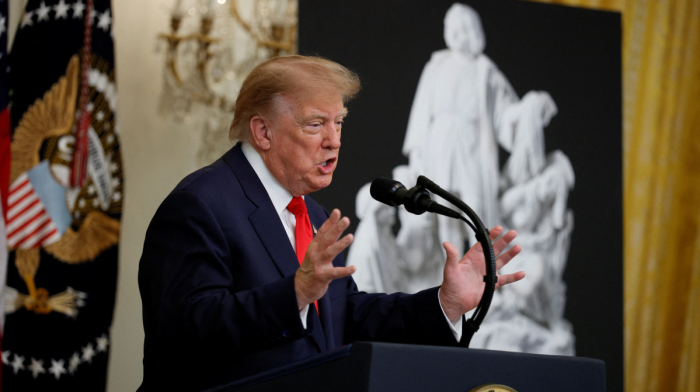
“We’re not done yet,” he told reporters. “We need Hamas to agree, and I believe they can. Now it’s time for them to accept the terms of the plan we’ve put forward today.” He called the proposal “extremely fair” and acknowledged that building peace will not be easy. Trump added that Arab and Muslim partners are ready to support the people of Gaza, a trilateral security mechanism has been agreed, and the plan envisions a phased Israeli withdrawal. If Hamas accepts, all hostages will be freed. The plan also establishes an international oversight body, the Board of Peace, to monitor implementation.
On the topic of regional peace, Trump brought up the Abraham Accords, suggesting that Iran could eventually join the historic agreement that normalized relations between Israel and four Muslim-majority nations during his first term. Standing beside Netanyahu, he said, “Who knows, maybe even Iran can get in there. I think they're going to be open to it. I really believe that. But they could be a member.”
Both leaders stressed the broader regional goals.
Netanyahu voiced full support for the Gaza plan, saying the plan achieves Israel’s war aims, dismantles Hamas’ military capabilities, and ensures Gaza never again poses a threat. He said Gaza would be demilitarised and governed by a peaceful civilian administration, while the Palestinian Authority cannot play a role without major reforms. Netanyahu also warned that if Hamas rejects the plan, Israel will act to complete the mission independently.
Qatar says it has delivered a U.S. ceasefire proposal to Hamas, which is reportedly reviewing it positively, Egyptian media say, citing security sources.
Trump thanked Netanyahu for agreeing to the 20-point Gaza peace plan, saying it marked a critical step toward ending the conflict, restoring stability, and paving the way for broader regional cooperation.

















What is your opinion on this topic?
Leave the first comment