live Trump sees 'progress' in Israel-Lebanon talks as Hezbollah rejects ceasefire
U.S. President Donald Trump said he sees progress between Israel and Lebanon after talks with Netanyahu, while Hezbollah has rejected a new ceasefire ...
France’s government is moving to pass emergency legislation to keep the state operating into January after lawmakers failed to agree on a 2026 budget, as pressure grows from investors and credit ratings agencies.
The stopgap bill would allow public spending, tax collection and borrowing to continue beyond the end of the year. Parliament is expected to vote on the measure on Tuesday.
Government spokeswoman Maud Brégeon said on Monday the emergency law was intended to give politicians time to complete budget negotiations in the new year.
“This special law is not a budget,” she said, quoting President Emmanuel Macron. “We must, as quickly as possible in January, deliver a budget for the country.”
The move follows the failure on Friday of a joint committee of lawmakers from both chambers to reach agreement on the full 2026 budget, prompting Prime Minister Sébastien Lecornu to seek temporary legislation to avoid a shutdown.
France’s public finances are under close scrutiny, with the country running the largest budget deficit in the euro zone, raising concerns among investors and ratings agencies.
Conservative lawmaker Philippe Juvin, who has been steering the budget through the lower house, said he expected a final budget text to be adopted in early January.
Speaking to broadcaster BFM TV, he said he hoped the prime minister would consider using special constitutional powers to force through a compromise acceptable to Socialist lawmakers.
Lecornu has previously said he would not use those powers, which allow legislation to be adopted without a parliamentary vote.
Doing so would likely trigger a motion of no confidence from either the far right or the hard left, although such a move would be unlikely to succeed without Socialist support.
The prime minister’s minority government faces a fragmented parliament, where budget disputes have already brought down three governments since Macron lost his parliamentary majority in a snap election in 2024.
France relied on similar emergency rollover legislation last year until a full 2025 budget was approved in February, a delay the government said cost the state about €12bn.

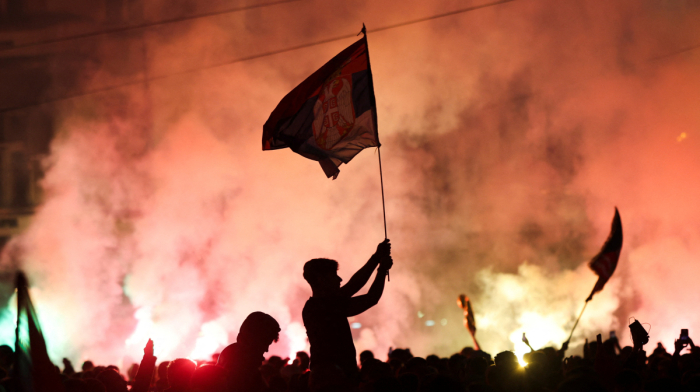
Thousands of people have taken to the streets in Albania in recent days to protest against a luxury tourism project linked to Jared Kushner, the son-in-law of U.S. President Donald Trump, and his wife Ivanka Trump.
Iran’s Revolutionary Guards (IRGC) said in a statement that its Aerospace Force did not strike the Kuwait Airport passenger terminal on Wednesday, and that the destruction was instead caused by a failed U.S. Patriot missile.
Israel and Lebanon have agreed to implement a ceasefire after U.S.-backed talks in Washington. The deal requires Hezbollah to halt attacks and withdraw from southern Lebanon, while both sides will resume direct talks later this month aimed at reaching a broader agreement.
Protesters chanted “I can’t breathe” and threw bins at police in Southampton on Tuesday (2 June) after footage emerged showing murdered teenager Henry Nowak being arrested as he lay dying from a stab wound.
As Armenia heads toward parliamentary elections on 7 June, the country's relationship with Azerbaijan is emerging as one of the defining issues of the campaign, with analysts and international observers highlighting the role of regional politics in shaping voters’ mindsets.
Chinese President Xi Jinping will visit North Korea on 8-9 June, marking his first trip to the country in nearly seven years as Beijing seeks to strengthen relations with its long-time ally.
A blaze at a popular market in northeast Thailand sent vendors fleeing and left five people in hospital, with police investigating a suspected electrical short circuit.
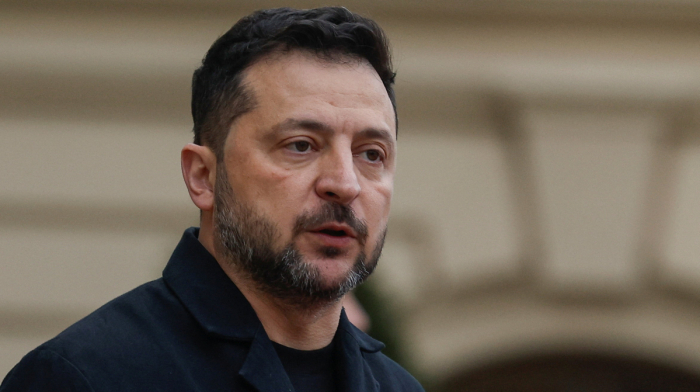
Ukrainian President Volodymyr Zelenskyy has publicly invited Russian President Vladimir Putin to meet for direct talks aimed at ending the war between their countries, saying Ukraine remains ready for peace but will continue fighting if no agreement can be reached.
Start your day informed with the AnewZ Morning Brief. Here are the top stories for the 5 June, covering the latest developments you need to know.
The U.S. House of Representatives has approved legislation that would provide new aid to Ukraine and impose additional sanctions on Russia, marking the latest instance of Republican lawmakers breaking ranks with President Donald Trump and party leaders.
You can download the AnewZ application from Play Store and the App Store.
What is your opinion on this topic?
Leave the first comment