Ukraine imposes new sanctions targeting Russian maritime and defence supply chains
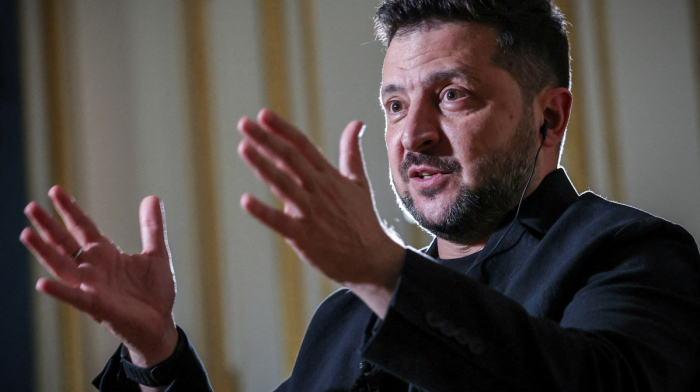
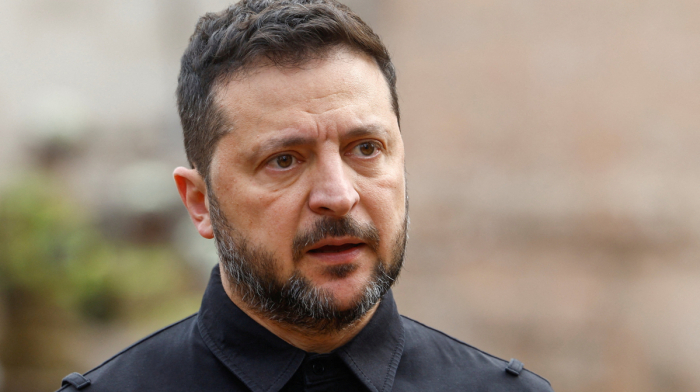
Ukraine’s President Volodymyr Zelenskyy has approved new sanctions targeting Russian maritime operators, defence-linked companies and individuals co...
A truck, a cache of explosives, and a pointed accusation: the case unfolding in Tbilisi has quickly become more than a domestic security matter. It now threatens to deepen the cracks in Georgia–Ukraine relations — ties once described as fraternal but increasingly defined by suspicion.
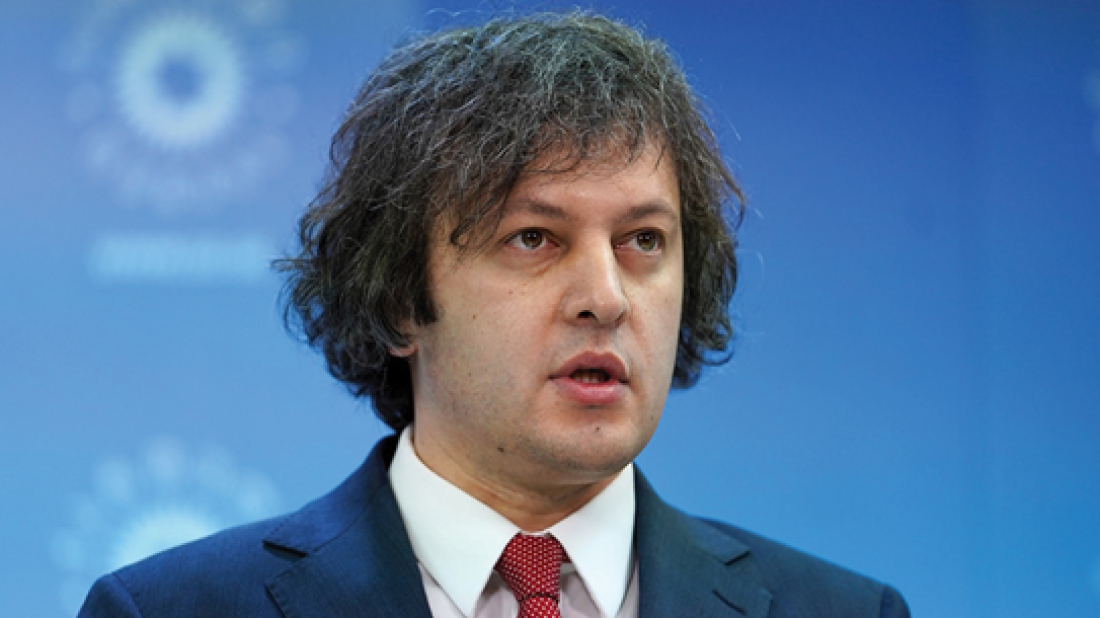
On Monday, Prime Minister Irakli Kobakhidze stunned observers with his claim that explosives intercepted in Georgia were brought in on the instructions of Ukrainian special services.
“This is very regrettable for us,” Kobakhidze said, adding that such behavior shows a “rude attitude” toward Georgia. He linked the case to earlier remarks by Ukrainian officials who openly spoke of opening a “second front” in Georgia, a reference to the possibility of drawing Russia into another conflict in the South Caucasus.
The State Security Service says the explosives — 2.4 kilograms of Hexogen — were hidden in a truck with Ukrainian license plates that crossed into Georgia on 10 September after passing through Romania and Bulgaria. Two Ukrainian citizens were detained. Investigators allege the material’s destination was a residential building in Tbilisi’s Avlabari district, an area steeped in political symbolism.
Kyiv has not yet responded to the accusations, and analysts caution against drawing premature conclusions.
Extraordinary claims demand extraordinary proof, otherwise, allegations of this kind can do lasting damage, not only between Georgia and Ukraine but across a region already destabilised by Russia’s war.
That broader context is impossible to ignore. Georgia has walked a tightrope since Russia’s full-scale invasion of Ukraine: offering humanitarian support, but refusing to join sanctions or provide military assistance.
Ukraine, meanwhile, has grown increasingly vocal in its frustration, accusing Tbilisi of failing to stand by an ally under fire.
Now, the explosives case risks hardening those fault lines. Whether it leads to a diplomatic rift or is defused through transparent investigation will depend not only on the evidence but also on how carefully both governments handle a moment heavy with geopolitical consequences.

Quentin Griffiths, co-founder of online fashion retailer ASOS, has died in Pattaya, Thailand, after falling from the 17th floor of a condominium on 9 February, Thai police confirmed.
Ukraine’s National Paralympic Committee has announced it will boycott the opening ceremony of the Milano Cortina 2026 Paralympics in Verona on 6 March, citing the International Paralympic Committee’s decision to allow some Russian and Belarusian athletes to compete under their national flags.
Eric Dane, the actor best known for his roles in 'Grey’s Anatomy' and 'Euphoria', died on Thursday, at the age of 53 after a battle with amyotrophic lateral sclerosis (ALS). His family confirmed his death after what they described as a “courageous battle” with ALS.
An Austrian climber has been convicted of gross negligent manslaughter after his girlfriend died from hypothermia while climbing Austria’s highest peak, the Grossglockner, in January 2025.
President Donald Trump said on Saturday (21 February) that he will raise temporary tariffs on nearly all U.S. imports from 10% to 15%, the maximum allowed under the law, after the Supreme Court struck down his previous tariff program.
Ukraine’s President Volodymyr Zelenskyy has approved new sanctions targeting Russian maritime operators, defence-linked companies and individuals connected to Moscow’s military and energy sectors, according to official decrees issued on Saturday.
Divers have recovered the bodies of seven Chinese tourists and a Russian driver after their minibus broke through the ice of Lake Baikal in Russia, authorities said.
A technical fault in the helium system of NASA’s next-generation moon rocket was announced on Saturday, ruling out the planned March launch window for the Artemis II mission.
President Donald Trump said on Saturday (21 February) that he will raise temporary tariffs on nearly all U.S. imports from 10% to 15%, the maximum allowed under the law, after the Supreme Court struck down his previous tariff program.
Germany's ruling conservatives on Saturday (21 February) passed a motion to ban social media use for under 14s and introduce more stringent digital verification checks for teenagers, building momentum for such limits in Germany and elsewhere in Europe.
You can download the AnewZ application from Play Store and the App Store.
What is your opinion on this topic?
Leave the first comment