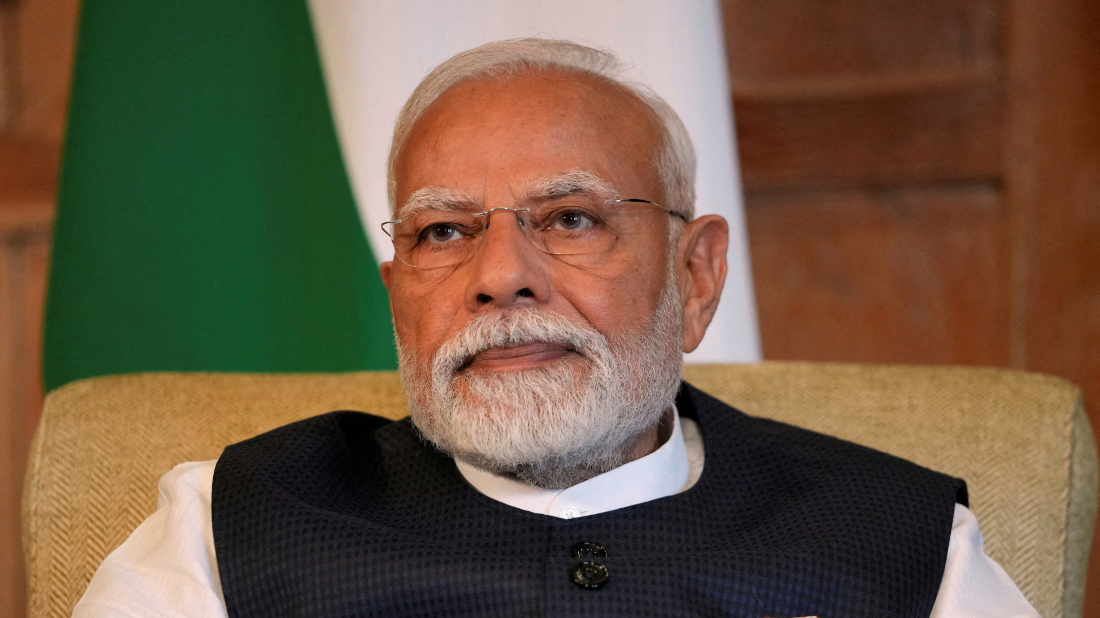
Indian Prime Minister Narendra Modi heads overseas on Thursday to meet the leaders of China, Japan and Russia, seeking to build closer diplomatic ties as New Delhi battles fallout from U.S. President Donald Trump's escalating tariff offensive.
By drawing nearer to some of the world’s largest economies, including his first visit to China in seven years, Modi hopes to to boost support for his flagship "Make in India" initiative, mainly from Japan, as Trump's measures spur new partnerships.
"This will be an opportunity to launch several new initiatives to build greater resilience in the relationship, and to respond to emerging opportunities and challenges," Foreign Secretary Vikram Misri said of the Japan visit.
While New Delhi says it is relying on talks to resolve Trump's additional tariffs of up to 50% on Indian exports, Japan's top trade negotiator cancelled a U.S. visit over a snag in the two nations' tariff deal.
Modi’s visit to Japan on Friday and Saturday gains significance as both belong to the Quad grouping, along with Australia and the United States, which seeks to counter China's growing influence in the Indo-Pacific region.
Despite strained ties with Washington, India said Modi and Japanese Prime Minister Shigeru Ishiba would discuss expanding cooperation within the framework of the regional security grouping.
Japanese companies are set to invest up to 10 trillion yen ($68 billion) in India in the next decade, public broadcaster NHK said, as Suzuki Motor 7269.T pledged to pump in about $8 billion over the next five to six years.
The two nations were partners "made for each other", Modi said this week, after visiting a Suzuki plant in India.
Their leaders are expected to discuss tie-ups on critical minerals and Japanese investments in high-value manufacturing in India, officials said.
India is believed to hold substantial deposits of rare earths, used in everything from smartphones to solar panels, but lacks the technology to mine and process them extensively.
India, China rapprochement
Modi next travels to China for a two-day summit of regional security bloc Shanghai Cooperation Organisation from Sunday. His visit comes as the neighbours strive to defuse tension following deadly border clashes in 2020.
He is expected to meet both Chinese President Xi Jinping and Russian President Vladimir Putin for two-way talks.
China and India seek to resume direct flights after a gap of five years and are discussing easing trade barriers, including reopening border trade at three Himalayan crossings.
India is also considering easing investment rules that put greater scrutiny on Chinese companies, while Beijing recently agreed to lift curbs on exports of fertilisers, rare earth minerals and tunnel boring machines to India.
The meeting comes against the backdrop of Washington's long-held desire for the world's largest democracy to act as a counterweight to China, which analysts say could offer New Delhi leverage in the effort to secure lower tariffs.
Otherwise, India could get pushed towards China and possibly join a Beijing-led free-trade pact, the Regional Comprehensive Economic Partnership, said Devashish Mitra, an economics professor at New York's Syracuse University.
"In the situation and climate President Trump has created, it won’t be surprising if both India and China find this a mutually beneficial transaction," he said.
But there is limited scope to improve relations with China, said William Yang, senior Northeast Asia analyst for the International Crisis Group.
"For now, China will be happy to reciprocate India’s desire to mend some areas of the strained ties by holding high-level diplomatic talks, but is unlikely to pursue a broader diplomatic breakthrough while existing differences remain," he warned.












What is your opinion on this topic?
Leave the first comment