Erdogan rejects claim that Venezuela’s Maduro was offered asylum in Türkiye
Turkish President Recep Tayyip Erdogan has dismissed reports that Nicolas Maduro, Venezuela’s toppled leader, was previously offered asylum in Türk...
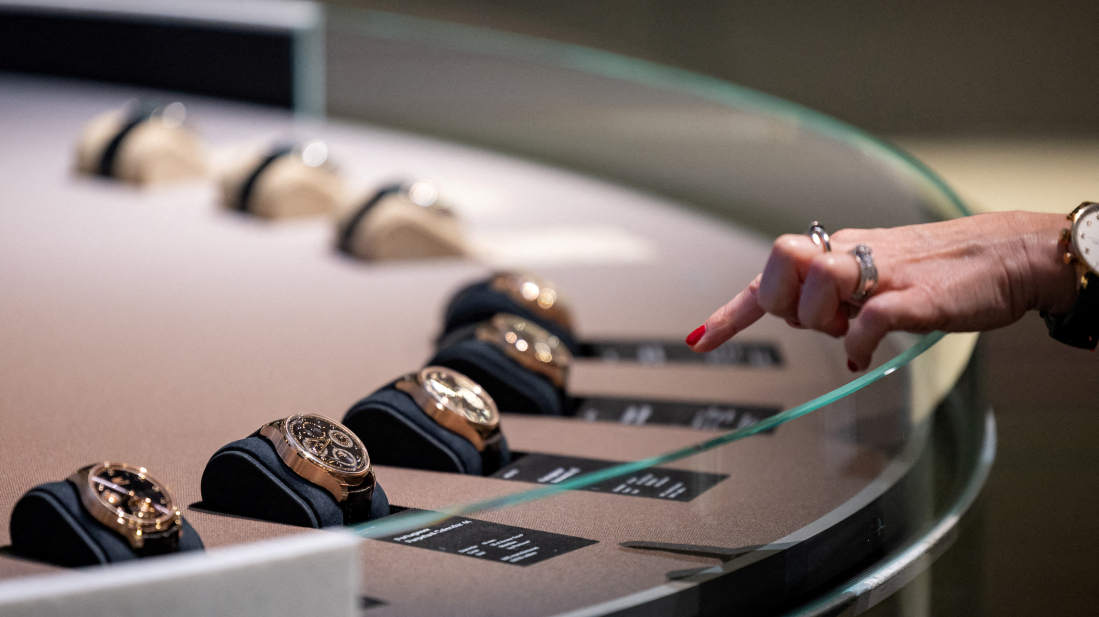
Swiss luxury watch stocks fell sharply on Monday after the U.S. imposed a 39% import tariff, raising fears of a sharp sales decline in their biggest market.
Richemont and Swatch shares dropped by as much as 3.4% and 5%, respectively, as markets reacted to the new tariffs after being closed Friday for Swiss National Day.
“The impact of the U.S. tariffs, if they stay at 39%, could be devastating for numerous brands in Switzerland,” said Jean-Philippe Bertschy, analyst at Vontobel. “We expect a strong negative impact for watches in the entry to mid-price segments.”
In 2024, Switzerland exported watches worth 26 billion Swiss francs ($32.79 billion), down from a peak of 26.7 billion francs ($33.64 billion) in 2022, and similar to 2020 levels when the industry faced disruptions due to the pandemic.
The U.S. remains the top foreign market for Swiss watches, accounting for 16.8% of exports, which translates to about 4.4 billion francs ($5.45 billion), according to the Federation of the Swiss Watch Industry.
Shahzaib Khan, a Swiss watch exporter, said many brands may not be able to absorb the tariff hike.
“I suspect, there won’t be any goods being shipped to the U.S. until the situation clears,” he said.
Analysts at Jefferies noted that Richemont derived just under 10% of its 2024 revenue from the U.S., though watches represented nearly a third of its overall sales.
Swatch, had already raised prices by 5% in response to earlier tariffs announced in April. The company generated 18% of its watch sales from the U.S. market last year, according to its CEO.

Open-source intelligence (OSINT) sources reported a significant movement of U.S. military aircraft towards the Middle East in recent hours. Dozens of U.S. Air Force aerial refuelling tankers and heavy transport aircraft were observed heading eastwards, presumably to staging points in the region.
Diplomatic tensions between Tokyo and Beijing escalated as Japan slams China's export ban on dual-use goods. Markets have wobbled as fears grow over a potential rare earth embargo affecting global supply chains.
Snow and ice stalled travellers in northwest Europe on Wednesday, forcing around a thousand to spend the night in Amsterdam's Schiphol airport but delighting others who set out to explore a snow-blanketed Paris on sledges and skis.
Two people have been killed after a private helicopter crashed at a recreation centre in Russia’s Perm region, Russian authorities and local media have said.
Iran’s chief justice has warned protesters there will be “no leniency for those who help the enemy against the Islamic Republic”, as rights groups reported a rising death toll during what observers describe as the country’s biggest wave of unrest in three years.
Turkish President Recep Tayyip Erdogan has dismissed reports that Nicolas Maduro, Venezuela’s toppled leader, was previously offered asylum in Türkiye. “We have not received any such news,” Erdogan was quoted as saying by local media after a Cabinet meeting held Wednesday in Ankara.
Former NATO Deputy Secretary-General Rose Gottemoeller has warned that Europe could face a future without U.S. nuclear deterrence.
Start your day informed with AnewZ Morning Brief: here are the top news stories for the 8th of January, covering the latest developments you need to know.
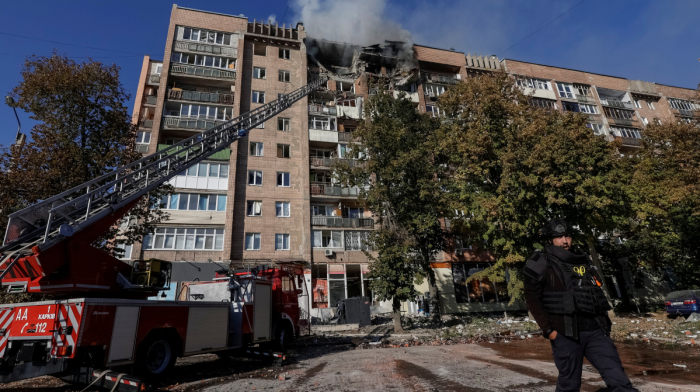
Russian attacks late on Wednesday (7 January) left almost all of Dnipropetrovsk and Zaporizhzhia regions without electricity, Ukrainian authorities said, amid freezing temperatures and worsening winter conditions.
A 37-year-old U.S. citizen was shot dead by a federal immigration agent in Minneapolis on Wednesday (7 January) during an Immigration and Customs Enforcement (ICE) operation, sparking protests and an investigation.
You can download the AnewZ application from Play Store and the App Store.
What is your opinion on this topic?
Leave the first comment