A newly introduced refereeing protocol has intensified debate over fairness at the FIFA World Cup, with another controversial decision involving defending champions Argentina fuelling criticism from fans and former officials.
The tournament has seen repeated complaints from Argentina's opponents over officiating, while social media users have questioned whether Lionel Messi's side has benefited from key refereeing decisions.
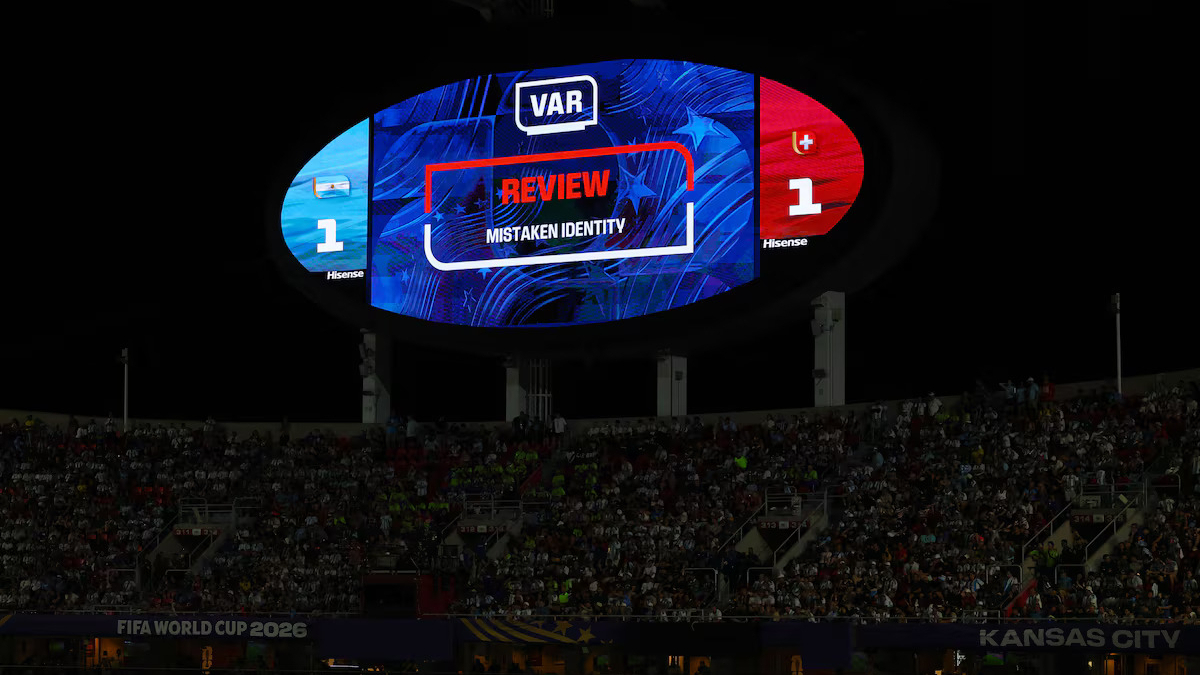
The latest controversy came during Argentina's quarter-final victory over Switzerland on Saturday, when Swiss forward Breel Embolo was shown a second yellow card for simulation following a Video Assistant Referee (VAR) review.
Switzerland head coach Murat Yakin described the decision as "unacceptable", adding to growing concerns over the use of VAR during the competition.
FIFA defends officials
Asked about the criticism on Monday, FIFA referred to comments made by refereeing chief Pierluigi Collina in an interview on 8 July, in which he rejected allegations of bias following Argentina's last-16 victory over Egypt.
Collina has maintained that refereeing decisions throughout the tournament have been made in accordance with the Laws of the Game.
New VAR protocol faces criticism
The controversy has centred on a newly introduced protocol covering mistaken identity, one of several changes to VAR procedures implemented for the 2026–27 season and the current World Cup.
Former FIFA referee Christina Unkel, now ITV's rules analyst for the tournament, questioned whether the protocol should have been introduced without further testing.
"I don't think it should have been applied in the first place. It was too broad," Unkel told Reuters.
She argued that the revised procedure goes beyond correcting disciplinary mistakes by allowing officials to alter the underlying decision itself.
"We're not just changing who gets the card, we're changing the underlying decision from a free-kick going one way to saying it's actually the opposite decision," she said.
"To me, that is where we are now officially entering the re-refereeing area that VAR has been trying to avoid."
Argentina's decisions fuel online debate
The fact that the latest controversial ruling favoured Argentina has intensified discussion online, where some critics have nicknamed the team "VARgentina" in reference to perceived favourable VAR decisions.
Unkel warned that introducing an expanded protocol without extensive testing had created uncertainty among supporters and officials alike.
"This new expansion of the protocol without testing it, without really knowing that that's what they wanted it to do, is like a powder keg," she said.
Earlier matches also sparked complaints
Questions surrounding Argentina's treatment by officials began during the group stage.
Algeria argued that Lionel Messi should have been sent off after appearing to stand on captain Aïssa Mandi's calf during the first half of their meeting. Messi remained on the pitch and later scored a hat-trick.
According to a source, the Algerian Football Federation subsequently lodged a complaint over the standard of officiating.
Controversy continued in Argentina's last-16 victory over Egypt. Egypt had a goal ruled out following a VAR review that identified a foul earlier in the move, while a later appeal for a penalty was rejected before Argentina scored a dramatic stoppage-time winner.
The Egyptian Football Association said several refereeing decisions had influenced the outcome of the match.
Confidence in officiating questioned
Despite the criticism, Unkel said she did not believe the refereeing performances in either match were clearly incorrect, noting that officials are often the focus of frustration when results disappoint supporters.
However, she suggested that other disciplinary decisions during the tournament had further damaged public confidence.
Attention has focused on FIFA's handling of separate red-card incidents involving U.S. striker Folarin Balogun, who received a late reprieve from a one-match suspension, and England defender Jarell Quansah, who was handed a two-match ban.
Growing pressure on FIFA
Unkel believes the combination of controversial VAR decisions, disciplinary inconsistencies and widespread online speculation has significantly undermined trust in tournament officiating.
"I think fan confidence is completely eroded right now," she said.
"I've covered major tournaments in this position and as a referee, and I have never seen the level of discussion, not just on social media."
With the World Cup entering its decisive stages, FIFA and its refereeing team are likely to remain under intense scrutiny as every major decision continues to attract global attention.

















What is your opinion on this topic?
Leave the first comment