live Iran's speaker addresses Baku meeting as U.S., Iran pursue peace talks
Iran’s parliamentary speaker said on Wednesday regional countries alone should determine the Middle East’s political and security order, rejecting...
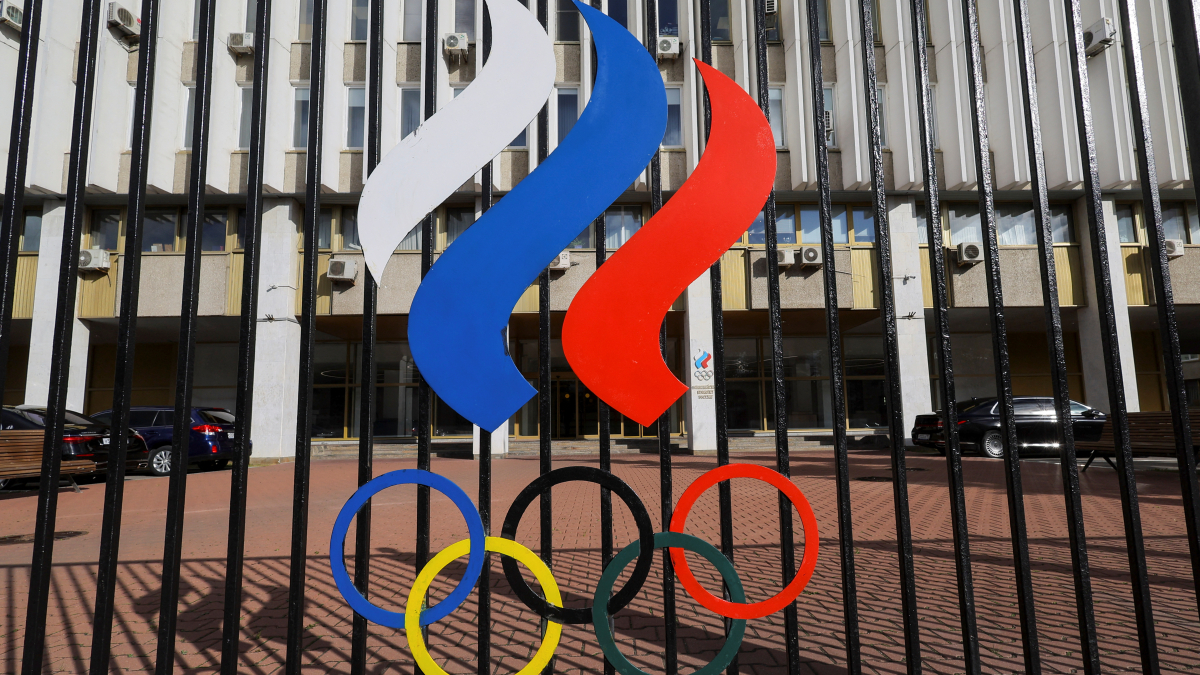
Russian athletes will not be allowed to represent their country at the Milano Cortina Winter Olympics even if a peace deal is reached with Ukraine, International Olympic Committee President Kirsty Coventry said in an interview with an Italian newspaper.
Speaking to Corriere della Sera, Coventry said there would be no change to the IOC’s current position regarding Russian participation at the February 2026 Games.
Under existing rules, athletes from Russia and Belarus - may compete only as neutral individuals, without national symbols, flags or anthems.
“At this stage nothing would change,” Coventry said, according to the newspaper, when asked whether a potential peace agreement could lead to Russia being reinstated as a nation.
The IOC banned Russia and Belarus from international sporting events following Russia’s invasion of Ukraine in February 2022. While the blanket ban has since been softened to allow limited participation in some competitions, the IOC ruled in September that athletes from both countries who qualify for the Milano Cortina Olympics would do so solely in an individual capacity.
That decision means Russian and Belarusian competitors would appear under a neutral designation and would not be officially linked to their home nations during the Games.
The policy mirrors arrangements used at recent Olympic events, where athletes were permitted to compete provided, they met strict eligibility criteria and did not actively support the war.
Russia has a rich Olympic history, hosting the 1980 and 2014 Games, but in recent years have faced bans and restrictions due to doping and the invasion of Ukraine.
Coventry’s comments come amid ongoing debate within international sport over how long sanctions related to the Russia-Ukraine conflict should remain in place. Some sports federations have argued for a gradual return of Russian athletes, while others have maintained a hard line, citing concerns over fairness, safety and the integrity of competition.
In the same interview, Coventry also addressed the structure of the Milano Cortina Olympics, which will be staged across multiple Italian cities and regions. She said the model of hosting Games in more than one location would become “the new normality” for the Olympic movement.
The Milano Cortina Winter Olympics are scheduled to take place from 6 February to 22 February.

At least thirteen people have died and sixty-six have been injured following an explosion at Qatar's main liquefied natural gas (LNG) processing hub at Ras Laffan, authorities said on Sunday.
Tehran has agreed to let the International Atomic Energy Agency (IAEA) recommence inspections of its nuclear programme, U.S. Vice President JD Vance has said. The U.S. and Iran have settled on a 60-day roadmap aimed at reaching a final deal, according to mediators Qatar and Pakistan.
A Ukrainian strike has damaged a school building in a Russian-controlled area of Ukraine’s Zaporizhzhia region, according to local authorities cited by the TASS news agency. No injuries were reported in the incident.
U.S. President Donald Trump said that Iran had agreed to nuclear inspections into "infinity, despite Tehran's denials, and that unfrozen Iranian assets would be used to buy humanitarian supplies from the United States.
Iran’s parliamentary speaker said on Wednesday regional countries alone should determine the Middle East’s political and security order, rejecting external involvement and calling for expanded intra-regional cooperation.
France has confirmed its first Ebola case linked to the current outbreak in the Democratic Republic of Congo after a doctor returning from a humanitarian mission tested positive for the virus, the health ministry said on Wednesday (24 June).
Ukraine said its forces had struck key energy installations inside Russia, including a gas processing plant and a helium facility in the Orenburg region, as drone assaults increased across multiple areas.
Critical minerals are becoming a key battleground in the growing economic rivalry between the G7 and China, as governments seek to secure supplies vital to the energy transition and advanced manufacturing.
An unusual weather pattern known as an omega block is at the heart of the extreme heat sweeping across Europe. The phenomenon can trap hot air over the same region for days or even weeks, allowing temperatures to climb to dangerous levels.
Ebola cases in the Democratic Republic of Congo have surpassed 1,000, with health officials warning that the outbreak is spreading rapidly through displacement camps and across borders.
You can download the AnewZ application from Play Store and the App Store.
What is your opinion on this topic?
Leave the first comment