Winter weather has brought air travel in the German capital to a complete halt, stranding thousands of passengers as severe icing conditions make runways and aircraft unsafe for operation and force authorities to shut down one of Europe’s key transport hubs.
The suspension of operations comes as an intense weather front moves across the region, coating the city in a dangerous layer of ice and compelling transport officials to prioritise safety over schedules.
Operations at Berlin Brandenburg Airport (BER) remain suspended as ground crews battle extreme meteorological conditions.
Aviation standstill: Why de-icing has failed
The situation at BER deteriorated rapidly on Thursday morning, resulting in a total ground stop for all departing aircraft. While winter delays are common in Northern Europe, the specific nature of this weather event, rapidly freezing rain, has created a logistical nightmare that standard airport protocols cannot currently overcome.
According to airport officials, rain is freezing instantly on contact with aircraft surfaces, rendering standard de-icing ineffective. While de-icing fluids normally provide a limited “holdover time” before take-off, the current rate of ice accumulation is outpacing ground crews’ ability to clear wings and fuselages, making lift-off highly dangerous.
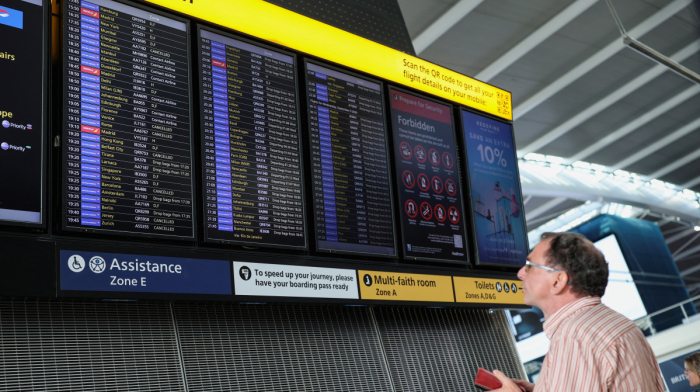
The airport administration issued a blunt statement confirming that “no take-offs are currently taking place”, triggering widespread inbound cancellations. Airlines are unable to land aircraft that cannot later depart, forcing diversions to other German airports less affected by the weather. Terminal buildings are reportedly filling with passengers, despite officials strongly advising travellers to stay away.
Travellers due to fly from Berlin are urged to check their flight status online before travelling to the airport. The disruption is expected to ripple across the European aviation network as aircraft meant to connect through the hub fall out of position. Passengers are advised to contact their airlines about rebooking and compensation, as operations remain dependent on rising temperatures or an end to the rainfall.
Rail and road chaos: City-wide lockdown
The freeze has extended beyond the tarmac, crippling Deutsche Bahn intercity services and Berlin’s local public transport network.
The paralysis at the airport is part of a wider transport crisis affecting Berlin and the surrounding state of Brandenburg. Germany’s national weather service, the Deutscher Wetterdienst (DWD), has issued a high-risk warning for “Blitzeis” (black ice), caused when rain freezes on contact with frozen ground, creating an instantly slippery and often invisible surface. The DWD has urged residents to avoid unnecessary outdoor activity and leave their cars at home due to a severe risk of accidents and injury.
The impact on public infrastructure has been immediate and widespread. Deutsche Bahn, the national railway operator, is struggling to maintain its timetable. High-speed InterCity Express (ICE) services, particularly on the vital east-west corridor between Berlin and Hannover, are facing cancellations and severe delays.
Freezing rain can coat overhead power lines in ice, disrupting the electrical contact required for trains to operate, while frozen switches can lock tracks in place. This has effectively severed reliable rail links between the capital and much of western Germany for the duration of the storm.
Locally, Berliner Verkehrsbetriebe (BVG) is fighting to keep the city moving but the weather has exposed vulnerabilities in the historic network. While underground U-Bahn lines remain largely unaffected, routes running on elevated viaducts or at street level, particularly the U2 and U3 lines, have been interrupted.
Commuter rail (S-Bahn) services, which operate entirely above ground, are experiencing similar disruption. For millions of commuters in Berlin, the message is clear: the transport network is currently fragile and travel should only be attempted if absolutely essential until the weather warning is lifted.
















What is your opinion on this topic?
Leave the first comment