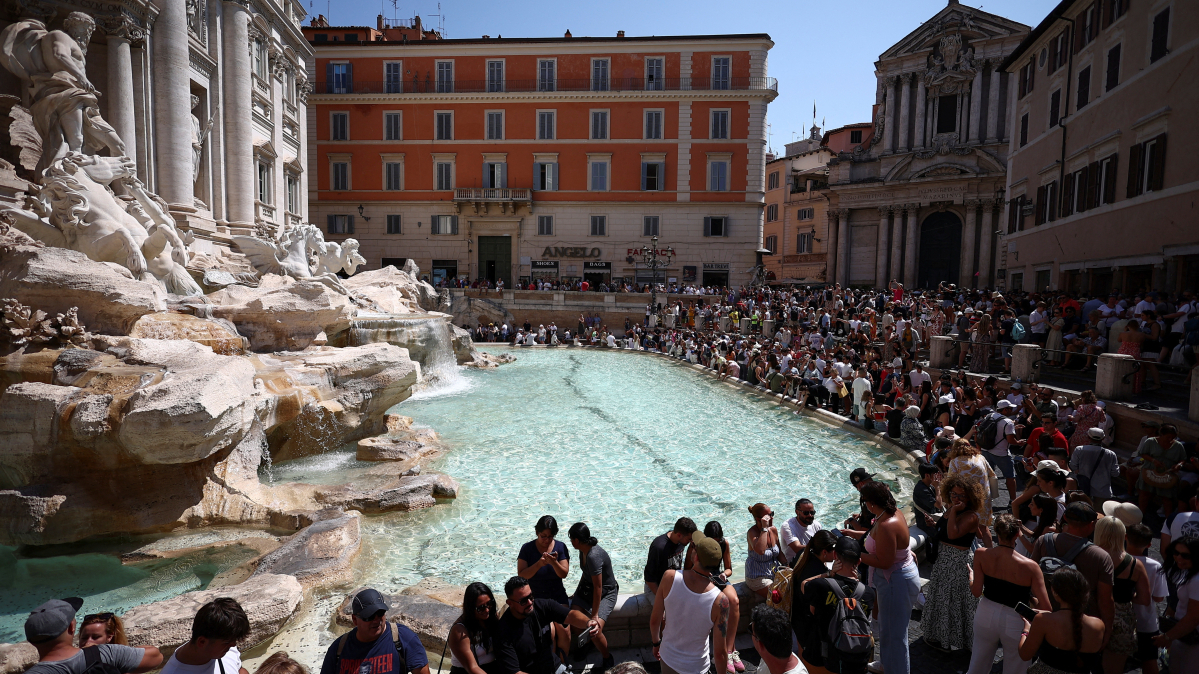
Rome has begun charging tourists 2 euros to step down to the Trevi Fountain’s basin area, a measure aimed at easing overtourism and funding maintenance.
The new rule came into force on Monday and applies only to those walking down the stone steps to get close to the Trevi Fountain. Visitors can still access the surrounding square for free, maintaining open views of one of the city’s busiest landmarks.
Under the schedule set by city authorities, the fee is collected from 11:30 a.m. to 10 p.m. on weekdays and from 9 a.m. to 10 p.m. on weekends. Exemptions cover Rome residents, people with disabilities and their companions, and children under six.
Argentine visitor Valentina De Vicentis said she was unaware of the charge but supported the move, noting that thinner crowds made the experience more pleasant. She said the reduced numbers allowed people to take photographs and spend more time at the site.
City officials say the fountain drew more than 10 million visitors between December 2024 and December 2025, a period overlapping with the Catholic Holy Year that brought an estimated 33.5 million pilgrims to Rome.
Completed in 1762 and fed by an ancient aqueduct, the late Baroque monument depicts Oceanus, the god of all water, represented through shifting moods of seas and rivers.
The site has a deep place in popular culture, including the famous sequence in Federico Fellini's film "La Dolce Vita", in which Anita Ekberg calls Marcello Mastroianni into the water.
Italy has increasingly introduced access charges at major cultural sites to manage crowds and support preservation. These include the Pantheon, the city of Venice during peak season, and the Verona courtyard linked to Shakespeare’s "Romeo and Juliet".
























What is your opinion on this topic?
Leave the first comment