Georgia's Bochorishvili highlights security concerns at OSCE Ministerial Council meeting
Georgian Foreign Minister Maka Bochorishvili is participating in the 32nd OSCE Ministerial Council holding from 3rd to 5th December in Vienna....
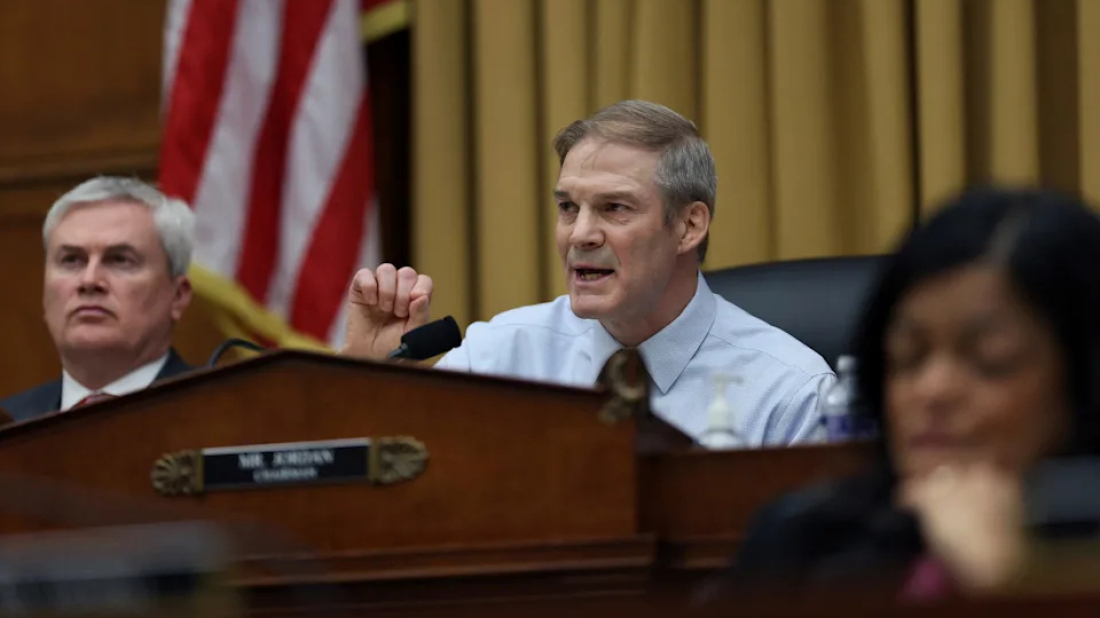
The Republican-led House Judiciary Committee, led by Representative Jim Jordan, has issued subpoenas to 16 tech companies involved in artificial intelligence to probe allegations that the Biden administration pressured private firms to moderate content, curb "harmful bias,"
The subpoenas, sent to major players including Adobe, Alphabet, Amazon, Anthropic, Apple, Cohere, IBM, Inflection AI, Meta, Microsoft, Nvidia, OpenAI, Palantir, Salesforce, Scale AI, and Stability AI, request any and all communications—both internal and with third parties—relating to the moderation, deletion, suppression, or restriction of content across AI models. The requested documents cover a five-year span from January 1, 2020, to January 20, 2025.
According to the committee, the investigation aims to determine whether the previous administration’s executive order on algorithmic discrimination influenced tech companies’ practices in ways that amounted to censorship of AI content. Representative Jordan contends that these measures were part of an effort to limit speech, an allegation he has raised repeatedly, having subpoenaed Google over similar concerns just last week.
The scope of the inquiry is notably broad, extending even to companies that do not primarily operate speech platforms, such as Adobe and Nvidia. Jordan and his colleagues are seeking to connect what they describe as distant dots—alleged governmental pressures from the Biden era with subsequent moderation decisions made by private companies.
Tech companies have not yet commented on the subpoenas. As the committee digs into five years’ worth of emails, memos, and other communications, it remains to be seen how far the alleged pressure reached and what impact it may have had on the deployment and management of AI systems.
Chinese scientists have unveiled a new gene-editing therapy that they say could lead to a functional cure for HIV, making it one of the most promising developments in decades of global research.
For nearly three decades following the dissolution of the Soviet Union, the international system was defined by a singular, overwhelming reality: American unipolarity.
As the year comes to an end, a new initiative bringing civil society actors and regional analysts from Armenia and Azerbaijan together is steadily gaining ground.
Uzbekistan has reopened its border with Afghanistan for the first time since 2021, the country’s Chamber of Commerce and Industry announced on Tuesday.
Faced with mounting public outrage following one of the deadliest environmental disasters in the nation’s recent history, the Indonesian government has pledged to investigate and potentially shut down mining operations found to have contributed to the catastrophic flooding on Sumatra.
A former Apple engineer has unveiled a new Chinese chip designed to compete directly with Apple’s Vision Pro headset.
Chinese AI startup DeepSeek has introduced its newest model, DeepSeek-V3.2-Speciale, claiming it can perform some tasks as well as the latest models from Google DeepMind and OpenAI.
A new robotic system developed for the Czech Police is reshaping how complex investigations are carried out, bringing laboratory-level precision directly to crime scenes.
Chinese scientists say they are moving closer to building one of the world’s most powerful neutrino telescopes, an underwater array known as the Tropical Deep sea Neutrino Telescope, or TRIDENT, that will sit around 3,500 metres below the surface.
Russia’s state communications watchdog said it is tightening restrictions on WhatsApp, claiming the US-owned platform violates Russian law and is being used to facilitate criminal activity, according to comments carried by the Tass news agency.
You can download the AnewZ application from Play Store and the App Store.
What is your opinion on this topic?
Leave the first comment