Drone attack sparks fire at power station in northern Sudan
A drone strike hit a power station in northern Sudan early Sunday (1 November), sparking a fire and triggering loud explosions, witnesses said....
OpenAI’s GPT-5 model is nearing release, with early testers praising its coding and problem-solving skills, though experts say the leap from GPT-4 may be smaller than previous upgrades.
Two early testers said the model performs well in coding and technical problem-solving but shows more modest gains over GPT-4. They spoke under non-disclosure agreements.
OpenAI has not confirmed a release date, but industry watchers expect the launch soon.
GPT-5 follows GPT-4’s 2023 debut, which set new benchmarks in reasoning and exam performance. By contrast, GPT-5’s training faced data shortages and risks of hardware failures, both common in large-scale AI development.
To improve output, OpenAI is using “test-time compute”, a method of boosting processing power during execution. OpenAI CEO Sam Altman has said future models will combine this with traditional training.
Boris Power, OpenAI’s head of Applied Research, wrote on X, “Excited to see how the public receives GPT-5.”
Navin Chaddha, managing partner at venture capital firm Mayfield said, “The hope is that GPT-5 will unlock AI applications that move beyond chat into fully autonomous task execution.”
The launch comes amid rising competition. Google, Anthropic and Meta have all released models rivaling GPT-4’s performance.
Three years after ChatGPT’s debut, OpenAI is under pressure to deliver its next leap forward.
The U.S. has approved the sale of 500 Patriot PAC-3 missiles to Ukraine in a deal worth an estimated $2.1 billion, but Kyiv could face years of delays before receiving the weapons it urgently needs to defend against intensifying Russian attacks.
Iranian Supreme Leader Ayatollah Khamenei has ordered Iran's armed forces to respond to any threat immediately and without geographical limits in statements posted to social media platforms on Saturday (31 October).
Demonstrators carrying Iranian flags and placards supporting the hijab gathered outside the Azerbaijani Embassy in London.
A Chinese-made AI chip has matched Nvidia’s H200 in tests conducted by its developer, marking a potential breakthrough in China’s efforts to reduce its dependence on foreign technology.
A hacking group linked to North Korea is widely believed to be behind the theft of $6.3 billion from cryptocurrency giant Binance, a cyberattack that experts describe as the largest cryptocurrency heist on record.
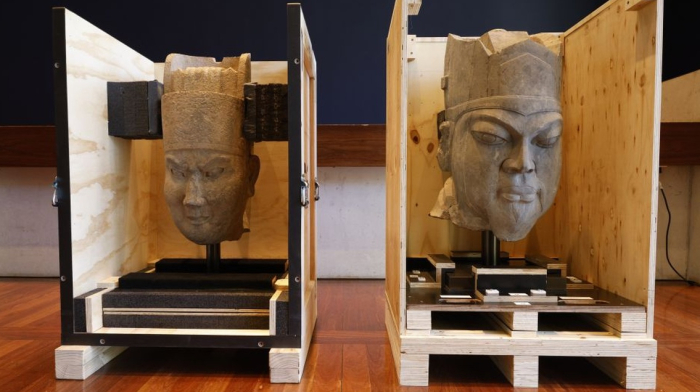
Australia has returned two ancient stone statue heads to China, more than 30 years after they were taken from imperial tombs in central China.
Uzbekistan is launching a new fashion academy in Tashkent to help local clothing manufacturers build their own brands, sharpen design skills and compete in international markets.
Baku is set to host the second “Fly to Baku” Art Weekend from 30 October to 1 November, bringing together Azerbaijani and international artists to explore the Caucasus’ wildlife and cultural heritage, and the need to protect nature.
A rare 67-million-year-old dinosaur skeleton known as “Jodi” has sold for $47.3 million at Sotheby’s in New York, smashing its pre-sale estimate and becoming the second-most expensive dinosaur fossil ever sold at auction.
Iran is looking to turn its centuries-old tea culture into an opportunity for trade, industrial development and tourism as it held the Second Tea Festival in the northern province of Gilan bordering the Caspian Sea.
You can download the AnewZ application from Play Store and the App Store.
What is your opinion on this topic?
Leave the first comment