Day three of the U.S.-Iran conflict: Further strikes and oil price surge
The U.S.-Iran crisis has entered its third day, with further strikes reported across the Middle East and the death toll rising. Oil prices have sur...
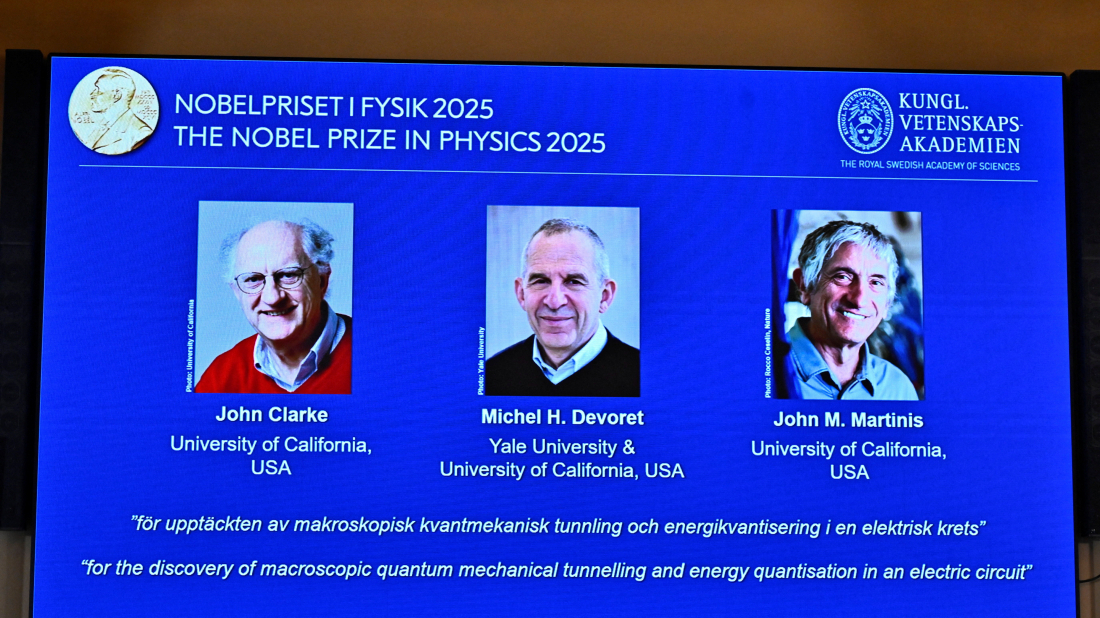
The 2025 Nobel Prize in Physics has been awarded to John Clarke, Michel H. Devoret, and John M. Martinis for their groundbreaking discovery of macroscopic quantum mechanical tunnelling and energy quantisation in electric circuits.
The Royal Swedish Academy of Sciences announced on Tuesday in Stockholm that their pioneering research has laid the foundation for modern quantum computing and superconducting circuit technologies, opening new frontiers in both applied science and fundamental physics.
The laureates — affiliated with the University of California and Yale University — will share the 11 million Swedish kronor prize (approximately $1.2 million), which will be formally presented at a ceremony on 10 December.
According to the Nobel Committee, the trio’s work represents a major step forward in harnessing quantum phenomena at macroscopic scales, enabling the creation of highly sensitive electronic systems and accelerating the development of quantum technologies that could revolutionise computation and communication.
First awarded in 1901, the Nobel Prize in Physics celebrates scientific achievements that deepen humanity’s understanding of the physical universe.
This year’s laureates continue that tradition — demonstrating how the once-theoretical world of quantum mechanics is now shaping the technologies of the future.
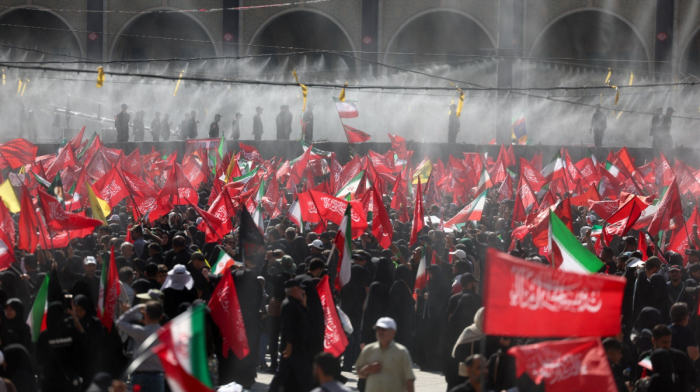
Follow the latest developments and global reaction after the U.S. and Israel launched “major combat operations” in Iran, prompting retaliation from Tehran.
Saudi Arabia’s state oil giant Saudi Aramco closed its Ras Tanura refinery on Monday following an Iranian drone strike, an industry source told Reuters as Tehran retaliated across the Gulf after a U.S.-Israeli attack on Iranian targets over the weekend.
The Kremlin is utilising the recent United States and Israeli military strikes on Iran to validate its ongoing war in Ukraine. Russian officials are pointing to the escalation in the Middle East as evidence that Western nations do not adhere to international rules.
The Middle East crisis intensifies after the deadly attack on Iran's Supreme Leader Ali Khamenei's compound on Saturday that killed him, other family members and senior figures. Iran has launched retaliatory strikes on U.S. targets in the region.
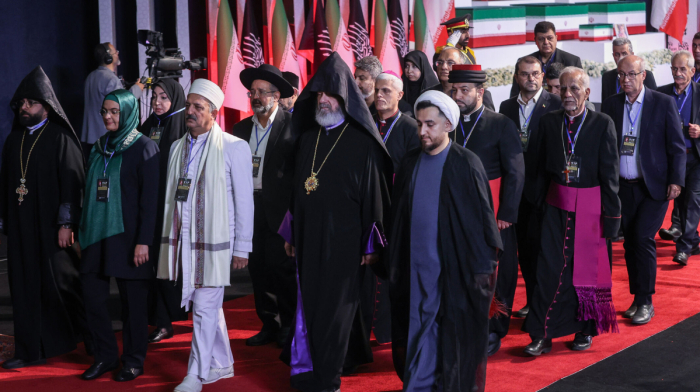
Ayatollah Alireza Arafi has moved into a pivotal constitutional role following the death of Supreme Leader Ayatollah Ali Khamenei, becoming the clerical member of Iran’s temporary leadership council under Article 111 of the Constitution of the Islamic Republic of Iran.
South Korea will soon cease to be one of the few countries where Google Maps does not function fully, after its security-conscious government reversed a two-decade-old policy and approved the export of high-precision map data to overseas servers.
New research suggests 40,000-year-old carved objects from south-western Germany bear repeated marks arranged in organised sign sequences similar to early proto-cuneiform, although they are not regarded as a form of writing.
The chief executive of Google DeepMind, Demis Hassabis, has called for more urgent research into the risks posed by artificial intelligence, warning that stronger safeguards are needed as systems become more advanced.
NASA successfully completed a critical fueling rehearsal on Thursday (19 February) for its giant moon rocket, Artemis II, after earlier hydrogen leaks disrupted preparations for the next crewed lunar mission. The launch is scheduled for 6 March, according to the latest information from NASA.
ByteDance will take steps to prevent the unauthorised use of intellectual property on its artificial intelligence (AI) video generator Seedance 2.0, the Chinese technology firm said on Monday.
You can download the AnewZ application from Play Store and the App Store.
What is your opinion on this topic?
Leave the first comment