Three killed in San Diego Islamic Centre shooting as police confirm suspects dead
Three people have been killed in a shooting at the Islamic Centre of San Diego, including a security guard while the two suspects were later found ...
Cupertino, CA, February 19, 2025 – Apple has announced the iPhone 16e, its new entry-level model that replaces the iPhone SE, priced at $599. The device adopts the modern full-screen design of the iPhone 14, marking the first time an entry-level iPhone includes Face ID and a 6.1-inch display.
The iPhone 16e is powered by the A18 chip, which now enables Apple Intelligence - a suite of generative AI features that includes writing tools, Genmoji, Image Playground, Visual Intelligence, ChatGPT integration, and updated notification summaries. Apple Intelligence is activated by default during the device’s initial setup, though users can disable the feature in Settings.
Key hardware updates include a USB-C port replacing the traditional Lightning connector and a single 48MP "2-in-1" rear camera with integrated 2x zoom capabilities. The device also introduces the Action Button, a customizable physical shortcut that debuted on the iPhone 15 Pro. However, the iPhone 16e does not support MagSafe charging and only offers Qi wireless charging up to 7.5W - a notable drawback compared to more expensive models.

Internally, the A18 chip in the iPhone 16e is the same processor found in the higher-end iPhone 16 and 16 Plus models, though it is configured with four GPU cores, compared to five or six in other models within the series. In a further differentiation, the iPhone 16e is the first to feature an in-house modem, known as C1, replacing Qualcomm’s modems. This change means the device lacks ultra-wideband 5G and Wi-Fi 7 support, though it remains compatible with sub-6GHz 5G and Wi-Fi 6 networks.
Available in storage configurations of 128GB, 256GB, and 512GB and offered in black and white finishes, the iPhone 16e positions itself as a competitive option against similarly priced devices such as Google’s $499 Pixel 8a and Samsung’s $400 Galaxy A35. Pre-orders begin on February 21 at 8AM ET, with shipping scheduled to start on February 28.
By integrating advanced AI capabilities into an affordable model, Apple aims to attract users interested in next-generation features while expanding its market reach in the entry-level segment.
Bulgaria has won the Eurovision Song Contest for the first time, taking victory in a final overshadowed by a boycott over Israel’s participation and the war in Gaza.
The World Urban Forum (WUF13) continues in Baku, Azerbaijan on 18 May, addressing the global housing crisis. The day’s agenda includes the official opening press conference, the WUF13 Urban Expo opening and a ministerial dialogue on the Nairobi Declaration to advance Africa's urban agenda.
U.S. President Donald Trump said on Monday he had paused a planned attack on Iran after appeals from the leaders of Qatar, Saudi Arabia and the United Arab Emirates, allowing negotiations to continue over a possible deal to end the conflict.
A 5.2 magnitude earthquake struck China’s Guangxi region early on Monday, killing two people and forcing more than 7,000 residents in Liuzhou to evacuate as rescue efforts continued.
The World Health Organization (WHO) has declared an Ebola outbreak in the Democratic Republic of Congo (DRC) and Uganda a Public Health Emergency of International Concern (PHEIC), warning that the situation poses a significant risk of cross-border spread in Central Africa.
China has launched the world’s first experiment to study how artificial human embryos develop in space, marking a major step in understanding whether humans could one day reproduce beyond Earth.
Japanese filmmaker Koji Fukada has said that the use of artificial intelligence (AI) to “jump straight to the result” risks undermining the purpose of art, which he believes should be rooted in self-expression and a deeper understanding of the world.
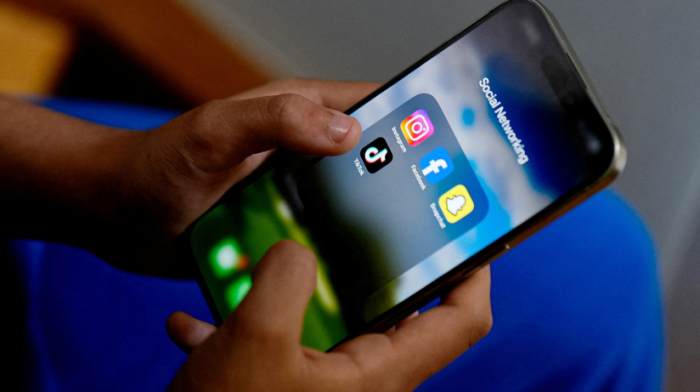
The Spanish government has issued a defiant message to Silicon Valley, confirming it will push ahead with stringent new legislation designed to make social networks and Artificial Intelligence (AI) demonstrably safer.
A robotics startup says it has built an AI “brain” that can teach humanoid robots new physical skills in days rather than months, as the race to deploy human-shaped machines in factories and warehouses accelerates.
Apple and Meta have publicly opposed a Canadian bill they say could force technology companies to weaken encryption on devices and online services if it becomes law.
You can download the AnewZ application from Play Store and the App Store.
What is your opinion on this topic?
Leave the first comment