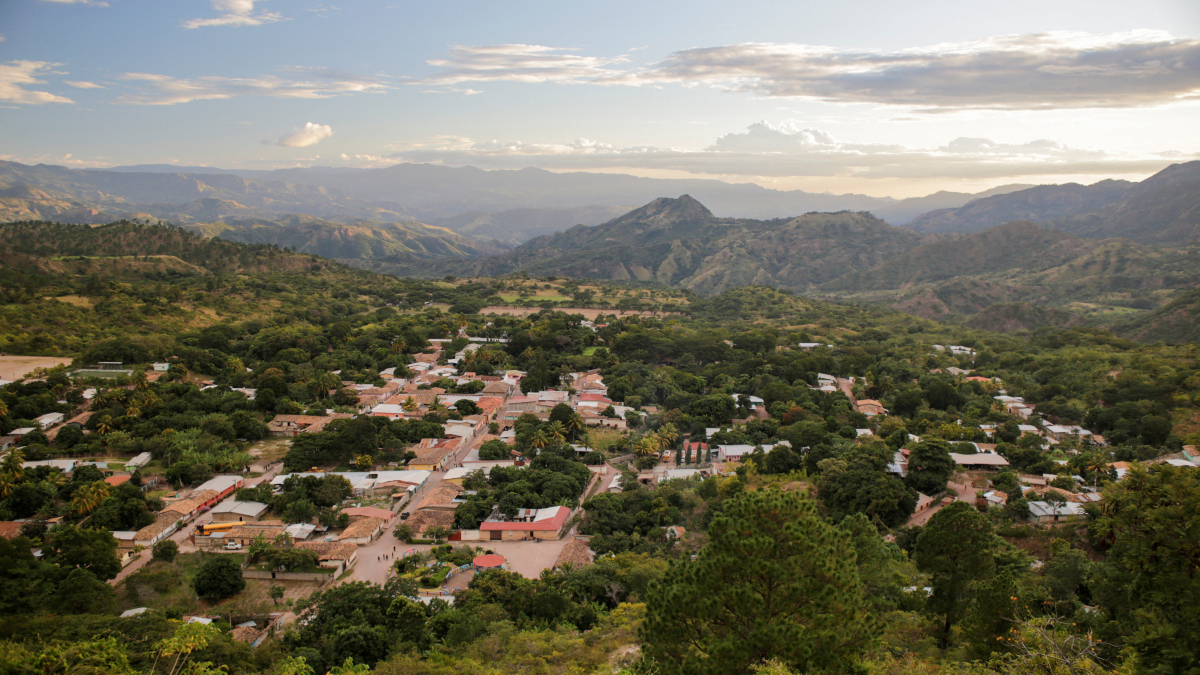
A delayed local vote in the rural Honduran town of San Antonio de Flores has become a pivotal moment in the country’s tightest presidential contest, with both campaigns watching its results as counting stretches into a second week.
In this isolated farming community, where residents in cowboy hats walked to polling stations under the watch of heavily armed troops at dawn, Sunday’s vote marked a rare second attempt. The first effort collapsed on 30 November when local officials shut down the polls amid accusations of sabotage and missing credentials. That halt transformed a remote town of 4,996 registered voters into the unexpected centre of Honduran politics.
The uncertainty began as nationwide results showed centre-right Liberal Party candidate Salvador Nasralla trailing Nasry Asfura of the conservative National Party by fewer than 20,000 votes with about 88% of ballots tallied. The narrow gap brought Nasralla to San Antonio de Flores by helicopter on Saturday in a last-minute push. “Every vote, no matter how insignificant they seem, matters,” he said as supporters gathered in the town square.
The delayed vote has also become part of a broader geopolitical test. U.S. President Donald Trump has openly backed Asfura and warned earlier in the week that “there will be hell to pay” if Honduras altered preliminary results showing the National Party candidate narrowly ahead. His comments rippled through San Antonio de Flores. Some voters welcomed Trump’s stance, seeing the U.S. as an essential ally. Farmer Ramon Avila said he planned to vote for Asfura because “the U.S. is the most powerful nation in the world.” Others recoiled at what they viewed as pressure from Washington. School principal Kathy Osorio said the U.S. president’s intervention felt like bullying and pushed her away from Trump’s preferred contender. “We should be able to elect who we want without fear,” she said.
The tensions in the town reflect deeper fractures. For two years, San Antonio de Flores had no mayor after a dispute over the 2021 local election turned into a prolonged legal fight, resolved only when the Supreme Court ruled in favour of the Liberal Party. When last month’s credentials failed to arrive for Liberal poll watchers, the party said the process was compromised. Mayor Pedro Caceres argued that the vote could not continue under those conditions and blamed the National Party. His opponent, former mayor Alex Garcia, denied wrongdoing and said the poll should have proceeded. “They committed crime after crime until it got too late in the day,” he said.
Despite the disorder, residents returned in large numbers on Sunday. Some travelled twice within a week. Benicio Ramos spent eight hours on a bus from his farm for the second time after finding the polls closed on 30 November. “It’s a sacrifice, but I’m happy to be here voting,” he said.
Ballot processing delays and unsubstantiated fraud claims have shaped the broader national picture, turning this rural enclave into a measure of whether the country can restore confidence in its democratic institutions. Observers say the town has now become a litmus test for Trump’s influence across Latin America, where Washington’s push for conservative alliances is increasingly visible. “Honduras is a test case,” said analyst Laura Carlsen, who is in the country as an election observer.
As the final count resumes, the outcome from San Antonio de Flores is expected to carry outsized weight. What began as a procedural breakdown in a remote municipality has become a decisive chapter in a presidential contest watched far beyond Honduras’ borders, with both candidates and international actors waiting to see which way the town swings.














What is your opinion on this topic?
Leave the first comment