Oil prices hit four year high: Latest news on the Middle East conflict on 9 March
Global oil prices reached a four year high on Monday (9 March), surpassing $...
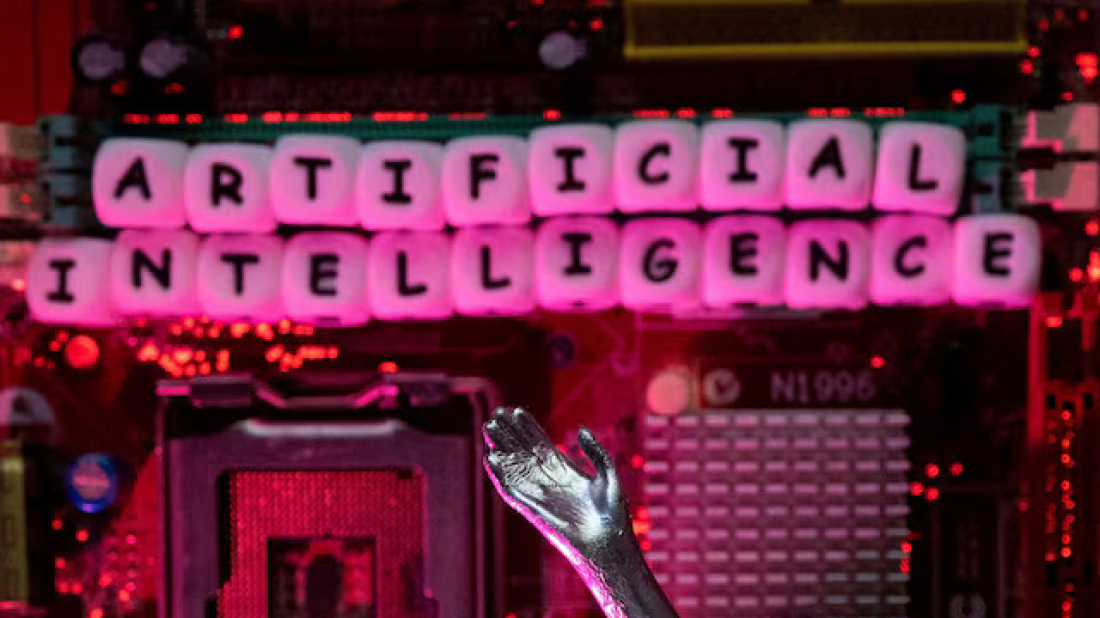
Feb 18, 2025 – In a significant move in the competitive AI landscape, former OpenAI chief technology officer Mira Murati has launched Thinking Machines Lab, an AI startup assembling a team of about 30 leading researchers and engineers.
Roughly two-thirds of the team consists of former OpenAI employees, including prominent researcher Barret Zoph, who left the ChatGPT maker on the same day as Murati last September and will serve as the startup’s technology chief.
Thinking Machines Lab aims to develop artificial intelligence systems that encode human values and support a broader range of applications than those offered by current models. The startup emphasizes a collaborative approach between its research and product teams and has committed to advancing AI alignment by sharing code, datasets, and model specifications.
Among the new venture’s key hires is John Schulman, an OpenAI co-founder who recently departed for rival Anthropic to focus on AI alignment. More OpenAI employees are expected to join, according to sources familiar with the matter, as Murati’s startup continues to attract talent from across the industry.
Murati, who played a central role in the development of ChatGPT since joining OpenAI in June 2018, now leads Thinking Machines Lab as CEO. Her departure was part of a series of high-profile exits during OpenAI’s recent governance changes. Prior to her tenure at OpenAI, Murati held positions at augmented reality startup Leap Motion and Tesla.
The launch of Thinking Machines Lab highlights the intensifying competition in the generative AI sector, with several former OpenAI executives launching startups amid growing interest in AI safety and alignment. The company is currently in discussions with venture capital investors and is positioning itself as a key player capable of tackling a broader spectrum of human expertise through innovative AI applications.

Mojtaba Khamenei, son of the late Ayatollah Ali Khamenei, is a hardline cleric with strong backing from the Islamic Revolutionary Guard Corps. His rise signals continuity in Tehran's anti-Western policies.
Global oil prices surpassed $119 a barrel on Monday (9 March, 2026), an almost four year high, as the Middle East conflict rumbled on.
Trump says the United States "don’t need people that join wars after we’ve already won," targeting his criticism at UK Prime Minister Keir Starmer. Israel continues to fire missles at strategic sites in Iran and Gulf regions report more strikes from Iran.
China has urged Afghanistan and Pakistan to resolve their dispute through dialogue after Chinese envoy Yue Xiaoyong met Afghan Foreign Minister Amir Khan Muttaqi, as fighting between the two neighbours entered its eleventh day.
Iran named Mojtaba Khamenei to succeed his father Ali Khamenei as supreme leader on Monday (9 March), signaling that hardliners remain firmly in charge, as the week-old U.S.-Israeli war with Iran pushed oil above $100 a barrel.
Chinese electric vehicle giant BYD is pushing to make charging an electric car almost as quick and convenient as filling up a traditional petrol vehicle - a move that could help remove one of the biggest barriers to wider electric vehicle adoption.
South Korea will soon cease to be one of the few countries where Google Maps does not function fully, after its security-conscious government reversed a two-decade-old policy and approved the export of high-precision map data to overseas servers.
New research suggests 40,000-year-old carved objects from south-western Germany bear repeated marks arranged in organised sign sequences similar to early proto-cuneiform, although they are not regarded as a form of writing.
The chief executive of Google DeepMind, Demis Hassabis, has called for more urgent research into the risks posed by artificial intelligence, warning that stronger safeguards are needed as systems become more advanced.
NASA successfully completed a critical fueling rehearsal on Thursday (19 February) for its giant moon rocket, Artemis II, after earlier hydrogen leaks disrupted preparations for the next crewed lunar mission. The launch is scheduled for 6 March, according to the latest information from NASA.
You can download the AnewZ application from Play Store and the App Store.
What is your opinion on this topic?
Leave the first comment