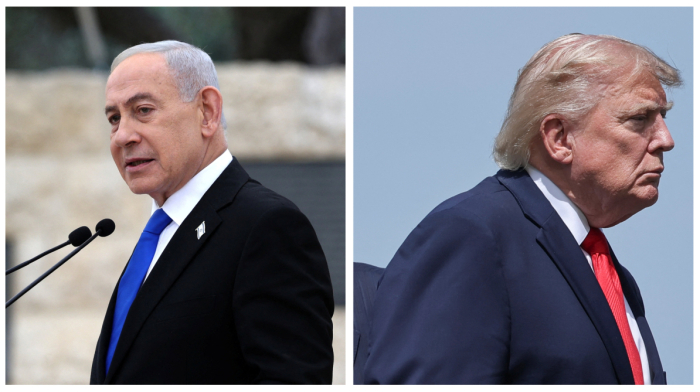
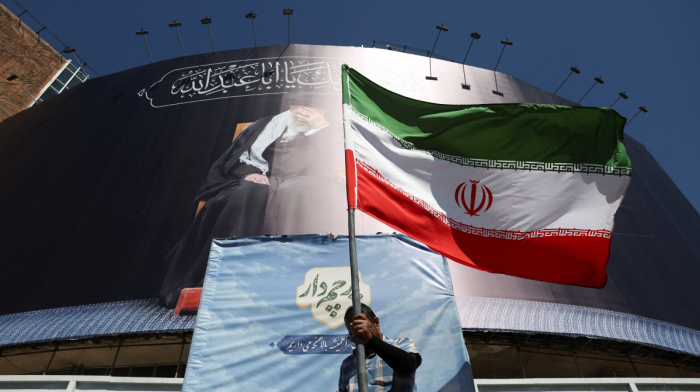
'Another major strategic mistake': Iran slams EU blacklisting of Revolutionary Guards
Iran’s Foreign Minister Abbas Araghchi denounced the European Union's designation of the Islamic Revolution Guards Corps (IRGC) as a terrorist organ...
Meta has snapped up three star researchers from OpenAI's Zurich lab, escalating the fierce battle for top Artificial Intelligence talent as tech giants race to dominate the next era of artificial intelligence.
Meta has recruited three leading artificial intelligence researchers from OpenAI, according to a report by The Wall Street Journal cited by Reuters. The trio—Lucas Beyer, Alexander Kolesnikov, and Xiaohua Zhai—were previously part of OpenAI's Zurich team and had earlier worked together at Google’s DeepMind unit.
This move underscores Meta’s renewed push to strengthen its AI division, as the company continues to invest in advanced research and development.
The hires are believed to be part of CEO Mark Zuckerberg’s broader strategy to build a high-powered team focused on developing artificial general intelligence (AGI).
Meta has reportedly offered significant financial incentives to attract top talent in the AI sector, with some offers reaching up to $100 million in compensation packages.
The company is also working on enhancing its Llama series of AI models and expanding partnerships, including a recent $14 billion investment in Scale AI.
While OpenAI CEO Sam Altman has acknowledged that Meta has tried to poach some of their researchers, he noted that many of OpenAI’s key personnel have chosen to remain with the company.
The ongoing competition for AI talent highlights the growing importance of human capital in driving innovation, particularly as firms seek to lead developments in generative and general AI systems.
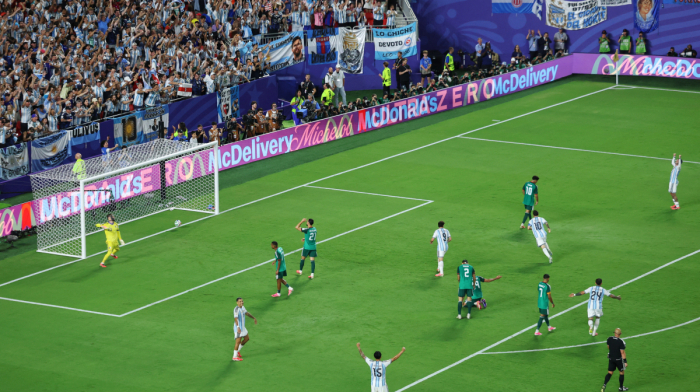
Liverpool confirmed direct qualification to the UEFA Champions League round of 16 with a 6-0 win over Qarabağ at Anfield in their final league-phase match. Despite the setback, Qarabağ secured a play-off spot, with results elsewhere going in the Azerbaijani champions’ favour on the final matchday.
China is supplying key industrial equipment that has enabled Russia to speed up production of its newest nuclear-capable hypersonic missile, an investigation by The Telegraph has found, heightening concerns in Europe over Moscow’s ability to threaten the West despite international sanctions.
Storm Kristin has killed at least five people and left more than 850,000 residents of central and northern Portugal without electricity on Wednesday (28 January), as it toppled trees, damaged homes, and disrupted road and rail traffic before moving inland to Spain.
“This is a strategic wake-up call for all of Europe” French President Emmanuel Macron warned on Wednesday, 28 January, as he hosted Danish Prime Minister Mette Frederiksen and Greenland’s premier, Jens-Frederik Nielsen, in Paris to reaffirm France’s support for Greenland’s sovereignty.
Russian President Vladimir Putin said he was ready to assist in rebuilding Syria’s war-damaged economy as the country's interim President Ahmad al-Sharaa made his second visit to Moscow in less than four months on Wednesday (28 January).
China has approved the first batch of Nvidia's H200 artificial intelligence (AI) chips after Washington allowed limited sales, paving the way for major Chinese technology companies to gain access to processors that remain far ahead of domestic alternatives.
TikTok has reached a confidential settlement in a landmark lawsuit over youth mental health, leaving Meta and YouTube to face a jury in California as the first major trial of its kind gets underway.
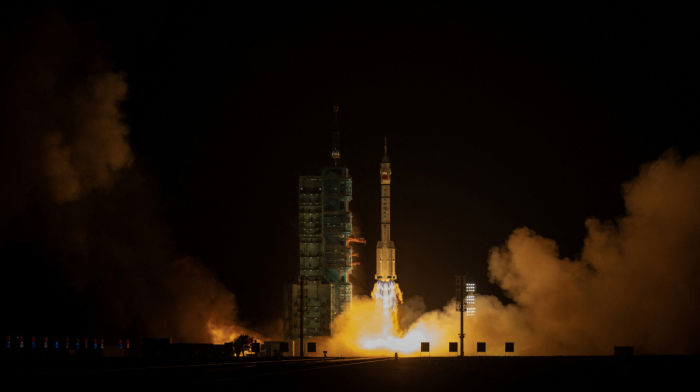
China has successfully completed its first metal 3D printing experiment in space, marking a significant step forward in the country’s efforts to develop in-orbit manufacturing capabilities.
A faint hand outline found in an Indonesian cave has been dated to at least 67,800 years ago, making it the oldest known example of rock art and offering new insight into early human migration across Southeast Asia.
New modelling suggests Mars shapes some of Earth’s long-term orbital rhythms, including shorter eccentricity cycles and a 2.4-million-year pattern that vanishes without its gravitational pull.
You can download the AnewZ application from Play Store and the App Store.
What is your opinion on this topic?
Leave the first comment