Trump discusses acquiring Greenland, military option ‘Always Open’, White House says
U.S. President Donald Trump and his team are actively exploring options to acquire Greenland, with discussions including the potential use of the U.S....
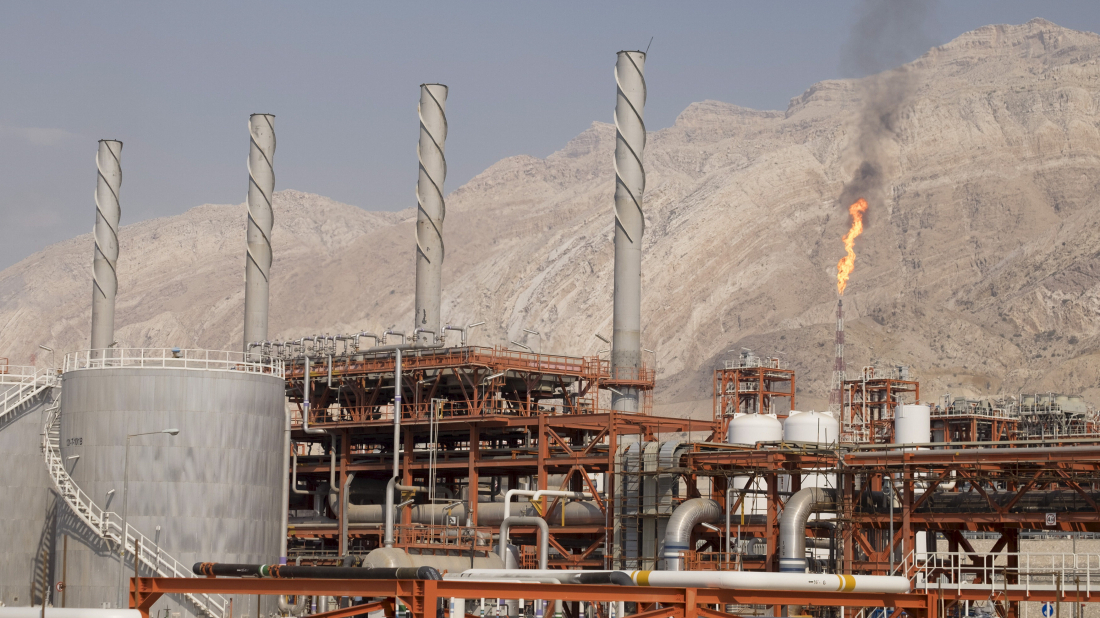
A key unit at Iran’s South Pars gas field, damaged during Israel’s first strike on the country’s energy infrastructure, has resumed operations just 10 days after the attack.
A damaged section of the South Pars refinery’s Phase 14 has returned to service, Iranian state-run agency Nour News reported on Thursday. The facility had been struck during Israel’s 13 June air offensive, which marked the first direct attack on Iran’s vital oil and gas infrastructure.
Located offshore in the southern province of Bushehr, South Pars is the largest gas field in the world and provides the bulk of Iran’s natural gas supply. Despite the strike, overall gas production was not disrupted, and the damaged unit was repaired in approximately 10 days, according to the report.
The Israeli strike ignited a fire in one of the four units of Phase 14 on 14 June, which was later brought under control. The extent of the damage was not disclosed, but the quick repair suggests the facility’s core systems remained largely intact.
Iran ranks as the third-largest gas producer globally, behind only the United States and Russia. The temporary damage at South Pars did not affect exports or domestic distribution, Iranian officials said.
The attack was part of a broader Israeli campaign launched on 13 June that targeted military commanders, nuclear scientists, and critical infrastructure, claiming to prevent Iran from developing a nuclear weapon.
The 12-day aerial conflict ended with a ceasefire announced by U.S. President Donald Trump on Monday (23 June). The truce followed days of escalating strikes between Israel and Iran, raising concerns of a broader regional escalation.
South Pars’ swift recovery signals both the field’s strategic importance and Iran’s determination to keep its energy infrastructure operational amid conflict.

Germany’s foreign intelligence service secretly monitored the telephone communications of former U.S. President Barack Obama for several years, including calls made aboard Air Force One, according to an investigation by the German newspaper Die Zeit.
Israeli media report that Israeli Prime Minister Benjamin Netanyahu chaired a lengthy security meeting that reportedly focused on the country’s regional threats, including Gaza, Lebanon, and Iran.
U.S. President Donald Trump said on Sunday (4 January) that the United States could carry out further military action in Venezuela following the capture of President Nicolás Maduro. Speaking to reporters aboard Air Force One, he said Washington now effectively controls the country.
At the end of last year, U.S. President Donald Trump was reported to have raised the Azerbaijan–Armenia peace agenda during a conversation with Israel’s prime minister, warning that if peace were not achieved, Washington could raise tariffs on both countries by 100 percent.
President Ilham Aliyev said 2025 has politically closed the Armenia-Azerbaijan conflict, as a Trump-era reset in U.S. ties, new transport corridors and a push into AI, renewables and defence production reshape Azerbaijan’s priorities.
International law remains codified through treaties, charters, and resolutions, but enforcement depends largely on political will. When major powers choose not to comply, there is no global authority capable of compelling implementation.
President Ilham Aliyev has said Azerbaijan is not considering participation in any combat or peace enforcement mission in the Gaza Strip, stressing that any discussion of involvement depends on a clearly defined international mandate, the nature of the mission, and the consent of all parties.
Iran has denounced the U.S. detention of Venezuelan President Nicolás Maduro, describing the operation as an ‘abduction’ and calling for his immediate release.
The speaker of Georgia’s parliament, Shalva Papuashvili, has questioned the European Union’s ability to act as a global geopolitical power, saying it no longer functions as a guarantor of international order.
In late December 2025, protests erupted across Iran after the rial collapsed and inflation soared. Unrest spread from Tehran’s Grand Bazaar as citizens expressed frustration over rising prices, economic hardship, and long‑standing grievances with government policies.
You can download the AnewZ application from Play Store and the App Store.
What is your opinion on this topic?
Leave the first comment