Israel killed Hezbollah’s top military official in a strike on a southern Beirut suburb, the Israeli military said, shattering a fragile truce that has struggled to hold for a year.
The Israeli military said its aircraft targeted Ali Tabtabai, described as Hezbollah’s acting chief of staff, in the first strike on the outskirts of Beirut in months. A statement said he commanded most of the group’s units and had been working to restore them to readiness for conflict with Israel. There was still no formal confirmation from Hezbollah, although senior figure Mahmoud Qmati acknowledged that a central operative had been hit. Standing near the collapsed building in Haret Hreik, he said the strike crossed a red line and added that Hezbollah’s leadership would determine next steps.
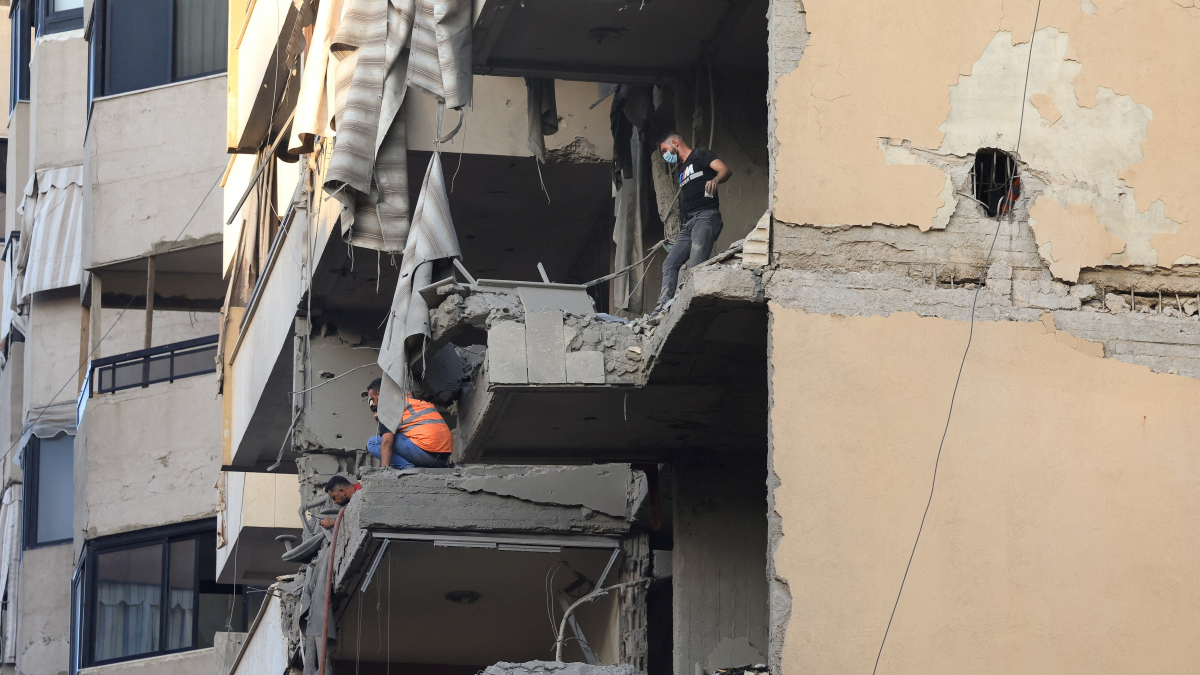
Lebanon’s health ministry reported five dead and 28 wounded. The blast tore into a multi storey building, sending concrete and metal down onto cars on the main road below. Residents rushed out into the street, shaken by the force of the explosion and unsure if more strikes were coming.
The United States sanctioned Tabtabai in 2016 and offered up to 5 million dollars for information on him. The attack came days before Pope Leo is due to make his first foreign trip to Lebanon, a visit many in the country hoped would signal a shift towards calmer times.
The strike piled new strain onto a ceasefire agreed in November 2024 to end a year of fighting set off when Hezbollah fired rockets at Israeli posts after the October 7, 2023 attack carried out by Hamas. Israel has continued near daily strikes across Lebanon since the truce, saying it is targeting arms depots, fighters and attempts by Hezbollah to rebuild. Officials in Jerusalem have insisted they will block any move by the group to recover strength.
Lebanese President Joseph Aoun urged international partners to act to stop further Israeli attacks, saying the situation risked slipping into another cycle of escalation. Beirut maintains that Israeli strikes and the continued occupation of several southern posts violate the truce, while Israel says Hezbollah is trying to regroup in the south and wants Lebanon to do more to control unauthorised weapons.
Israel says it removed much of Hezbollah’s senior leadership during the year long war, including its former leader Hassan Nasrallah. For now, Hezbollah has not fired on Israel since the ceasefire began and says it continues to observe the agreement despite repeated Israeli raids.











What is your opinion on this topic?
Leave the first comment