live U.S.-Iran standoff continues as Hormuz shipping and diplomacy remain uncertain
Shipping traffic through the Strait of Hormuz remains limited on Thursday, with no increase in vessel crossings as U.S.-Iran talks to res...
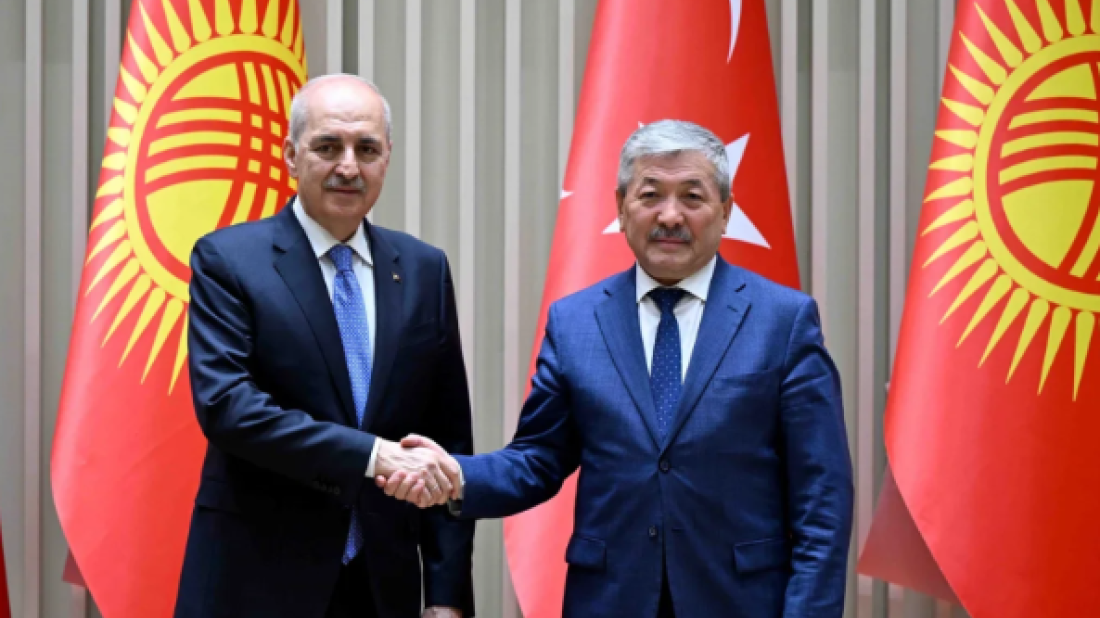
Kyrgyzstan and Türkiye have reaffirmed their commitment to deepening economic cooperation, with a shared goal of boosting bilateral trade turnover to $5 billion in the coming years.
Chairman of the Cabinet of Ministers and Head of the Presidential Administration of Kyrgyzstan, Adylbek Kasymaliev, met with the Speaker of the Grand National Assembly of Türkiye, Numan Kurtulmuş, to discuss expanding cooperation across a broad range of sectors.
During the meeting, held in Bishkek, the two sides emphasized the strengthening of trade and economic ties. Kasymaliev highlighted Kyrgyzstan's keen interest in deepening collaboration with Türkiye in agriculture, energy, light industry, mining, and processing sectors.
“We are witnessing positive momentum in our bilateral relations, with trade turnover reaching $1 billion. The goal set by our leaders—to raise this to $5 billion—is ambitious but entirely within reach,” Kasymaliev stated.
He also underscored the government's focus on creating a favorable investment climate, supporting the private sector, reducing administrative barriers, and enhancing legislation.
The meeting also addressed banking sector cooperation and the regulation of migration processes. Kasymaliev praised the work of the Kyrgyz-Turkish Intergovernmental Commission on trade and economic cooperation, which he co-chairs with Turkish Vice President Cevdet Yılmaz.
In response, Speaker Kurtulmuş reaffirmed Türkiye’s commitment to strengthening comprehensive relations with Kyrgyzstan and expressed readiness to further expand bilateral trade.

The collective-defence agreement between Türkiye, Saudi Arabia and Pakistan signals that regional powers no longer want to rely solely on external security guarantees. Whether it becomes a stabilising deterrent or another axis of rivalry remains unresolved.
Shipping through the Strait of Hormuz has slowed, according to the latest data, as uncertainty over the waterway’s reopening kept most shipowners away. Six commodity vessels crossed the strait on Tuesday, down from nine the day before and below the 10-day daily average of 11.
Shipping traffic through the Strait of Hormuz remains limited on Thursday, with no increase in vessel crossings as U.S.-Iran talks to resolve the conflict remained stalled. Nine commodity vessels transited the key waterway on Wednesday, unchanged from the previous day, according to Kpler data.
Iran has said the Strait of Hormuz will remain closed until the U.S. fulfils the terms of an interim deal, including lifting the maritime blockade and sanctions and releasing Iran’s frozen assets.
Start your day informed with AnewZ Morning Brief. Here are the top news stories for the 19th of August, covering the latest developments.
Syria says it assured Israel that Türkiye had no plans to establish a military presence at the Abu al-Duhur airbase before Israeli forces struck the site on Tuesday.
Israeli Prime Minister Benjamin Netanyahu has issued his strongest warning yet over Türkiye's growing military role in Syria, saying Israel will not accept Turkish forces expanding their presence further south.
Azerbaijan’s support for Ukraine could provide a model for neighbouring countries seeking to strengthen their sovereignty, the director of development at an organisation supporting Ukraine’s armed forces has told AnewZ.
Two days inside Uzbekistan’s newsrooms, hospitals, factories and technology hubs reveal a country eager to show how it is changing — while that transformation is still under way.
Syrian Foreign Minister Asaad al-Shaibani arrived in Islamabad on Wednesday for a two-day visit, marking the first trip by Syria’s top diplomat to Pakistan in 19 years as Damascus seeks to deepen ties with the country.
You can download the AnewZ application from Play Store and the App Store.
What is your opinion on this topic?
Leave the first comment