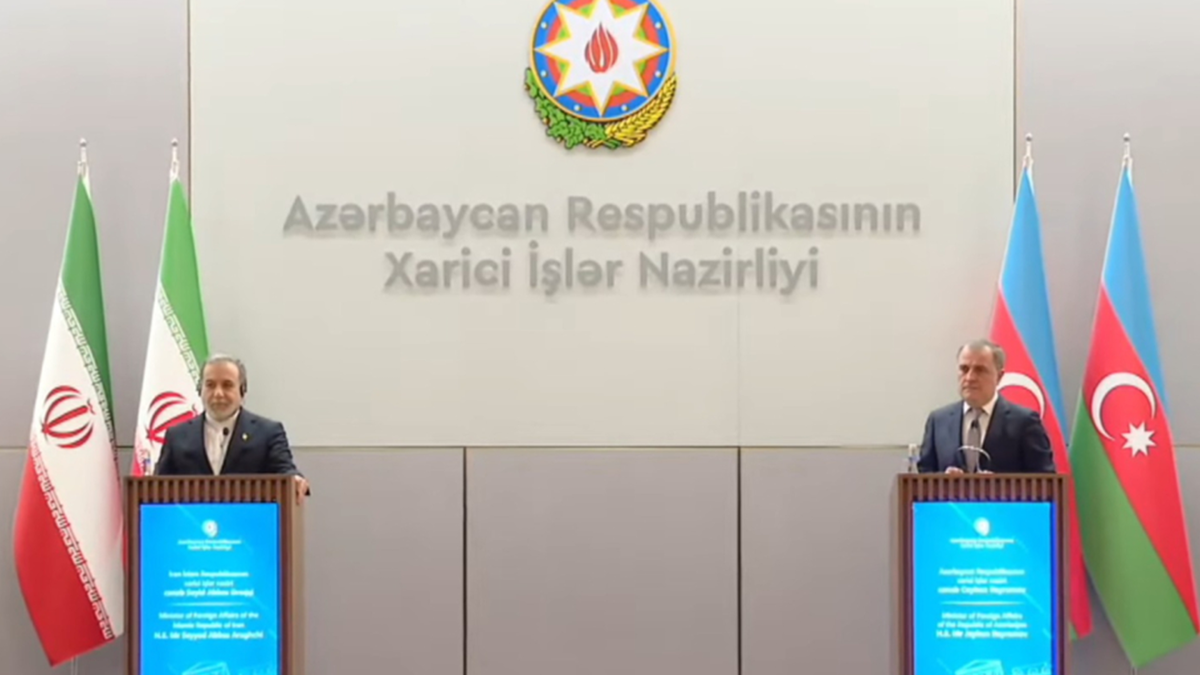
Azerbaijan's Minister of Foreign Affairs Jeyhun Bayramov held both a tête-à-tête and an extended-format meeting with Seyed Abbas Araghchi, the Foreign Minister of Iran, in Baku on Monday (8 December).
The discussions focused on deepening bilateral ties, expanding cooperation, and addressing regional issues of mutual concern according to the Azerbaijan Ministry of Foreign Affairs on X.
The two ministers underscored the enduring friendship between Azerbaijan and Iran, grounded in good neighbourly relations and mutual respect. They emphasised the importance of robust institutional frameworks that support a stable, long-term partnership. These frameworks include political consultations, the Joint State Commission, and a comprehensive legal treaty base, all of which have contributed to a solid foundation for continued collaboration.
A significant portion of the discussions focused on advancing economic and trade cooperation, particularly in the transport and logistics sectors.
The ministers explored opportunities to expand the International North-South Transport Corridor, a critical initiative aimed at improving connectivity between Iran, Azerbaijan, and other regional players.
They also discussed enhancing connectivity between the East Zangazur Economic Region of Azerbaijan and the Nakhchivan Autonomous Republic, which holds strategic importance for both nations.
The conversation also covered humanitarian cooperation, with particular attention given to the increased number of flights between Baku, Tehran, and Tabriz. Educational, cultural, and tourism collaborations were highlighted as areas of potential growth, reflecting the shared interest in fostering people-to-people connections.
Regional and international cooperation
The ministers exchanged views on a range of regional and international matters. This included collaboration within key international organisations such as the United Nations (UN), Non-Aligned Movement (NAM), and the Organisation of Islamic Cooperation (OIC).
They also discussed the ongoing Azerbaijan-Armenia normalisation process and the post-conflict reconstruction efforts in Azerbaijan’s liberated territories, recognising the importance of stability and peace in the South Caucasus region.
Future cooperation
In his opening remarks, Minister Bayramov expressed optimism for the future of Azerbaijan-Iran relations. The two ministers, having held discussions in a cordial and constructive atmosphere, reaffirmed their commitment to deepening cooperation across various sectors, ensuring a positive trajectory for bilateral ties.
Seyed Abbas Araghchi’s official visit to Baku is seen as a step forward in strengthening the strategic partnership between Azerbaijan and Iran. Both nations continue to prioritise mutual respect, regional stability, and economic growth as cornerstones of their evolving relationship.
The ongoing dialogue between Azerbaijan and Iran sets the stage for enhanced cooperation in multiple areas, ensuring both countries work together toward a more prosperous and peaceful future in the region.












What is your opinion on this topic?
Leave the first comment