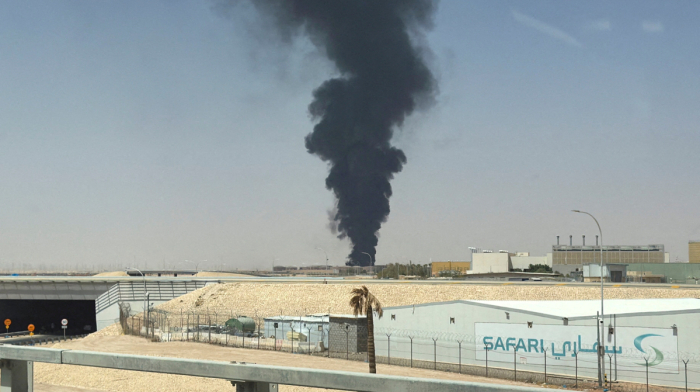
live Yemen's Houthis deny plans to impose fees on ships sailing through Red Sea
Yemen's Houthi-run maritime coordination body on Saturday denied reports that it planned to charge commercial ships transiting the Bab el-Mandeb Strai...
Electric vehicles increasingly prominent as world shifts to clean energy, sustainability, while Türkiye follows changing trends in auto industry.
The share of diesel cars on Turkish roads fell to 31.7% as of January, with the green transformation and sustainable efforts shifting automotive trends in Türkiye.
The ratio eased from 34.1% in 2024, according to data from the statistical bureau, TurkStat, and Türkiye’s Automotive Distributors Association (ODMD), compiled by Anadolu.
As of January, the number of registered cars was 16.3 million, 5.6 million of which were diesel in 2024.
In 2020, the share of diesel cars was 38.3%, which fell to 37.6% in 2021, 36.9% in 2022 and 35.6% in 2023.
ODMD data showed that diesel car sales fell 60% in the last four years.
Electric vehicles (EVs) came into prominence in recent years, as the share of diesel cars among all cars on Turkish roads gradually decreased in the last four years, as strong demand for EVs replaced diesel cars in the production lines of automotive firms.
The EU approved an initiative to ban the sales of new gasoline and diesel cars, starting in 2035, as member states approved the legislation would impose strict carbon emission standards on cars and light commercial vehicles from that point.
The German cities of Stuttgart and Hamburg banned older diesel vehicles from entering certain areas in 2019, while restrictions on those cars are also in place in the Norwegian capital of Oslo due to low-emission policies, as Norway is set to become the first country to ban combustion engine cars from the new car market.
The Turkish auto market is also shifting in parallel with global developments.

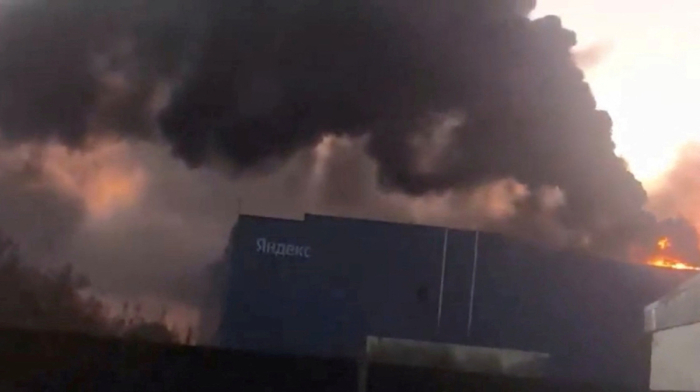
Ukraine targeted a warehouse belonging to Russia’s largest retailer, Wildberries, and an oil refinery overnight, while Moscow said its forces struck a ship carrying military cargo in the Black Sea.
The U.S. military said it completed its latest wave of strikes on Iran, a two-hour operation that hit dozens of targets. Washington described the strikes as a "powerful response" to Iranian missile attacks targeting U.S. forces in the Middle East a day earlier.
Iran’s army said it targeted U.S. military facilities in Bahrain and Kuwait with drone attacks. Tehran said the operations were carried out in retaliation for recent U.S. strikes.
Thousands of migrants have crossed into the Spanish exclave of Ceuta from Morocco, overwhelming border security and prompting local authorities to call for a national emergency and military deployment.
AnewZ travelled across northeastern Syria, where the scars of more than a decade of war remain visible but many believe the country has entered a new chapter.
Kazakhstan and Azerbaijan have begun laying a fibre-optic cable beneath the Caspian Sea, marking the start of offshore construction on a long-planned digital infrastructure project.
UNESCO has granted World Heritage status to 10 landmarks of Tashkent's modernist architecture, recognising the buildings that helped redefine Uzbekistan's capital after the devastating 1966 earthquake.
Apple Pay has launched in Kyrgyzstan and Tajikistan, expanding digital payment services across Central Asia and supporting the region's shift towards cashless transactions.
Georgia has secured two major financial commitments this week, with one aimed at easing road congestion around the capital and the other at strengthening the country's banking safety net.
A Turkish-owned cargo ship was struck by a drone in the Black Sea after leaving a Ukrainian port, in the latest incident to raise concerns over the safety of commercial shipping in the region. No information has been released on casualties or the extent of the damage.
You can download the AnewZ application from Play Store and the App Store.
What is your opinion on this topic?
Leave the first comment