Georgia has been named among a growing number of states accused of targeting critics beyond their borders, according to a new report by Freedom House. The finding raises questions about the country’s recent political trajectory and international standing.
Transnational repression refers to efforts by governments to control, intimidate or silence critics living abroad. This can include threats, surveillance, harassment, legal pressure or even physical attacks.
It is not always visible. In many cases, it operates quietly through pressure on families at home, online intimidation or the misuse of legal systems.
According to Freedom House, at least 54 governments engaged in such practices between 2014 and 2025, with 1,375 documented cases. In the past year alone, 126 new incidents were recorded.
Why has Georgia been added?
The report identifies Georgia as one of six newly flagged countries, alongside Afghanistan, Benin, Kenya, Tanzania and Zimbabwe.
Rather than focusing on a single defining incident, the report highlights patterns of behaviour. These may include actions against political opponents, activists or critics based abroad.
The threshold for inclusion is not necessarily large-scale operations, but credible evidence of attempts to extend pressure beyond national borders.
The wider context: why now?
Georgia’s inclusion comes amid a turbulent political period that has unfolded since 2024. Mass protests erupted after the government introduced controversial legislation, often referred to by critics as a “foreign agents” law, seen as threatening civil society and the country’s European path.
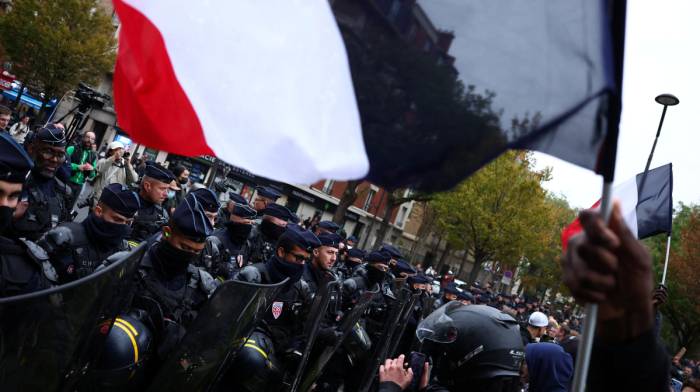
Demonstrations intensified later in 2024 when the government suspended EU accession talks, triggering large-scale unrest and violent clashes between protesters and police in Tbilisi. Security forces used tear gas, water cannons and other crowd-control measures, while hundreds of protesters were arrested.
Reports from human rights groups and media documented repeated instances of force used against demonstrators and journalists, with some describing a pattern of intimidation and suppression of dissent.
At the same time, international scrutiny increased. The European Parliament and U.S. lawmakers held debates and hearings highlighting concerns over democratic backsliding, electoral irregularities, pressure on independent media and anti-Western rhetoric from the ruling party.
By 2025, these concerns had led to concrete consequences. The European Union moved to suspend certain visa privileges for Georgian officials, citing a crackdown on protests and weakening democratic standards.
In this context, Georgia’s inclusion on the transnational repression list reflects not a single event, but a broader pattern identified by international observers - shaped by internal political tensions, contested elections and growing friction with Western partners.
What does this mean for Georgia?
Being listed does not automatically place Georgia in the same category as long-established authoritarian systems. However, it signals concern among international watchdogs and may influence how partners, including Western governments, assess the country’s democratic trajectory.
It also adds another layer to Georgia’s foreign policy challenges, particularly as it seeks closer ties with Western institutions while facing increasing scrutiny.
The bottom line
The label of “transnational repression” is not just about isolated incidents - it reflects wider concerns about how states treat dissent beyond their borders.
For Georgia, the key question is how it responds: by rejecting the findings, or by addressing the concerns behind them.












What is your opinion on this topic?
Leave the first comment