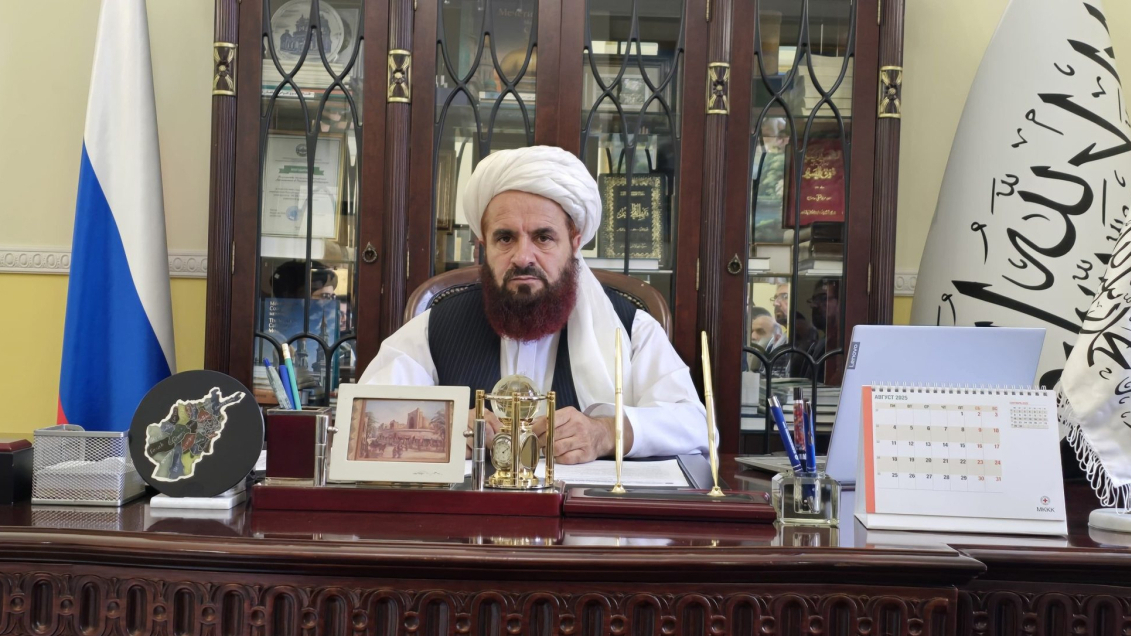
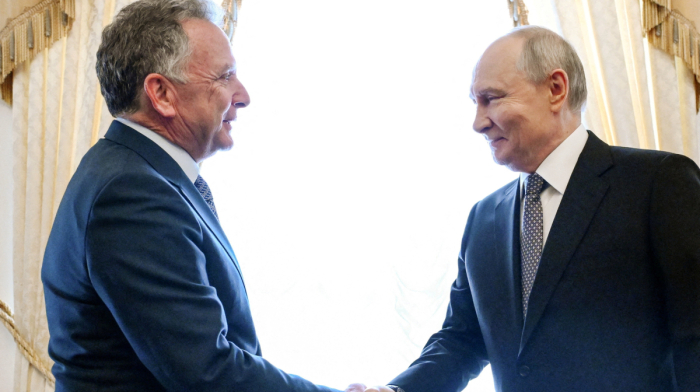
President Vladimir Putin received the credentials of Afghanistan’s ambassador to Russia, Gul Hassan Hassan, during a ceremony at the Kremlin on Thursday.
The move underlines Russia’s position as the only country so far to have officially recognised the Taliban-led government since last year, signalling a shift from years of diplomatic isolation for Kabul’s current authorities.
Speaking at the ceremony, where he accepted letters of credence from ambassadors of several countries, Putin said Moscow sees growing scope for engagement with Afghanistan.
He stressed Russia’s interest in long-term stability in the country adding that his country wants Afghanistan to emerge from decades of conflict as a stable regional partner.
“We are sincerely interested in Afghanistan being a united, independent and peaceful state — free from war, terrorism and drug trafficking,” Putin said during his address.
He also highlighted the direction of bilateral relations, saying that cooperation between the two countries has strengthened since Moscow changed its diplomatic posture towards Kabul.
Summarising Russia’s recent policy shift, Putin said, “Cooperation between Russia and Afghanistan has in recent times acquired marked momentum. This has been facilitated by Russia’s decision last year to officially recognise the country’s new authorities.”
The decision to recognise the Afghan government followed a series of legal and political steps aimed at normalising relations.
On 17 April 2025, Russia’s Supreme Court lifted the Taliban’s designation as a terrorist organisation, a status that had been in place since 2003. The ruling removed legal barriers to formal engagement and paved the way for deeper diplomatic ties.
Less than three months later, on 3 July 2025, Moscow became the first country to formally recognise the Taliban-led government, accepting its diplomatic representative in the Russian capital.
During Thursday’s ceremony, Putin also referred to Afghanistan’s observer status in the Shanghai Cooperation Organisation (SCO), reaffirming Moscow’s interest in seeing Kabul integrated into regional frameworks focused on security and economic cooperation.
For Afghanistan, the presentation of credentials marks another step towards broader international legitimacy, even as most Western and regional governments continue to withhold formal recognition, citing concerns about governance, human rights and inclusivity.










What is your opinion on this topic?
Leave the first comment