In late 2025, Iran appeared to recalibrate its approach to Armenia, shifting from a security-centred posture toward a more conventional diplomatic engagement, as regional dynamics in the South Caucasus evolved.
A visible signal of this adjustment was Tehran’s decision to replace its ambassador in Yerevan.
Mehdi Sobhani, who concluded his mission in September 2025, had frequently been described by regional analysts as closely aligned with Iran’s security establishment, including structures linked to the Islamic Revolutionary Guard Corps. Iranian officials have not publicly commented on such characterisations.
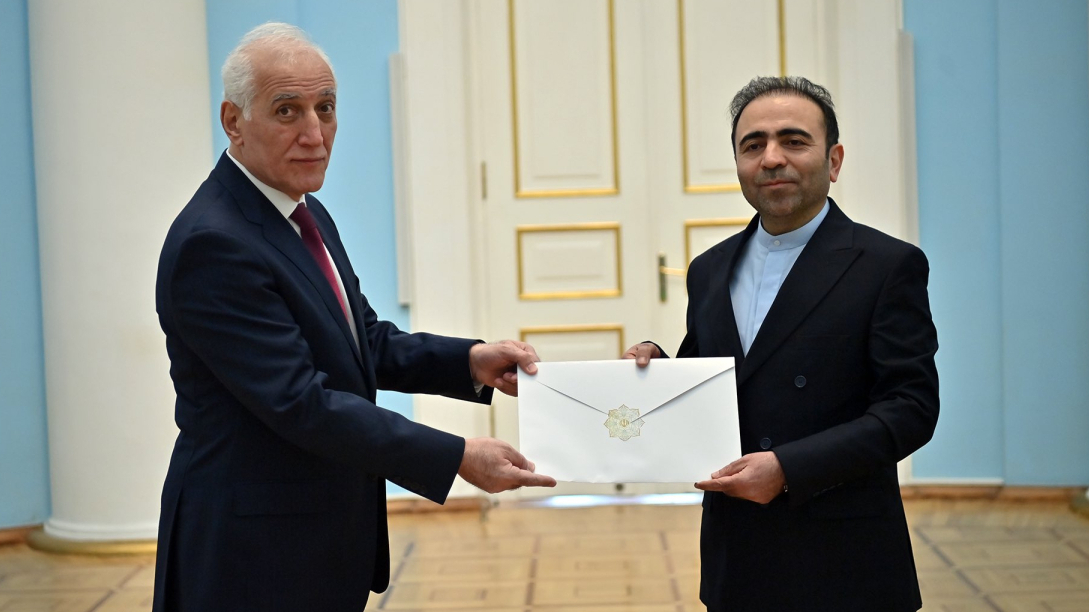
He was succeeded by Khalil Shirgholami, a career diplomat with a background in international studies and research.
The appointment was widely interpreted by observers as a signal that Tehran intended to place greater emphasis on traditional diplomacy rather than overt security signalling in its engagement with Armenia.
This personnel change coincided with a broader regional shift. On 8 August 2025, Armenia and Azerbaijan signed a U.S.-mediated normalisation agreement in Washington.
The agreement addressed long-standing disputes and outlining frameworks for economic cooperation and regional connectivity.
Discussions linked to the agreement included a proposed transport route connecting Azerbaijan with its Nakhchivan exclave via Armenia’s Syunik region.
The initiative, publicly referred to by U.S. officials as the Trump Route for International Peace and Prosperity, or TRIPP, was presented as part of broader efforts to unblock regional transport links, without altering internationally recognised borders.
Iran’s initial response to these developments was measured. In late July 2025, Iranian Foreign Ministry spokesperson Esmail Baghaei reiterated Tehran’s long-standing position that any regional transport arrangements must respect state sovereignty and territorial integrity, while publicly welcoming dialogue around Armenia’s “Crossroads of Peace” initiative.
Iranian and Armenian officials held consultations in August 2025 to discuss regional connectivity, during which Tehran reiterated that it was closely following developments affecting its northern neighbourhood and expected transparency regarding transit arrangements.
Diplomacy over Confrontation
Observers noted a subtle shift in Iran’s public language in the second half of 2025, with official statements increasingly referring to “transport routes” rather than “corridors”, a change some analysts interpreted as an effort to de-escalate rhetoric and keep discussions within diplomatic frameworks.
This tone was reflected on 29 December 2025, when Baghaei stated that Iran’s regional relationships are based on mutual interests and respect for sovereignty, and that Tehran remained committed to developing ties with Armenia across economic, political and cultural fields.
The remarks contrasted with earlier Iranian statements that had placed stronger emphasis on opposing external involvement near Iran’s borders.
At the same time, Armenia signalled a gradual diversification of its foreign relations. In late November 2025, Deputy Foreign Minister Vahan Kostanyan visited Israel, while Armenia’s economy minister held meetings with Israeli officials.
Such engagements, while not directed against Iran, have traditionally been approached with caution by Tehran.
Iran’s response appeared restrained. In early 2026, Deputy Foreign Minister Majid Ravanchi travelled to Yerevan for talks with Armenian Foreign Minister Ararat Mirzoyan.
Official readouts focused on cooperation, trade, and the unblocking of regional infrastructure, using language that emphasised dialogue rather than opposition.
Armenian officials, for their part, publicly reaffirmed that relations with Iran remain strategically important, even as Yerevan engages with broader regional and international frameworks.
Analysts suggest Iran’s evolving approach reflects a recognition that it has limited leverage to reverse Armenia’s expanding diplomatic options or fully shape regional transport initiatives.
Instead, Tehran appears focused on safeguarding its interests through diplomatic engagement, economic cooperation, and cautious participation in emerging regional formats.
By appointing a career diplomat in Yerevan and moderating its public rhetoric, Iran is signalling an intent to maintain stable neighbourly relations, even as the South Caucasus enters a period of wider geopolitical realignment.










What is your opinion on this topic?
Leave the first comment