The South Caucasus is witnessing a notable recalibration of geopolitical alignments, with Azerbaijan and Armenia both pursuing strategic partnerships with global powers, including the United States and China.
Azerbaijan has already developed a comprehensive strategic partnership with China, while Armenia has upgraded its earlier arrangement to a strategic partnership, though not yet comprehensive. On 8 August, Azerbaijan signed a memorandum of understanding establishing a strategic working group to coordinate this partnership, reflecting the country’s growing engagement in global diplomacy.
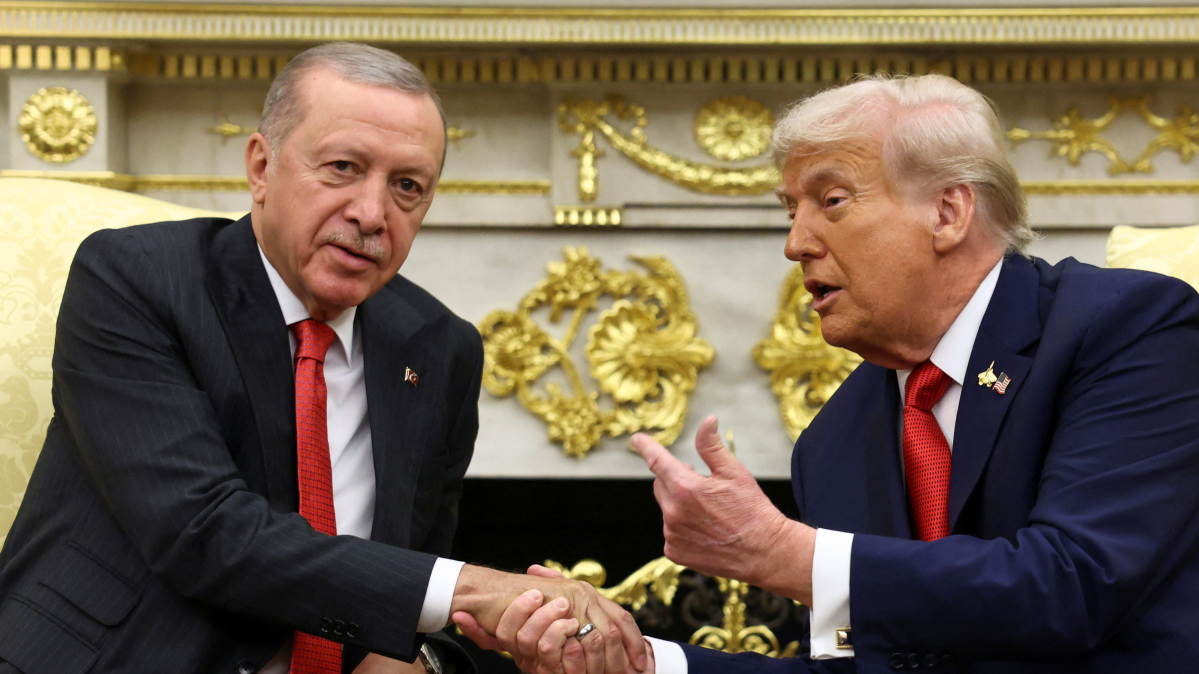
AnewZ spoke to Professor Ferit Murat Özkaleli of ADA University, who said the shifting dynamics between Ankara and Washington are particularly consequential for the South Caucasus. From his perspective, in terms of basic national interests, Türkiye and the United States are largely aligned, especially concerning Azerbaijan’s strategic priorities. He highlights that key infrastructure and connectivity projects in the region, including routes linked to Azerbaijan’s Nakhchivan exclave, illustrate how Türkiye plays an important supportive role in U.S.-facilitated regional engagement.
Türkiye’s broader strategic significance for the United States has deep historical roots. In the aftermath of World War II, Washington recognised Ankara’s importance as a cornerstone of Western security architecture. Over the ensuing decades, however, ideological debates - such as those shaped by Samuel Huntington’s Clash of Civilisations thesis - briefly overshadowed hard strategic considerations in some U.S. policy circles. Özkaleli suggests the United States is now returning to a more pragmatic, realist approach that emphasises balance‑of‑power dynamics over ideological foreign policy aims.
Recent changes in U.S. foreign strategy support this interpretation. The 2025 U.S. National Security Strategy articulates a shift away from promoting democracy abroad and toward a model of “flexible realism,” prioritising strategic partnerships and pragmatic cooperation with states regardless of their internal systems. This marks a departure from earlier policies that placed a heavy emphasis on exporting democratic governance.
This renewed strategic pragmatism, Özkaleli argues, is especially relevant in the South Caucasus, where external powers’ interests intersect and where balance‑of‑power dynamics shape outcomes. In this context, Azerbaijan has emerged as a pivotal actor in Eurasia. Its strategic location and evolving partnerships with both the United States and Türkiye position it as a potential stabilising force in the region.
As Armenia and Azerbaijan deepen their respective alliances, the alignment between Washington and Ankara is seen by analysts like Özkaleli as a stabilising factor that could influence political, economic, and security dynamics across the wider South Caucasus.


















What is your opinion on this topic?
Leave the first comment