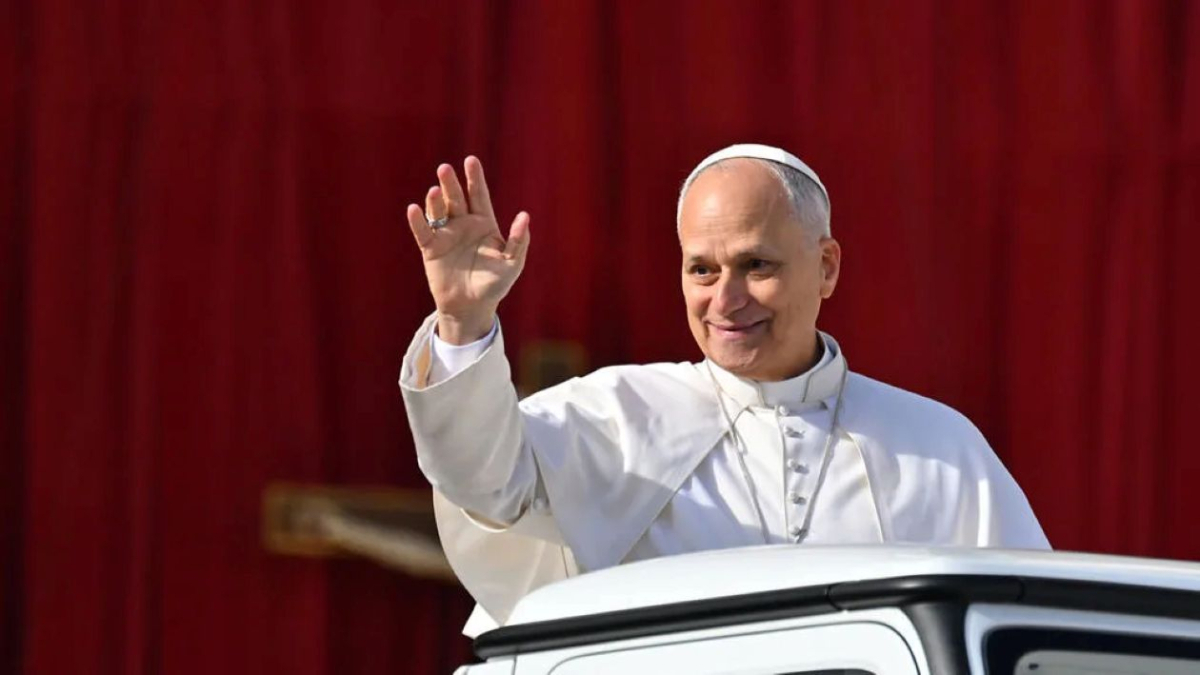
Pope Leo continued his visit to Türkiye in Istanbul on Thursday (27 November), following a round of meetings in Ankara. This marks his first trip outside Italy since being elected in May as the leader of the 1.4-billion-strong Catholic Church.
On Friday (28 November), Pope Leo XIV is scheduled to lead a prayer service in Iznik, the north-western town where the first ecumenical council was convened 1,700 years ago. Earlier, he will meet bishops and clergy at the Cathedral of the Holy Spirit in Istanbul and visit a nursing home.
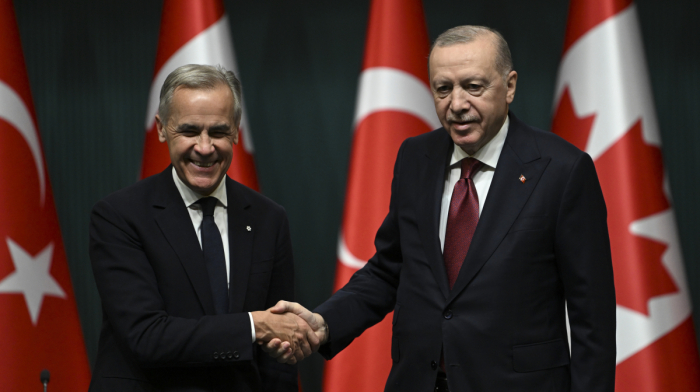
The pontiff arrived in Ankara on Thursday (27 November) for his first overseas trip since his election, at the invitation of President Recep Tayyip Erdogan. The official visit, which also includes Lebanon, will continue through Sunday, with stops in Ankara, Istanbul, and Iznik.
Following his first-day meeting with President Erdogan, Pope Leo warned that the world is witnessing “an unusually high number of bloody conflicts” and cautioned that a third world war is being fought “piecemeal,” placing humanity’s future at risk. The first US-born pope in history criticised “ambitions and choices that trample on justice and peace,” saying these forces are destabilising the world, fuelled by “prevailing strategies of economic and military power.”
President Erdogan described the visit as a “very important step that strengthens our common ground,” noting that the pope’s messages would reach both the Turkish-Islamic world and the Christian world, reinforcing hope for global peace. He highlighted Türkiye’s tradition of religious coexistence, pointing to mosques, churches, and synagogues often standing side by side, including Istanbul’s Hagia Irene Museum and Neve Shalom Synagogue, Trabzon’s Sumela Monastery, and Van’s Akdamar Museum. Since 2002, nearly 100 religious sites have been restored, with five more due to reopen by the end of the year.
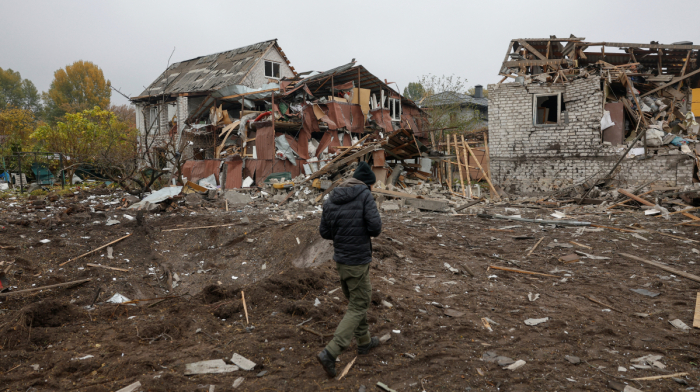
Erdogan emphasised inclusivity, saying: “Every one of our citizens, regardless of language, religion, sect, or ethnic background, is a first-class citizen of the Republic of Türkiye.” He praised the pope’s statements on protecting the institution of the family and underlined the importance of dialogue in supporting diplomatic efforts, including the Russia-Ukraine war.
On the ongoing situation in Gaza, Erdogan said: “As the family of humanity, our greatest debt to the Palestinian people is justice. The way to pay this debt is to implement a two-state solution based on the 1967 borders.” He stressed the importance of preserving the historical identity of East Jerusalem and noted that Israeli military actions have targeted civilian areas, including Gaza’s Holy Family Church.
“Preserving the historical status quo in the Holy City of Jerusalem carries critical importance,” the president added.










What is your opinion on this topic?
Leave the first comment