Azerbaijan has urged the international community to show stronger solidarity and support in tackling the global threat of landmines, as the country continues to face widespread contamination across more than 13 percent of its territory.
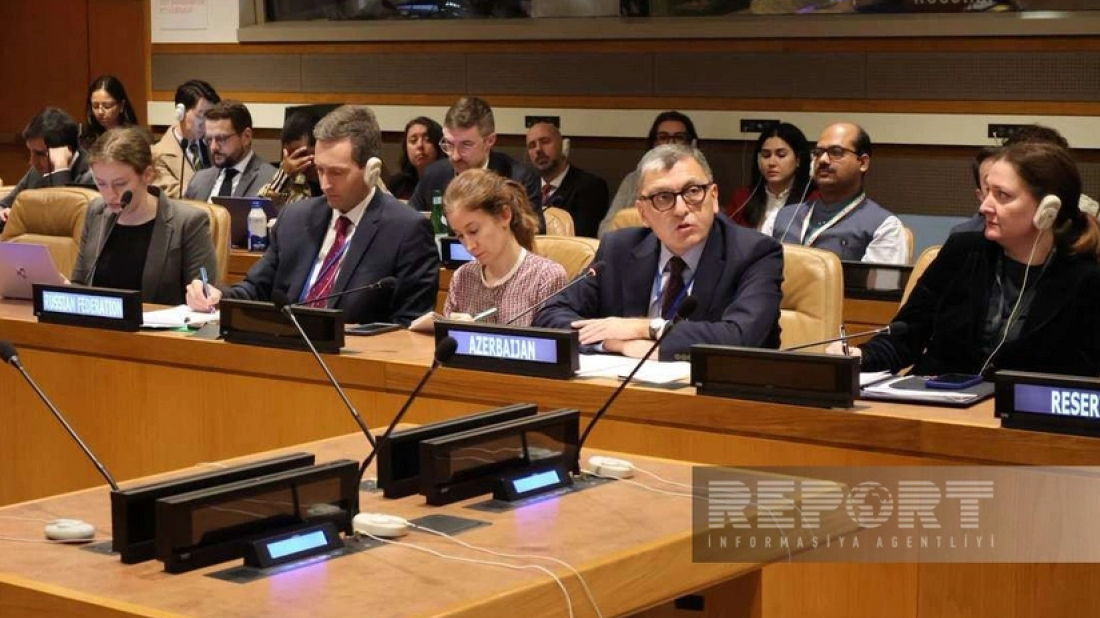
According to Report’s U.S. Bureau, Azerbaijan’s Permanent Representative to the United Nations, Ambassador Tofiq Musayev, made the call during a session of the UN General Assembly’s 80th meeting held under the theme “The Secretary-General’s Humanitarian Disarmament and Mine Action Campaign.”
Speaking at the event, Musayev said that landmines, explosive remnants of war, and improvised devices continue to pose a deadly risk to civilians, military personnel, peacekeepers, and humanitarian workers in many conflict and post-conflict regions — including Azerbaijan.
“More than 13 percent of our territory remains contaminated by mines and unexploded ordnance, and the number of victims keeps growing,” the ambassador said.
He stressed that widespread mine contamination represents a major obstacle to achieving the Sustainable Development Goals (SDGs). To reflect this challenge, Azerbaijan has designated humanitarian demining as its 18th National Sustainable Development Goal.
Since 2022, Azerbaijan has jointly organised three international mine action conferences with the United Nations. These events produced concrete outcomes and documents addressing humanitarian demining, sustainable development, and the environmental impact of mine contamination.
Musayev also recalled that in December 2023, Azerbaijan succeeded in securing the adoption of a resolution under the 1954 Hague Convention concerning “The Impact of Mines on Cultural Heritage Sites.”
He noted that the UN General Assembly’s Resolution 79/173 - introduced by Azerbaijan - highlighted how mines and explosive remnants obstruct the search and recovery of missing persons’ remains.
The ambassador further addressed the gender dimension of mine action, noting that Azerbaijan’s first female demining teams were established under a joint project between the Azerbaijan Mine Action Agency (ANAMA), the UN Development Programme (UNDP), and the European Union.
Concluding his speech, Musayev called for stronger international coordination and support for humanitarian demining:
“The scale of the landmine threat worldwide requires enhanced international cooperation and greater financial and technical assistance. Coordinated and adequate action in humanitarian demining is essential,” he said.












What is your opinion on this topic?
Leave the first comment