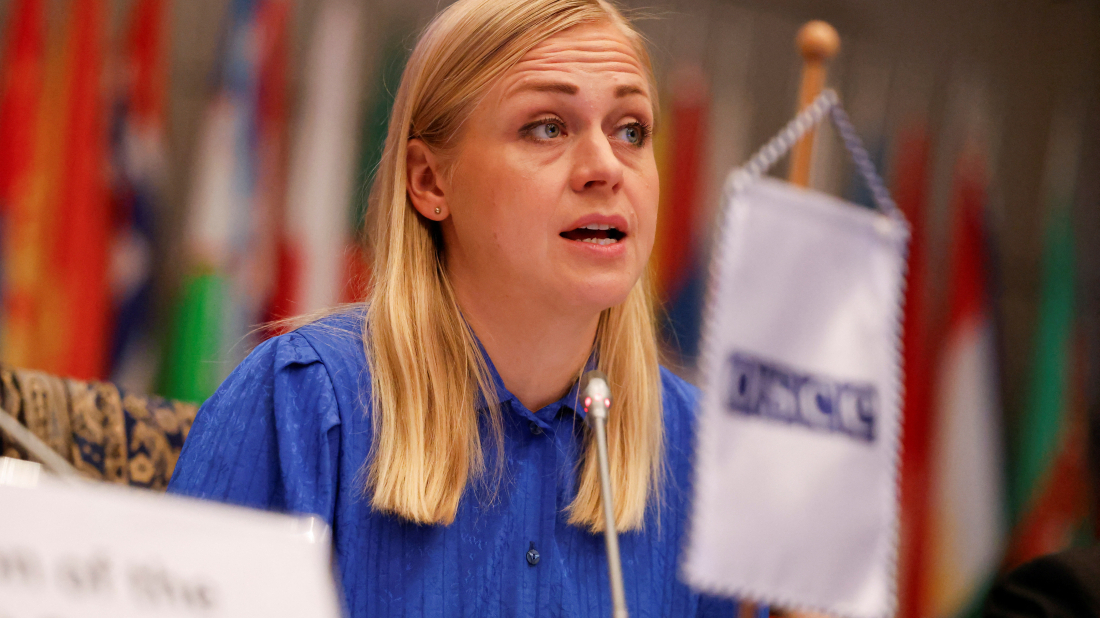
The Chairperson-in-Office of the Organization for Security and Co-operation in Europe (OSCE) and Finnish Foreign Minister Elina Valtonen is continuing a three-nation tour of the South Caucasus, visiting Georgia, Azerbaijan and Armenia between 13 and 15 October.
The visit comes at a politically sensitive moment, as the region faces renewed diplomatic and democratic challenges — from Georgia’s disputed local elections to ongoing peace efforts between Armenia and Azerbaijan.
In Tbilisi, Valtonen is expected to discuss Georgia’s domestic and foreign policy challenges, the OSCE’s continued support for the Geneva International Discussions on the 2008 Russia–Georgia war, and civil society engagement, a key priority under Finland’s 2025 OSCE Chairmanship.
The Finnish minister will also raise broader regional issues, including the Armenia–Azerbaijan peace process and the OSCE’s evolving role in maintaining stability across the South Caucasus.
Valtonen’s trip comes less than two weeks after Georgia’s 4 October local elections, which the OSCE observation mission said were marked by “an uneven playing field” and the “blurring of boundaries between the ruling party and the state.”
The timing of the visit has prompted speculation over whether it signals a softening of tone towards Tbilisi or a continued commitment to critical but constructive dialogue. Analysts suggest it is likely the latter — a diplomatic effort to balance criticism with engagement and keep channels of communication open as Georgia navigates growing political polarisation and Western scrutiny.
Prime Minister Irakli Kobakhidze confirmed he will meet Valtonen on 14 October, emphasising that cooperation with the OSCE remains important and valuable for Georgia. He said the government plans to reaffirm its “complete openness” and readiness to strengthen collaboration with the organisation.
Kobakhidze also cited what he described as a “positive assessment” by the OSCE/ODIHR regarding Georgia’s previous parliamentary elections, arguing that the government had been unfairly criticised by the domestic opposition and their “foreign patrons.” He added that the government aims to “further activate” cooperation with the OSCE and maintain constructive dialogue.
Members of the ruling Georgian Dream party echoed similar views, describing Valtonen’s visit as a routine but constructive engagement. Officials said Georgia welcomes talks with European partners willing to focus on “facts rather than perceptions.”
Beyond Georgia, Valtonen’s tour underscores the OSCE’s efforts to reassert its diplomatic influence in the South Caucasus, where overlapping geopolitical interests have constrained international mediation. The visit is also seen as an opportunity to rebuild confidence in multilateral diplomacy after years of waning Western involvement. With tensions between Armenia and Azerbaijan still simmering and Georgia’s democratic trajectory under close scrutiny, the OSCE is positioning itself as a facilitator of both political dialogue and civil stability.












What is your opinion on this topic?
Leave the first comment