At least 44 people have died and more than one million have been stranded due to widespread flooding and landslides across southeastern Bangladesh, authorities said on Saturday (11 July).
The country's Disaster Management Ministry said flooding occured after days of torrential monsoon. The natural disaster has disrupted daily life, isolated communities and left 267,918 households stranded across seven districts.
The worst-affected districts include Chattogram, Cox's Bazar, Bandarban, Rangamati, Khagrachhari, Moulvibazar and Habiganj.
Communities cut off
Power outages, damaged roads and disrupted communications have hampered rescue efforts, while many residents remain unable to return home or prepare food after floodwaters inundated homes.
"There is still water inside our home and we have no way to cook," said Nurul Islam, a resident of Chattogram.
"The dry food we had has run out, and we spend the nights in the dark with our children because there is no electricity."
Thousands of families are relying on emergency food supplies such as flattened rice, puffed rice and biscuits, while damaged roads and bridges have made it difficult for relief teams to reach some of the worst-hit areas.
Military joins relief effort
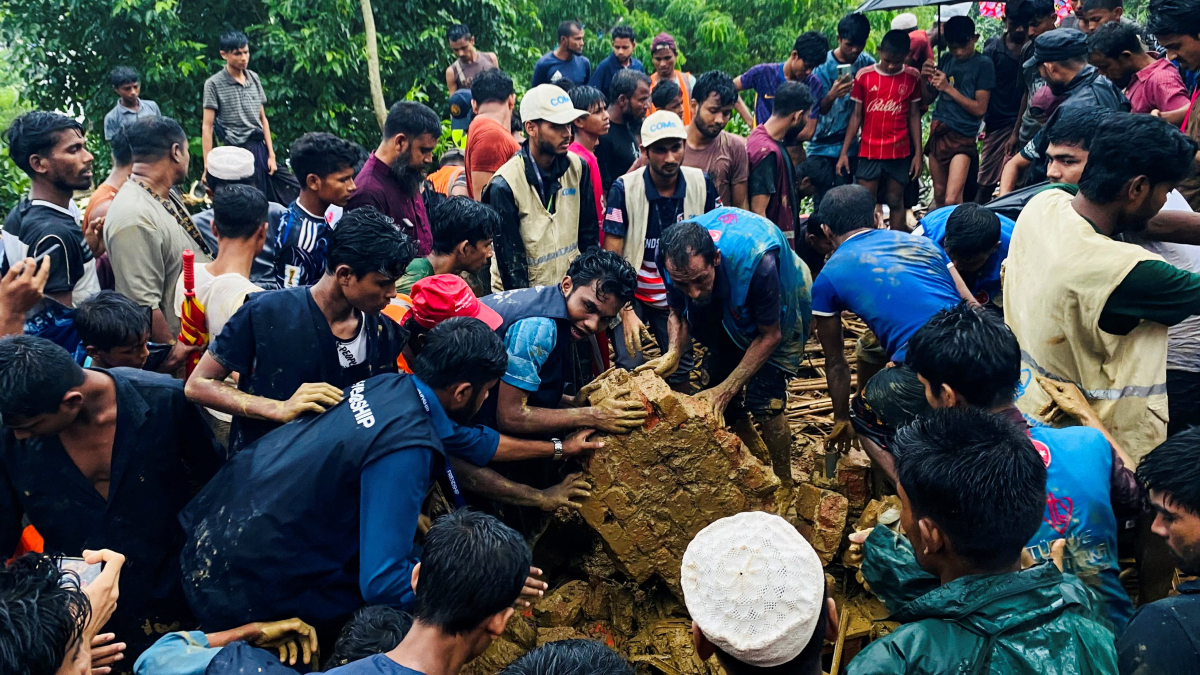
Army and navy personnel are transporting food, drinking water, medicines and other emergency supplies by boat to isolated communities as authorities intensify relief operations.
"The government is doing everything possible to support flood victims," Disaster Management and Relief Minister Iqbal Hossain said during a visit to affected areas.
He urged residents whose homes had been inundated to move to nearby emergency shelters while relief supplies continued to be distributed.
Rohingya among hardest hit
The severe weather has also triggered landslides in Rohingya refugee camps in Cox's Bazar, where 16 refugees, including women and children, were killed earlier this week.
More than one million Rohingya refugees live in the camps, where temporary shelters built on steep, deforested hillsides remain particularly vulnerable during the annual monsoon season.
Bangladesh is among the world's most disaster-prone countries, with seasonal monsoon rains frequently causing floods, landslides and river erosion.
Scientists warn that climate change is increasing the frequency and intensity of extreme rainfall, worsening the impact of such disasters.
Read more:




















What is your opinion on this topic?
Leave the first comment