View: Russia is not isolated, despite Western sanctions, analyst says
The Ashgabat forum in Turkmenistan brought together Russian President Vladimir Putin, Turkish President Recep Tayyip Erdoğan, and Iranian President M...
At least 20 people were killed and more than 50 injured after a suicide bomber attacked a church in central Damascus, Syria’s capital, on Sunday, officials confirmed.
The attack took place during a service at the Mar Elias Greek Orthodox Church in the Dweila neighbourhood. According to Syria’s interior ministry, the assailant, identified as a member of ISIL, entered the church, opened fire, and then detonated his explosive vest. A second man was reportedly involved but his fate remains unclear.
This marks the first suicide bombing in Damascus since Bashar al-Assad was ousted by an Islamist-led rebel coalition in December. The incident highlights the persistent threat posed by ISIL despite the group’s territorial defeat.
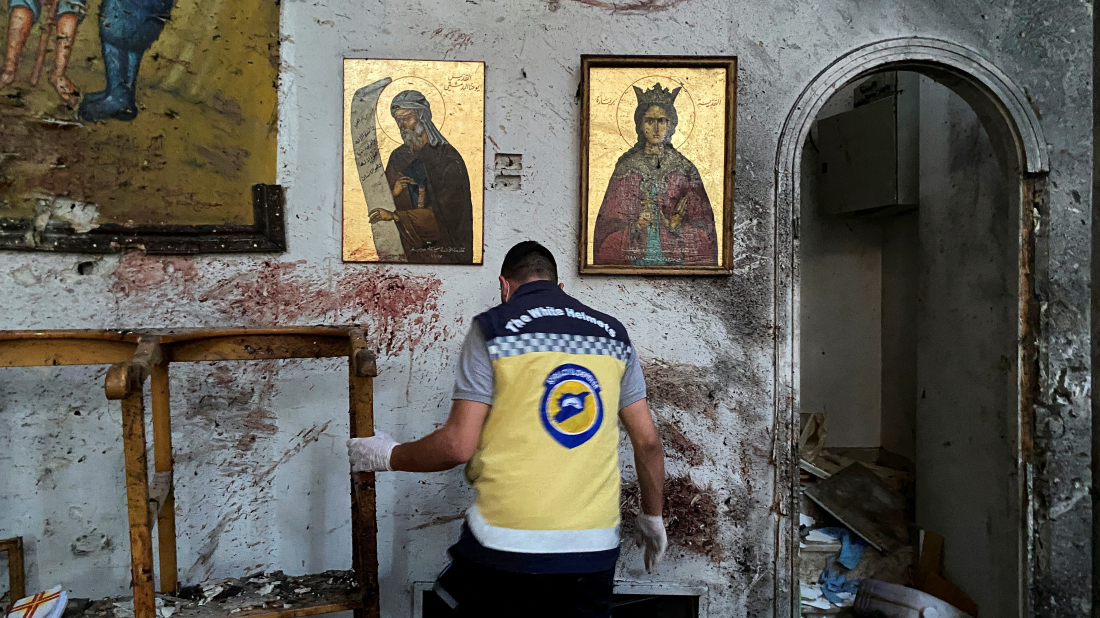
The health ministry reported 52 people were injured in the blast. A livestream from the scene by Syria’s civil defence, the White Helmets, showed extensive damage inside the church, including bloodstained floors and shattered masonry.
ISIL has previously attempted attacks on churches in Syria, but this is the first successful strike since Assad's removal. A security source told Reuters the group had intensified its focus on religious minorities in recent months.
President Ahmed al-Sharaa, who assumed power in January for a transitional period, condemned the attack and reiterated his commitment to protecting minority communities.
The Greek foreign ministry also issued a statement, denouncing the bombing as "abhorrent" and urging Syrian transitional authorities to take swift action to secure all religious groups.
ISIL had carried out similar attacks in the past, notably the 2016 bombing targeting Shiite pilgrims in Sayeda Zainab, one of the deadliest incidents during Assad’s rule.
The latest bombing raises concerns over ongoing security lapses and the resurgence of extremist violence in the post-Assad era.

Japan has lifted a tsunami advisory issued after an earthquake with a magnitude of 6.9 hit the country's northeastern region on Friday (12 December), the Japan Meteorological Agency (JMA) said. The JMA had earlier put the earthquake's preliminary magnitude at 6.7.
Iran is preparing to host a multilateral regional meeting next week in a bid to mediate between Afghanistan and Pakistan.
The United States issued new sanctions targeting Venezuela on Thursday, imposing curbs on three nephews of President Nicolas Maduro's wife, as well as six crude oil tankers and shipping companies linked to them, as Washington ramps up pressure on Caracas.
Iran's President Massoud Pezeshkian has begun a two day visit to Kazakhstan, with officials from both sides describing the trip as an opportunity to advance cooperation in trade, transport, industry, mining and cultural exchanges.
China’s Ministry of Foreign Affairs has urged Afghanistan and Pakistan to resolve their tensions through dialogue and engagement, as it pledged to work with the international community to help improve relations between the two countries.
Kazakhstan has begun redirecting part of its crude exports, sending oil from Kashagan to China as the Caspian Pipeline Consortium (CPC) operates at reduced capacity.
Azerbaijan’s post-conflict reconstruction in Karabakh is attracting international attention. The book by British author Graeme Wilson documents this journey, combining first-hand reporting and digital storytelling to highlight both the region’s restoration and the human stories behind it.
Tashkent is hosting the 2025 Fédération Internationale de l’Automobile (FIA) Annual General Assemblies, one of the most significant events in global motorsport and mobility governance, bringing together officials and delegates from around the world.
Iran’s top diplomat, Abbas Araghchi, has welcomed the expansion of ties with neighbouring Azerbaijan, stating that Tehran and Baku are committed to building a ‘shared, secure and mutually respectful’ future, local media reported on Friday.
The global centre of political gravity is increasingly moving from the Atlantic to the Pacific, a development with significant implications for the South Caucasus and Central Asia.
You can download the AnewZ application from Play Store and the App Store.
What is your opinion on this topic?
Leave the first comment