Germany has returned 12 royal-era cultural artefacts to Ethiopia in a ceremony in Addis Ababa, marking a formal step in ongoing cultural cooperation between the two countries.
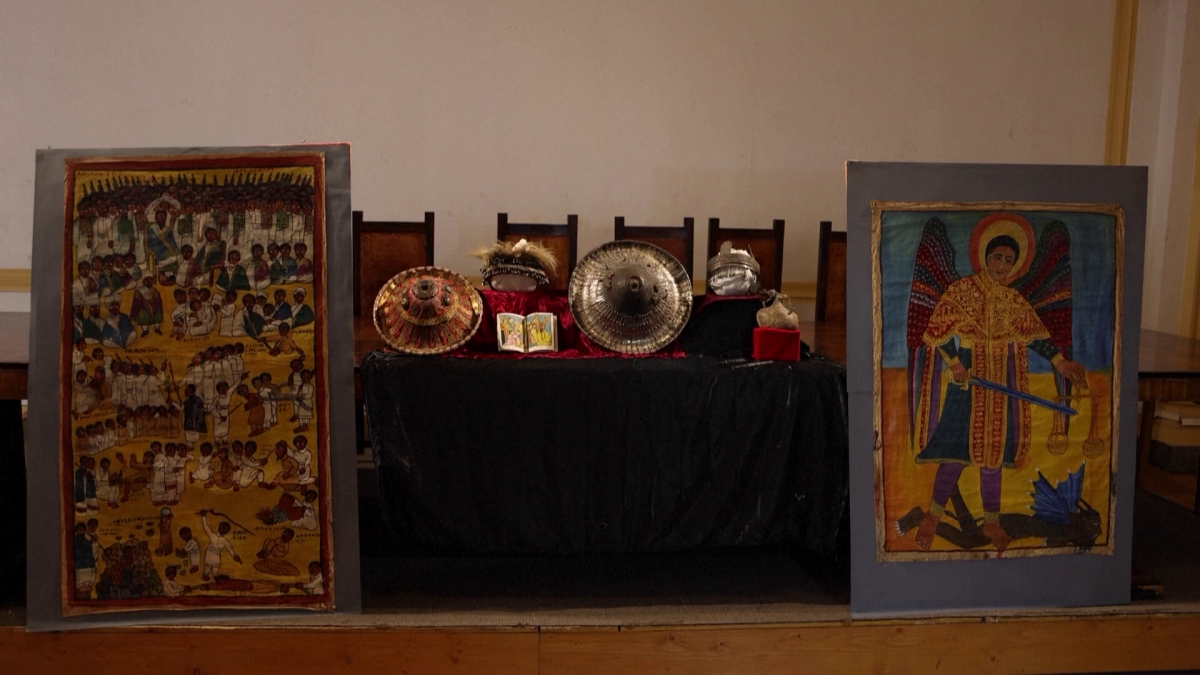
Germany has handed over 12 cultural artefacts to Ethiopia at a ceremony in Addis Ababa, bringing home items that had remained in Germany for almost a century. The objects were laid out on tables inside Ras Makonnen Hall where officials, guests and staff walked around to look at the pieces before the formal handover began.
The collection was originally gathered by Franz Weiss, a German diplomat who lived in Ethiopia with his wife Hedwig during the 1920s. Their grandson, Professor Ramon Wyss, travelled to Addis Ababa to return the items himself, presenting them to Dr. Yohannes Adigeh, Director of the Institute of Ethiopian Studies. Some of the objects had stayed in private family possession for decades.
Ethiopia’s Minister of Tourism, Selamawit Kassa, said the returned pieces include gifts presented by Regent Tafari Makonnen, who later became Emperor Haile Selassie, along with items bought or commissioned by the Weiss family. Two crowns were among the most notable objects, along with decorated shields, a sword with its belt, traditional headgear, paintings and an old manuscript.
During her remarks, Selamawit thanked Wyss and his wife Alice for facilitating the return and said the cooperation between the Institute of Ethiopian Studies and the German Embassy had helped make the process possible. At the event, several guests paused to take a closer look at a set of swords displayed inside a glass case, while others examined paintings showing scenes from Ethiopia’s royal past.
Wyss said that his grandparents had taken the collection with them when they left Ethiopia nearly one hundred years ago and explained that the family believed the pieces should now be preserved and studied in the country they came from. He added that this had been discussed within the family for some time before the decision was made.
The return comes as the repatriation of African cultural property continues to draw wider international discussion. Officials did not go into detail about how each individual item was acquired in the 1920s, but both sides described the handover as part of a broader effort to support cultural heritage and ensure important works are kept where they hold the greatest historical value.
An exhibition titled "Ethiopia in the 1920s through the eyes of a German diplomat" will open at the Goethe Institut on 20 November. It will show 51 photographs from the private archive of Fritz and Hedwig Weiss, offering a wider look at the period in which the artefacts were taken to Germany and the setting in which the couple lived during their time in the country.




















What is your opinion on this topic?
Leave the first comment