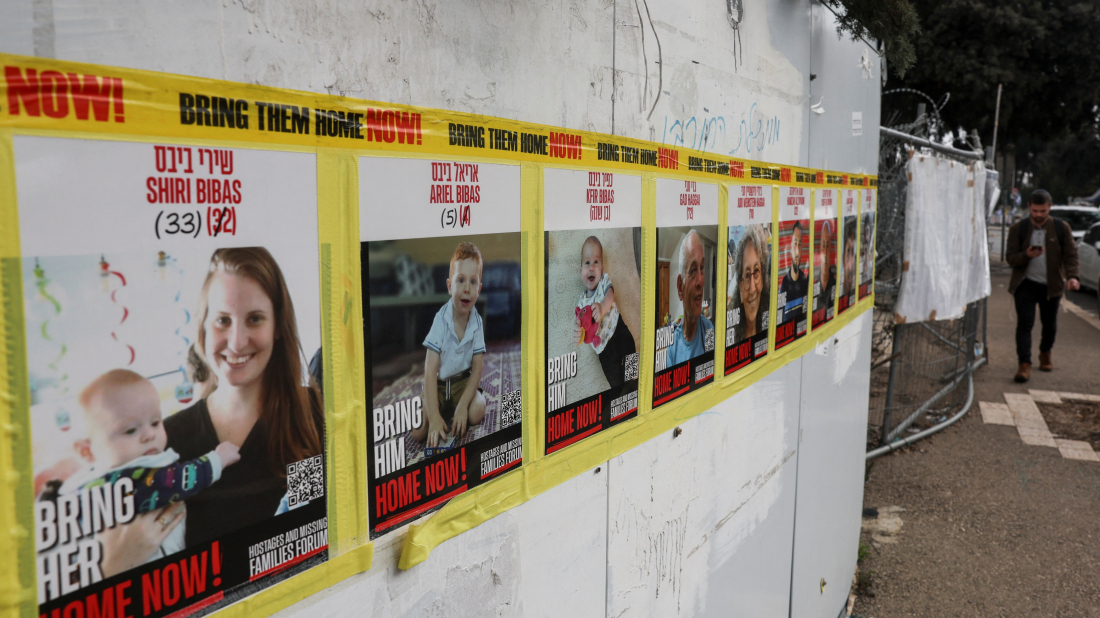
Israel prepared on Thursday to receive the bodies of Kfir Bibas, a nine-month-old baby, and his four-year-old brother, Ariel, who were taken hostage by Hamas on October 7, 2023. Their deaths have become a tragic symbol of the suffering caused by the attack.
Palestinian militant groups said the bodies of the two children, their mother, Shiri Bibas, and another hostage, Oded Lifschitz, would be handed over as part of the Gaza ceasefire deal. The agreement, arranged last month with the help of the United States, Qatar, and Egypt, has allowed both sides to exchange hostages and prisoners.
Israeli Prime Minister Benjamin Netanyahu called it "a very difficult day for Israel. An upsetting day, a day of grief."
The Bibas family was taken from Kibbutz Nir Oz, a community near Gaza, when Hamas fighters attacked on October 7. The children’s father, Yarden Bibas, was also taken hostage.
In November 2023, Hamas claimed the children and their mother were killed in an Israeli airstrike, but Israeli authorities never confirmed their deaths. Even as the exchange was about to happen, some Israelis still hoped they were alive.
"Shiri and the kids became a symbol," said Yiftach Cohen, a resident of Nir Oz, a village that lost about a quarter of its people in the attack, either killed or kidnapped. "I still hope they will be alive."
Yarden Bibas was released earlier in a hostage exchange, but his family says their "journey is not over" until they know for sure what happened to the children and their mother.
This is the first time the bodies of hostages will be returned under the ceasefire agreement. DNA tests will be done to confirm the identities of the remains.
Even though both Hamas and Israel have accused each other of breaking the ceasefire, the deal, which started on January 19, has continued, allowing more hostage exchanges.
Netanyahu has faced criticism from far-right politicians in his government for accepting the deal. Some in Israel believe it helps Hamas and lets the group stay in control of Gaza.
However, public support for the ceasefire is strong, with thousands of Israelis protesting to demand the government continue hostage talks until all captives are released.
On Saturday, six more living hostages will be freed in exchange for hundreds of Palestinian prisoners, mostly women and minors held by Israel.
Under the ceasefire deal, Hamas released 33 hostages in exchange for nearly 2,000 Palestinian detainees in the first phase.
So far, 19 Israeli hostages have been freed, along with five Thai nationals, who were unexpectedly released.
Talks for the next phase of the ceasefire are expected to focus on the release of about 60 more hostages, though less than half are believed to be alive. The deal could also involve Israel withdrawing its troops from Gaza to bring an end to the war.
A final agreement is uncertain, as Israel and Hamas remain divided over who will control Gaza. Israel has said that neither Hamas nor the Palestinian Authority should govern the territory.
The situation has become even more complicated after U.S. President Donald Trump suggested moving Palestinians out of Gaza. Critics say this would amount to forced displacement and have condemned Trump’s idea of turning Gaza into a waterfront property under U.S. control.















What is your opinion on this topic?
Leave the first comment