Qarabağ edge Eintracht Frankfurt 3–2 in dramatic Champions League clash
Qarabağ claimed a late 3–2 victory over Eintracht Frankfurt in the UEFA Champions League on Wednesday night, scoring deep into stoppage time to sec...
A flash of light followed by the sound of an explosion was observed over Gaza early on Saturday, according to witnesses, as severe winter storms worsened an already dire humanitarian crisis in the territory.
The circumstances surrounding the incident were not immediately clear.
The development comes as U.S. officials say international troops could be deployed to the Gaza Strip as early as next month as part of a United Nations-authorised stabilisation force aimed at addressing both security and humanitarian concerns. No formal decision has yet been announced by the UN.
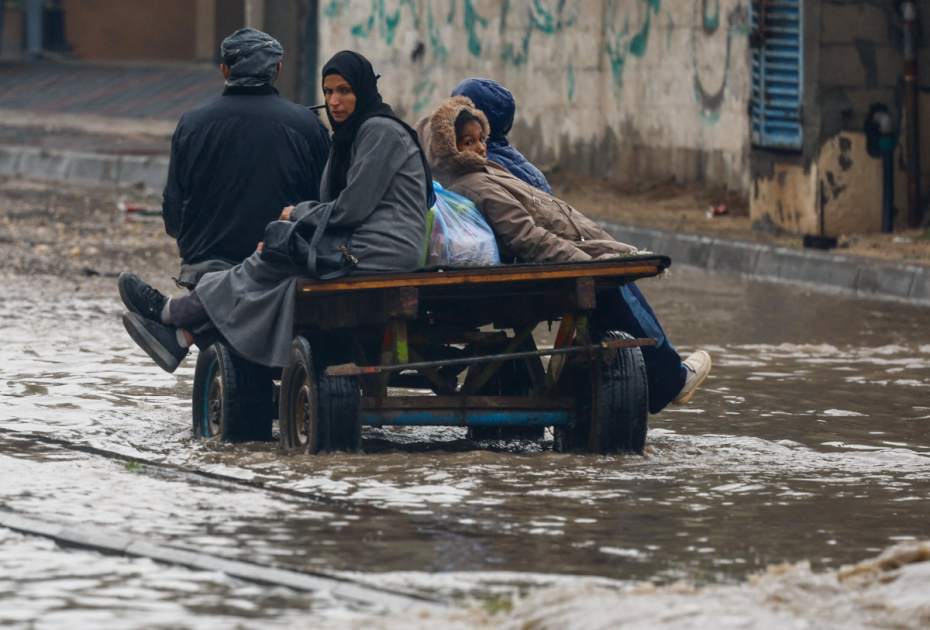
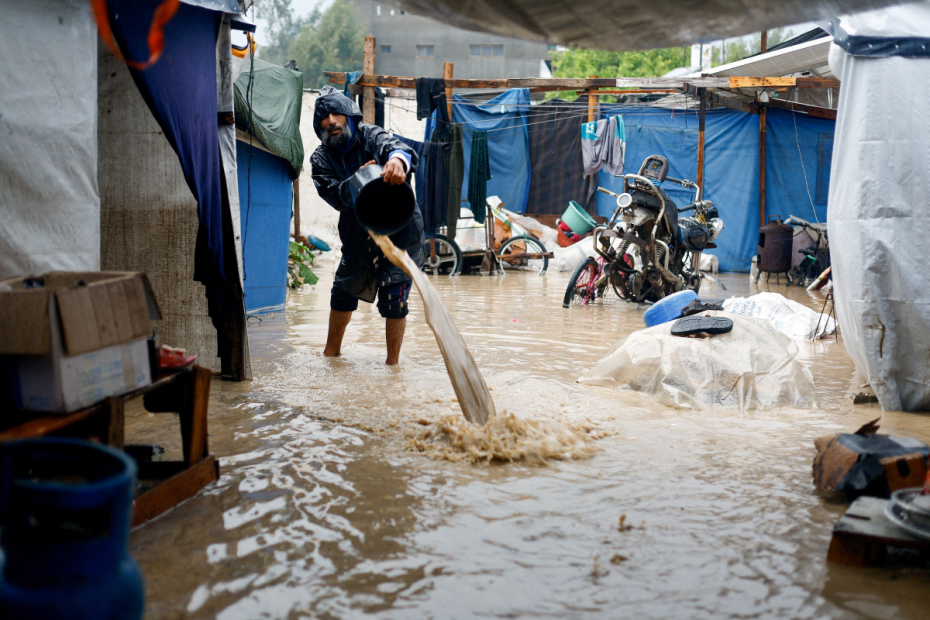
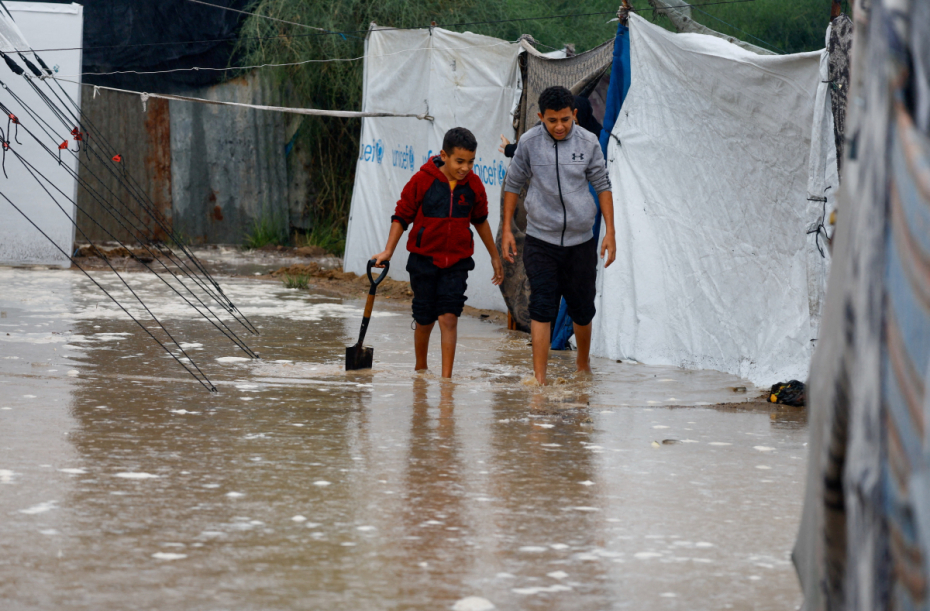
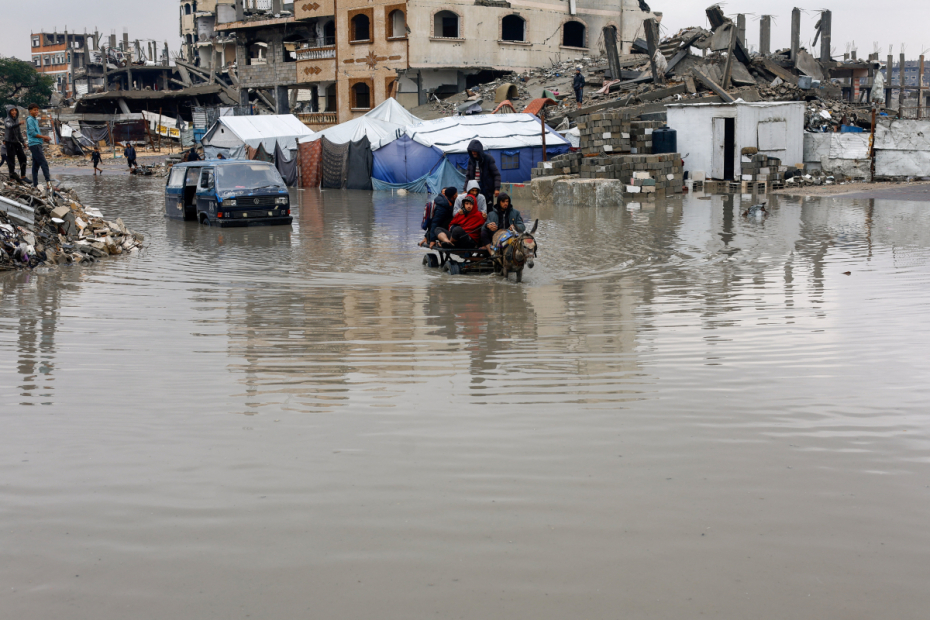
At the same time, torrential rainfall since Thursday has flooded hundreds of tents sheltering families displaced by nearly two years of conflict, aid agencies and local officials said. The flooding has left thousands exposed to cold temperatures and at risk of further displacement. Municipal authorities and civil defence teams said fuel shortages, damaged equipment and limited resources were hampering response efforts and slowing rescue and relief operations.
Displaced residents described desperate conditions in overcrowded camps.
“All night long, the children and I were on our feet,” said Youssef Tawtah, a displaced Palestinian. “If I, an adult, can’t handle it, how can small children? None of us slept. Our food is ruined. We are helpless.”
The United Nations estimates that around 850,000 displaced people in Gaza are at high risk of flooding due to severe winter storms. According to UN agencies, at least three children have died from hypothermia, while 14 people were killed by collapsing structures caused by heavy rain and strong winds.
The UN said hundreds of thousands of tents have been damaged, leaving families exposed to cold and worsening living conditions. Rescue teams continue to assist affected communities, but shortages of equipment, fuel and shelter materials are significantly limiting their ability to respond.

More than 100 vehicles were involved in a massive pileup on Interstate 96 in western Michigan on Monday (19 January), forcing the highway to shut in both directions amid severe winter weather.
Several locally-developed instant messaging applications were reportedly restored in Iran on Tuesday (20 January), partially easing communications restrictions imposed after recent unrest.
There was a common theme in speeches at the World Economic Forum on Tuesday (20 January). China’s Vice-Premier, He Lifeng, warned that "tariffs and trade wars have no winners," while France's Emmanuel Macron, labelled "endless accumulation of new tariffs" from the U.S. "fundamentally unacceptable."
Dozens of beaches along Australia's east coast, including in Sydney, closed on Tuesday (20 January) after four shark attacks in two days, as heavy rains left waters murky and more likely to attract the animals.
U.S. President Donald Trump said Washington would “work something out” with NATO allies on Tuesday, defending his approach to the alliance while renewing his push for U.S. control of Greenland amid rising tensions with Europe.
Armenia and Azerbaijan will interconnect their energy systems, enabling mutual electricity imports and exports as part of a wider regional transit initiative, Armenian Prime Minister Nikol Pashinyan said.
Mine-clearing machines produced in Azerbaijan by ImProtex are being used to support demining operations across the country, as efforts continue to address landmine contamination left by past conflicts.
As part of the Frontline episodes, this AnewZ documentary investigates Libya fifteen years after the revolution and the fall of Gaddafi — a state caught between militias, foreign powers, energy interests and diplomatic manoeuvring.
Armenia's Prime Minister, Nikol Pashinyan, wants former Armenian ambassador to the U.S., Lilit Makunts, to become the next Speaker of the National Assembly.
Türkiye and Uzbekistan have established a new institutional framework for security and foreign policy coordination. Held in Ankara on Tuesday (20 January), the first meeting in the “4+4” format assembled the Turkish and Uzbek ministers for foreign affairs, defense, the interior, and intelligence.
You can download the AnewZ application from Play Store and the App Store.
What is your opinion on this topic?
Leave the first comment