EU top diplomats voiced continued support for Ukraine after visit to Bucha to mark 2022 massacre
The European Union's top diplomat Kaja Kallas and several EU foreign ministers voiced their suppo...
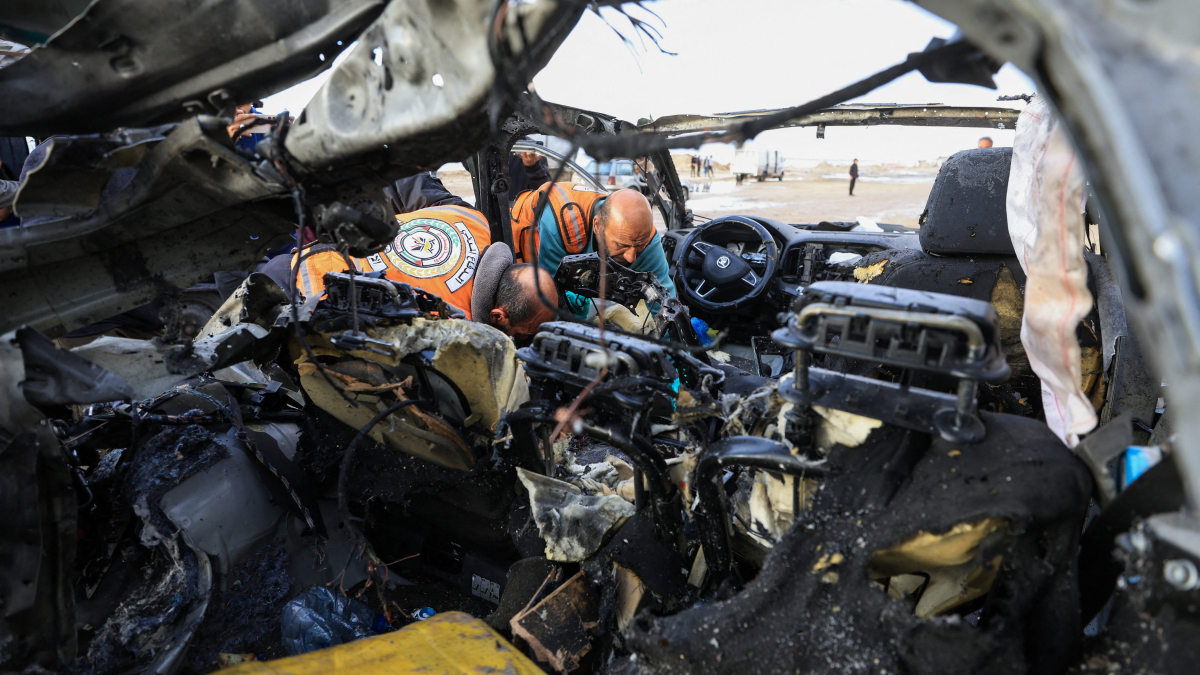
The Israeli military said Raed Saed, described as one of the architects of the October 7, 2023 attacks on Israel, was killed on Saturday when a vehicle was hit in Gaza City.
Israeli officials said the strike followed an earlier incident in which an explosive device injured two Israeli soldiers.
In a joint statement, Prime Minister Benjamin Netanyahu and Defence Minister Israel Katz said Saed was targeted in response to that attack. An Israeli military official described him as a high-ranking Hamas member who played a central role in establishing and expanding the group’s weapons production network.
According to the Israeli military, Saed had recently been involved in efforts to rebuild Hamas’ military capabilities and resume weapons manufacturing, actions Israel says violated the ceasefire agreement.
Gaza health authorities said the strike on the car killed five people and wounded at least 25 others. There was no immediate confirmation from Hamas or medical officials that Saed was among those killed.
Hamas sources have previously described Saed as the second-in-command of the group’s armed wing, behind Izz eldeen Al-Hadad, and as a former head of the Gaza City battalion, one of Hamas’ largest and best-equipped units.
Hamas issued a statement condemning the strike as a breach of the ceasefire agreement but did not confirm Saed’s status or threaten immediate retaliation.
The ceasefire, which came into effect on October 10, has allowed large numbers of displaced Palestinians to return to heavily damaged areas of Gaza City. Israeli forces have withdrawn from some urban positions and aid deliveries have increased.
Despite the truce, violence has continued. Palestinian health authorities say at least 386 people have been killed in Israeli strikes since the ceasefire began, while Israel says three of its soldiers have been killed in the same period and that it has continued to target armed fighters.

U.S. President Donald Trump has said that the U.S is in talks with the new Iranian regime. He said this in a post on his Truth Social account but warned that the U.S. will "Obliterate" Iran's electric and oil facilities if no deal is reached, especially regarding the Strait of Hormuz closure.
The Iran-U.S.-Israel conflict is intensifying, with fresh strikes near Tehran, European calls for restraint, and Iran threatening to target U.S. firms in the region, raising fears of a broader escalation across the Middle East.
The war in Iran has rapidly upended regional security, triggering spillover across the Middle East and raising fears of wider economic disruption that could threaten globalisation.
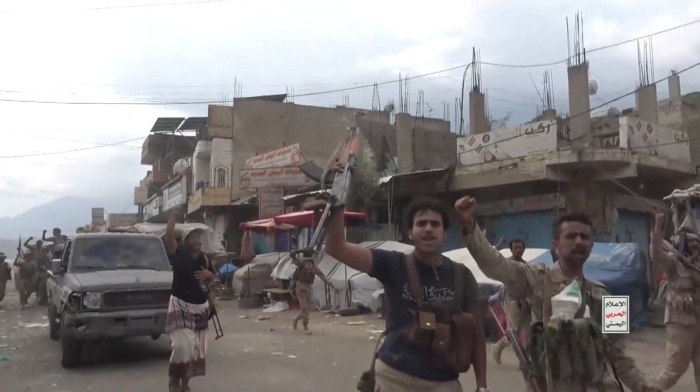
The Israeli military said on Monday that Iran launched multiple waves of missiles at Israel, and an attack had also been launched from Yemen for the second time since the U.S.-Israeli war began on Tehran. It said two drones from Yemen were intercepted early 30 March but gave no further details.
Japan’s growing interest in Caspian crude reflects a pragmatic response to uncertainty in global energy markets and its continued reliance on the Middle East for more than 90% of its oil imports.
Afghanistan’s Ministry of Mines and Petroleum says around 25 kilometres of the TAPI gas pipeline have been laid in Herat province, as work continues on one of the region’s largest energy projects.
Three Armenian citizens have been charged following an alleged attempt to attack Prime Minister Nikol Pashinyan at St Anna Cathedral in Yerevan on 29 March. Analysts say the incident reflects rising tensions between the government and the Church ahead of upcoming elections.
A man previously convicted of spying on Türkiye has been arrested by Turkish and Syrian authorities after more than a decade on the run, Turkish security sources said on Monday.
Uzbekistan is hosting the fifth-anniversary Space Technology Conference - Central Eurasia (STC 2026), bringing together more than 400 delegates, 24 sponsors and representatives from 32 countries to discuss the region’s space industry and expand international cooperation.
Kazakhstan remains among the least dependent countries in Central Asia on Chinese capital, maintaining a diversified external debt structure and greater financial flexibility than its regional peers.
You can download the AnewZ application from Play Store and the App Store.
What is your opinion on this topic?
Leave the first comment