Saudi Arabia has vowed to remain resilient after a wave of Houthi missile and drone attacks killed around 20 people at Riyadh's main airport, raising concerns over the kingdom's air defences and disrupting flights across the region.
The Saudi-led coalition fighting Yemen's Iran-backed Houthi rebels said it intercepted missiles targeting Riyadh and southern Saudi Arabia on Monday, following a week of deadly strikes on the capital's main airport.
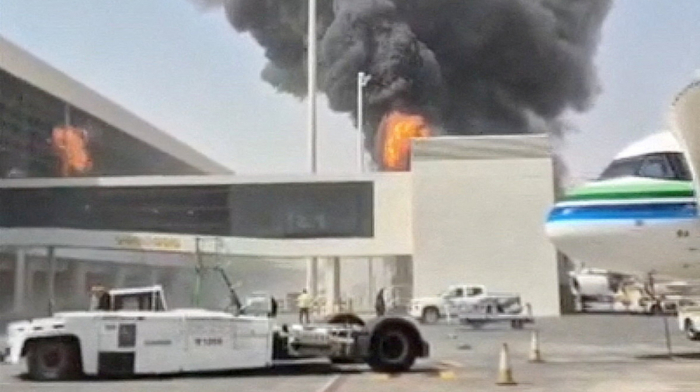
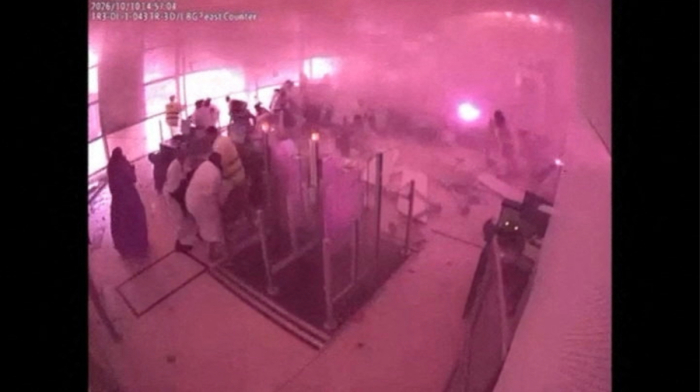
Saturday's strike on King Khalid International Airport killed at least 12 people and injured more than 300, marking the third attack on the airport in a week. The death toll rose to 13 on Sunday after an Indian national died from his injuries. The victims included four Saudi citizens and eight other foreign nationals, including a U.S. citizen.
Earlier attacks also claimed lives. Saudi authorities said six people were killed and dozens wounded in strikes on the airport from Tuesday to Thursday. Another attack on Sunday killed a Pakistani resident and injured 11 people. Together, the reported death toll from the airport attacks stands at around 20.
Further details have emerged about the strikes. Regional officials said a missile struck the complex housing domestic terminals 3 and 4 on Saturday, prompting an evacuation. One traveller described seeing an object streak across the sky before part of the ceiling collapsed near a departure gate.
On Sunday, a passenger aboard an aircraft taxiing on the runway reported seeing a projectile strike the tarmac near several parked planes at around 20:30. The Houthis claimed another attack on Monday, after the coalition said it had intercepted a missile over Riyadh.
Riyadh residents warned as explosions rock capital
Residents of Riyadh received emergency alerts on their phones on Monday evening, urging them to seek shelter amid a potential aerial threat. Powerful explosions were reported across the city shortly afterwards.
Coalition spokesman Turki Al-Maliki said the Houthis fired one ballistic missile at Riyadh and two towards Khamis Mushait in southwestern Saudi Arabia.
Missile strikes test Saudi air defences
The attacks have raised questions about Saudi Arabia's ability to protect its vast territory from long-range threats. Missiles and drones travelled more than 1,000 kilometres to reach Riyadh, prompting scrutiny of why the country's air defences failed to provide earlier warnings.
Saudi authorities have launched an investigation into the apparent security failures, including how a barrage of missiles and drones penetrated defences during the attack that killed 13 people at King Khalid International Airport.
Other key infrastructure has also come under threat. The U.S. Embassy said King Fahd International Airport in Dammam, on the Gulf coast, was targeted on 11 October.
The Houthis have also claimed attacks on Riyadh and an Aramco facility in the Red Sea port city of Yanbu.
Earlier this autumn, drones launched from Iraq struck the East-West oil pipeline in the Riyadh and Medina regions, prompting the Saudi Energy Ministry to shut it as a precaution. Houthi missiles have also continued to target southern Saudi Arabia.
Concerns are mounting over the kingdom's supply of interceptor missiles. Reports suggest stockpiles are running low, prompting Riyadh to seek assistance from Western and regional allies as it explores additional military support.
U.S. President Donald Trump has said Washington “may” join Saudi strikes against the Houthis, although he also maintained that the kingdom is capable of defending itself.
Houthi media report heavy Saudi bombardment in Yemen
In Yemen, Houthi-affiliated media reported on Tuesday that Saudi air strikes and shelling by Saudi-backed forces caused 48 casualties across Taiz and Al-Jawf provinces. The reports did not specify how many people were killed or injured.
The outlets also reported intense bombardment in Sanaa, Yemen's capital, alongside air strikes in several other areas.
According to the reports, Saudi aircraft targeted Al-Hazm district in Al-Jawf, carried out two raids on Kamaran Island and another on Al-Qanawis district in Hodeidah province, along the Red Sea coast.
Additional strikes were reported in Harf Sufyan district in Amran province and Ghamr district in Saada province.
Houthi-affiliated outlets attributed the attacks to Saudi Arabia, referring to it as “the enemy”. None of the claims has been independently verified.
Civilian toll mounts as thousands flee fighting
The escalating conflict has triggered widespread displacement across Yemen.
The International Organisation for Migration estimates that more than 216,000 people have been displaced since fighting intensified in August, including at least 172,000 from Taiz province alone.
The agency said at least 54 civilians had been killed, half of them children.
“A further 171 civilians have been injured, including 107 women and children,” it added.
Hundreds of flights disrupted across Saudi Arabia
The attacks have caused widespread disruption to air travel, with hundreds of flights cancelled or delayed at major Saudi airports.
Flight-tracking service Flightradar reported significant disruption at Dammam and Jeddah airports between Monday and Tuesday night.
King Fahd International Airport in Dammam recorded 62 cancellations and 52 delays, while King Abdulaziz International Airport in Jeddah reported 133 cancellations and 85 delays.
Riyadh's King Khalid International Airport is expected to remain closed until 17 October, according to a Notice to Airmen issued on 12 October.
Major international airlines have extended flight suspensions to Saudi Arabia and neighbouring countries. They include Air India, IndiGo, Lufthansa, Air France-KLM and Etihad Airways.
Akasa Air has suspended services to Riyadh and Jeddah, while Philippine Airlines has extended its suspension of flights to Riyadh until 29 November.
The disruption comes amid wider aviation uncertainty across the region linked to the ongoing conflict involving Iran.
Aviation regulators have also tightened safety measures. The European Union Aviation Safety Agency expanded its warning to cover additional Saudi airspace, citing threats to civilian aircraft from missiles, drones, air defence operations and falling debris.
The U.S. Embassy in Riyadh said U.S. government employees must now obtain special authorisation before using any airport in Saudi Arabia.
Global forum cancelled as major events face uncertainty
European Commission President Ursula von der Leyen described the attack as a “dangerous escalation”.
Meanwhile, the Misk Foundation, established by Saudi Crown Prince Mohammed bin Salman, announced on Monday that this year's Misk Global Forum would not take place.
The youth-focused non-profit organisation cited “organisational and logistical challenges” but made no reference to the airport attacks.
Despite the security situation, organisers of the World Petroleum Congress, currently taking place in Riyadh, and the Future Investment Initiative, scheduled for 26–29 October, said their events would proceed as planned.
Saudi authorities warn against filming missile attacks
Saudi officials have warned residents and visitors that filming or sharing footage of missile interceptions, drones and strike locations could result in legal consequences.
The U.S. Embassy confirmed on Monday that American citizens had been detained for recording recent incidents.
In a statement, the embassy said “American citizens have been detained for taking photos of recent events”.
It did not disclose how many people had been detained or whether any had been released.
The embassy also warned that Saudi authorities had explicitly stated that “filming, publishing, or sharing information related to counter missiles and drones and their impact sites exposes you to legal liability.”
Several foreign residents in Riyadh said people they knew had been taken into custody after filming the aftermath of attacks and posting footage online.
With missile and drone threats continuing, Saudi Arabia faces mounting pressure to protect its population, critical infrastructure and airspace while sustaining its military response.









What is your opinion on this topic?
Leave the first comment