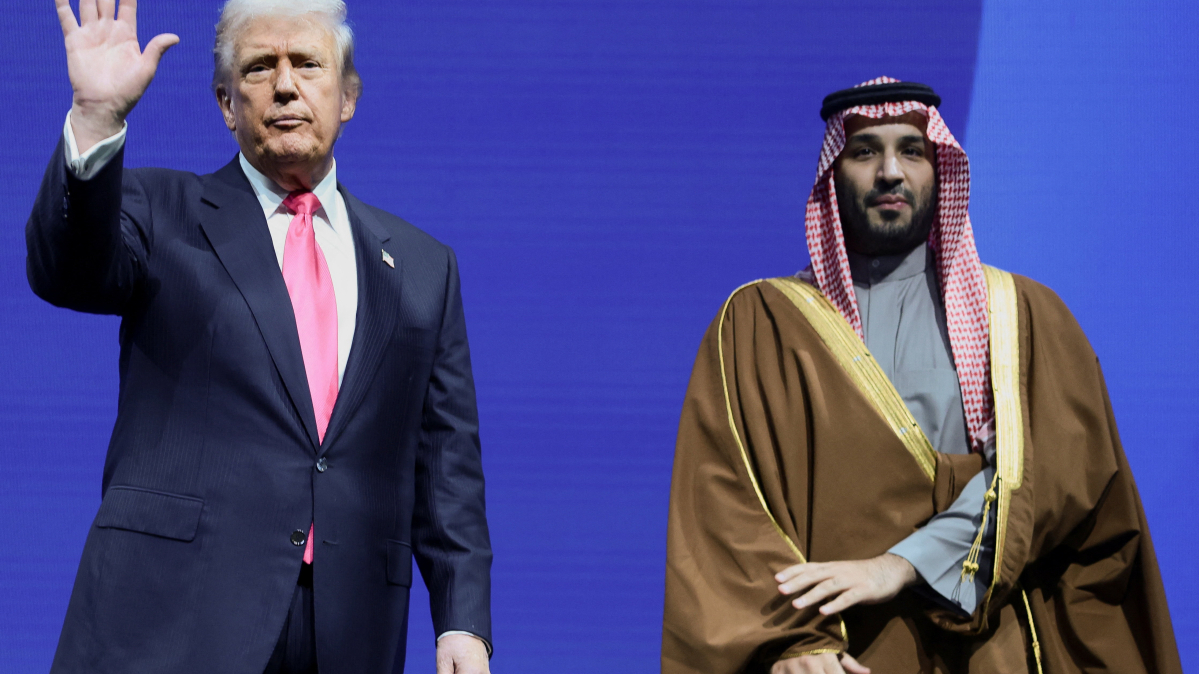
U.S. President Donald Trump has formally sent a landmark nuclear cooperation agreement with Saudi Arabia to Congress, opening a new phase in a deal that has already sparked debate over nuclear proliferation and Riyadh's ambitions.
The agreement, which was reached in July and would allow U.S. companies to export civilian nuclear technology to the Kingdom, was sent to Congress on Monday, according to a U.S. administration official who spoke to Reuters on Tuesday, and declined to be identified.
Under the accord, American companies would take a central role in developing Saudi Arabia's nuclear infrastructure, with much of the work structured to favour U.S. firms over foreign competitors.
The agreement could deepen U.S.-Saudi ties while giving Washington a major role in the Kingdom's emerging nuclear programme. But its potential impact on uranium enrichment has made it particularly contentious.
The 30-year nuclear deal calls for the construction of AP1000 reactors, a project worth tens of billions of dollars that would benefit Westinghouse, jointly owned by Canada-based Cameco and Brookfield Asset Management.
The Saudi embassy in Washington did not immediately respond to a request for comment.
It was not clear how Trump expects sending the nuclear deal to Congress, which has 90 session days to consider it, will advance his objectives.
"The president's position has not changed that the agreement will only move forward if Saudi Arabia joins the Abraham Accords," the U.S. official said in an email, referring to U.S.-brokered agreements between Israel and Arab and Muslim-majority nations to normalise relations.
Those accords, reached in 2020 and 2021, were between Israel and the UAE, Bahrain, Morocco and Sudan.
Uranium enrichment at the centre of debate
One of the most sensitive issues is whether the arrangement could allow Saudi Arabia to enrich uranium on its own territory.
Enrichment can be used for civilian nuclear fuel, but at higher levels it can also contribute to the production of material needed for nuclear weapons.
That has raised concerns among U.S. lawmakers and nuclear non-proliferation advocates, particularly in a region already shaped by tensions between Iran, Israel and Saudi Arabia.
Saudi Arabia has repeatedly expressed interest in developing nuclear power as it seeks to diversify its energy sector and reduce its reliance on hydrocarbons.
Riyadh has also previously indicated that it does not want to accept restrictions that would prevent it from developing a domestic nuclear fuel cycle.
Israel normalisation remains unresolved
The nuclear agreement is also tied to a much wider U.S. effort to reshape relations in the Middle East.
According to Reuters, Trump has not dropped his demand for Saudi Arabia to establish diplomatic relations with Israel. That issue has complicated negotiations over a broader strategic agreement between Washington and Riyadh.
Saudi Arabia has been more cautious on normalisation since the Gaza war, with Riyadh maintaining that Palestinian statehood and a political settlement remain central to any agreement with Israel.
The nuclear deal therefore sits within a much larger package involving security, energy, technology and regional diplomacy.
Congress gets its say
The agreement's submission to Congress is required under U.S. law and gives lawmakers an opportunity to scrutinise the terms and potentially seek to block it.
However, stopping the accord would be difficult. Congress would need to pass a joint resolution opposing the agreement, and lawmakers would then need a two-thirds majority in both the House of Representatives and Senate to overcome a presidential veto.
The review is nevertheless likely to put the most sensitive parts of the agreement - particularly uranium enrichment and safeguards - under intense scrutiny.
For the Trump administration, the deal offers a chance to strengthen a long-standing partnership with Saudi Arabia while securing a major role for U.S. companies in the Kingdom's nuclear ambitions.
For critics, the central question is whether greater access to nuclear technology can be provided without creating new proliferation risks in an already volatile region.
Read more about Saudi Arabia:














What is your opinion on this topic?
Leave the first comment