Energy security dominated the opening day of the 25th WPC Energy Congress in Riyadh, as Saudi Arabia warned of a serious response to recent attacks and industry leaders confronted growing threats to global oil and gas supplies.
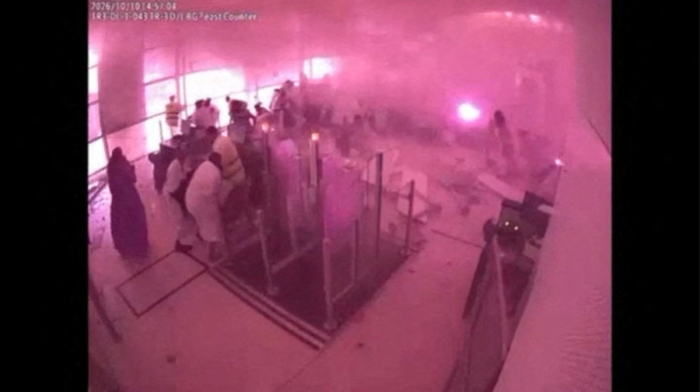
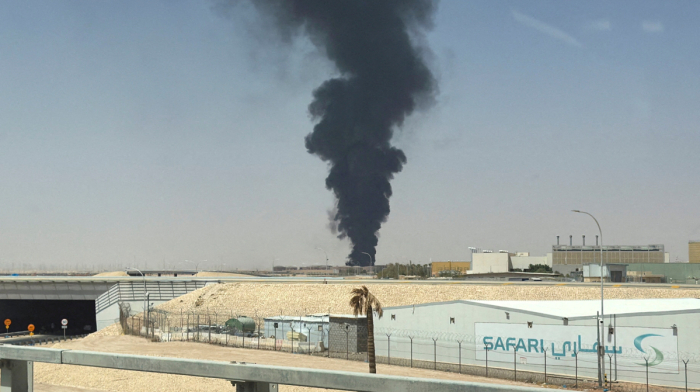
The congress is being held in Saudi Arabia for the first time in its 93-year history. The Riyadh Front Exhibition and Conference Center is located near King Khalid International Airport, which was struck twice in Houthi attacks over the weekend. The airport is set to remain closed until 17 October, according to a new Notice to Airmen (NOTAM).
Saudi minister vows serious response to attacks
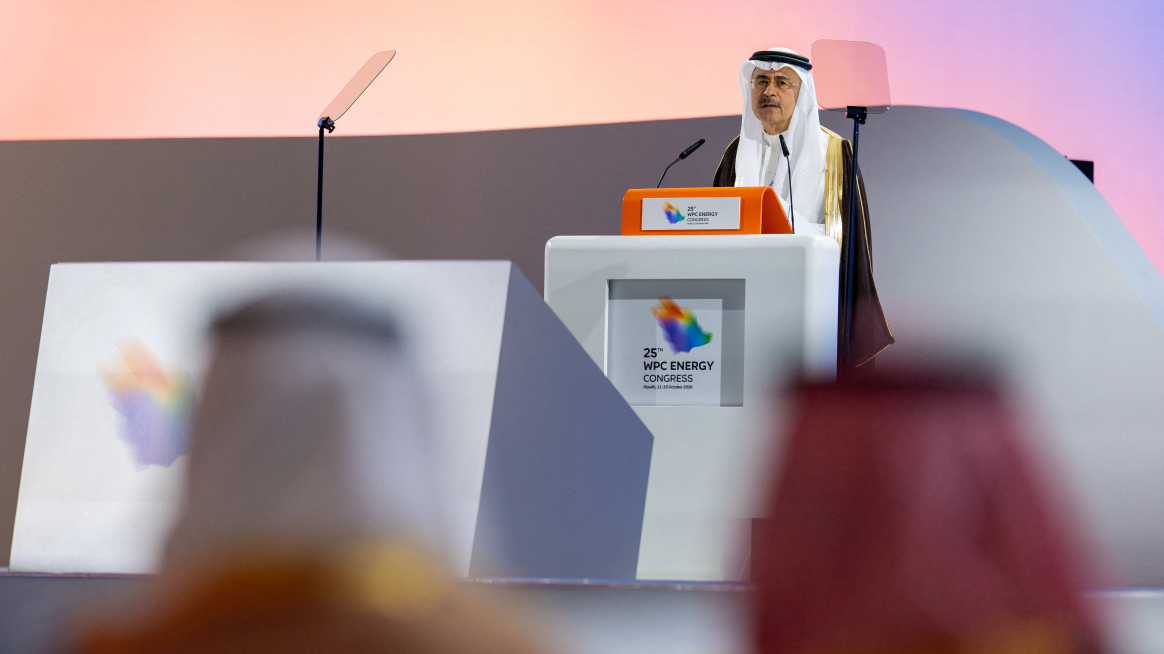
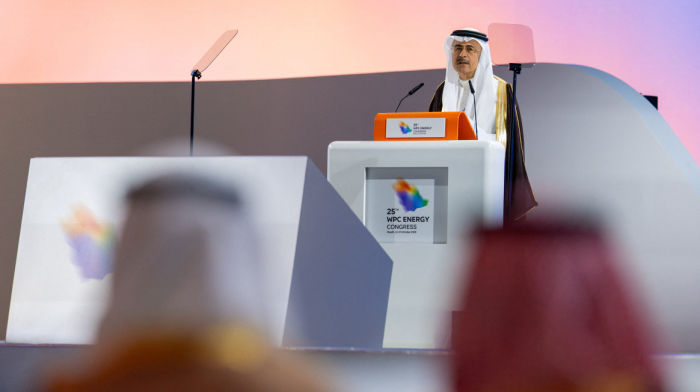
Saudi Energy Minister Prince Abdulaziz bin Salman opened the congress with a defiant message, placing national security ahead of energy policy.
“The word fear in the Saudi dictionary does not exist,” he told delegates, describing Riyadh as the capital of energy security and pointing to the gathering as evidence of the Kingdom's resilience.
Addressing the recent attacks, he said the events of recent weeks were serious and that Saudi Arabia's response must be “equally serious.”
More than 15 people have been killed in Houthi attacks on Saudi Arabia over the past two weeks, according to Reuters.
The minister insisted that the Kingdom would press ahead with its Vision 2030 programme, energy investment, industrial development and commitments to its citizens and international partners.
Turning to the congress theme, “Pathways to an Energy Future for All,” he stressed that security must underpin the global energy transition.
“There can be no energy future for all without energy security for all,” he said.
He argued that energy security, affordability, investment and resilience must work together to ensure a sustainable transition capable of withstanding future shocks.
Saudi Arabia highlights decades of energy investment
Much of the minister's address focused on Saudi Arabia's long-term investment in infrastructure designed to withstand disruption.
Energy security cannot be taken for granted, he warned, saying recent events had tested the Kingdom's infrastructure, institutions and people, as well as decisions made years before the current crisis.
He pointed to decades of investment in storage, spare production capacity, alternative export routes, technology, domestic supply chains and skilled workers as essential safeguards against unexpected crises.
Resilience, he argued, goes beyond pipelines and production capacity. It also means being able to maintain operations, repair damage, redirect supplies and recover quickly from disruption.
He emphasised the importance of localisation in keeping businesses operating when international supply chains are disrupted.
A key example is the East-West pipeline, which transports crude oil from Saudi Arabia's Eastern Province to Yanbu on the Red Sea, allowing exports to bypass the Strait of Hormuz.
His remarks drew applause from delegates.
Gulf countries seek alternative energy routes
Efforts to strengthen energy infrastructure are also gathering pace across the Gulf.
On Sunday, Prince Abdulaziz signed energy cooperation agreements with Kuwait, Qatar and Egypt, according to the Saudi Press Agency.
The agreement with Qatar covers oil, gas, refining, petrochemicals and clean hydrogen, including the possibility of developing joint pipelines for energy transport and exports.
The deal with Kuwait focuses on electricity grid interconnection, power exports, energy storage and smart grids.
In August, Kuwait's oil minister said the country was already discussing a new crude export pipeline with Saudi Arabia and other Arab states.
The security implications extend beyond energy infrastructure. UAE presidential adviser Anwar Gargash has warned that attacks on Saudi Arabia threaten all Gulf states and called for renewed cooperation on regional security and defence.
Strait of Hormuz crisis threatens global supplies
The congress opened against a backdrop of severe pressure on international energy markets.
The head of the International Energy Agency (IEA) has described the Strait of Hormuz crisis as the world's largest energy security crisis.
Although Gulf crude exports have partially recovered through alternative routes, shipments of refined petroleum products and liquefied natural gas (LNG) remain extremely low.
Saudi Aramco chief executive Amin Nasser warned delegates that pressure on crude supplies would persist until the Strait of Hormuz fully reopens.
He said commercial offshore oil inventories were well below six billion barrels, adding that replenishing stocks while meeting global demand could take up to two years.
Global energy leaders gather as major executives stay away
WPC Energy president Pedro Miras warned that global energy demand would continue to grow as the world's population approaches ten billion.
He stressed the need for a diverse energy mix and identified economic development as a fourth priority alongside security, affordability and sustainability.
Diversity among energy sources and producing countries, he argued, would help strengthen global energy resilience.
Organisers expect more than 25,000 delegates to attend the congress, including over 100 ministers and nearly 500 company executives.
The programme features 800 speakers and more than 30 sessions, while approximately 1,000 companies have reserved space across the 50,000-square-metre exhibition.
However, several prominent energy executives were absent from the agenda released on Monday morning.
According to Reuters, the chief executives of ExxonMobil, TotalEnergies, Shell, Chevron and BP, who had previously been expected to attend, were not listed. BP confirmed that it had cancelled its attendance.
Energy investment set to hit record $3.4 trillion
Despite geopolitical tensions and supply disruptions, global energy investment continues to grow.
The IEA forecasts a record $3.4 trillion in worldwide energy investment this year, including approximately $2.2 trillion for clean energy and electricity grids.
Oil prices eased on Monday amid hopes of an energy ceasefire between Russia and Ukraine, although Brent crude remained above $100 a barrel.
The WPC Energy Congress and exhibition continue on Tuesday and are scheduled to conclude on Thursday, 15 October, with a closing ceremony.












What is your opinion on this topic?
Leave the first comment