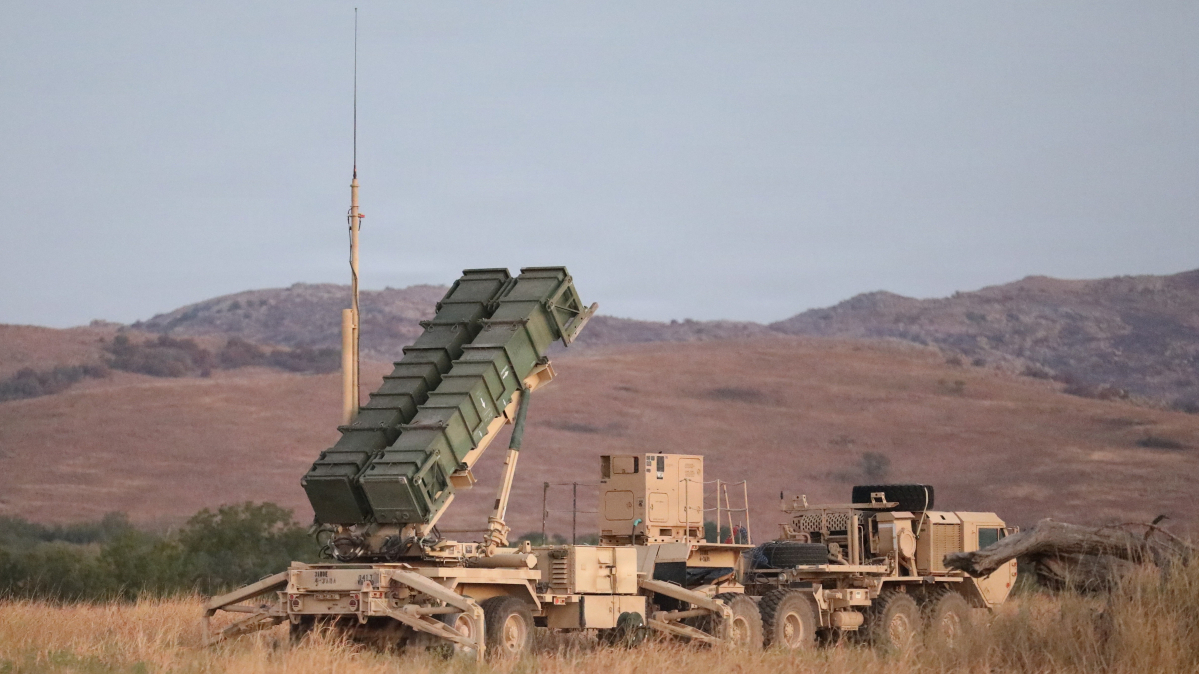
The U.S. has deployed two additional Patriot missile batteries to the Gulf, protecting key energy facilities in Saudi Arabia and Qatar as Washington expands its military presence in the Middle East amid heightened tensions with Iran.
Neither country is new to the Patriot. Both have spent years and billions of dollars on the U.S.-made system. What has changed is the scale of what must now be defended.
A long purchasing history
Saudi Arabia has operated Patriots for decades. In August 2022, Washington approved a possible $3.05 billion sale of 300 GEM-T missiles and related equipment, which the U.S. said would replenish stocks drained by repeated missile attacks.
A much larger package followed in January 2026: 730 PAC-3 MSE interceptors along with launcher conversion kits, spare parts, logistics, training, software and technical support, at an estimated $9 billion. The U.S. Defense Security Cooperation Agency said the sale would strengthen the kingdom's integrated air and missile defence.
That total does not mean each missile costs $12.3 million. The package covers far more than interceptors. U.S. budget documents offer a better, though still rough, guide. The Pentagon planned about $1.36 billion in fiscal 2026 for 245 PAC-3 MSE missiles and associated programme costs, equivalent to roughly $5.5 million each. That figure also includes support and other expenses, so it is not a simple unit price.
Qatar's commitment is similarly substantial. In 2012, the U.S. notified Congress of a possible $9.9 billion Patriot package for Doha: 11 fire units, 11 radar sets, 44 launchers, 246 GEM-T missiles and 768 PAC-3 missiles, plus training, infrastructure and logistics.
A single battery, with its radars, launchers, command equipment, communications, power units, missiles and crews, can cost hundreds of millions of dollars to deploy and maintain, depending on its configuration.
The targets have multiplied
For years, Gulf air-defence planning centred on military bases and ballistic missile threats. The list is now far longer: oil fields, refineries, export terminals, LNG plants, power stations, airports, desalination facilities and major cities.
The damage from a strike on any of these could extend well beyond the site itself. A hit on an oil terminal can disrupt exports. An attack on a gas plant can affect international supply. Damage to a power or desalination plant can disruptdaily life for civilians. With so much critical infrastructure concentrated along the Gulf coast, defending it becomes increasingly difficult.
That is why sending Patriots specifically to Saudi oil and Qatari gas sites stands out. It effectively places energy infrastructure on the region's front line.
The cost problem
Cheap drones create another financial challenge. A Gulf state may spend millions of dollars on an interceptor to destroy an incoming weapon costing far less to build. In a large attack involving dozens of missiles and drones, defenders need enough interceptors to handle several waves while retaining reserves for the next one.
That pushes governments towards larger stockpiles, more launchers and layered defences. Gulf states already combine Patriot and THAAD systems with fighter aircraft and shorter-range air defences, but no single system can cover every facility at once.
The Houthi front adds to Saudi Arabia’s air-defence burden
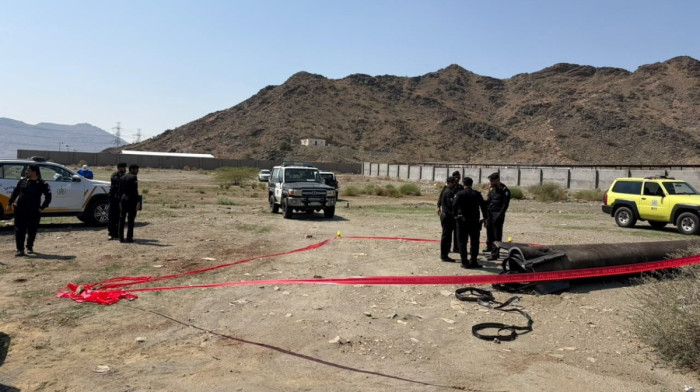
Saudi Arabia has faced missile and drone attacks from Yemen’s Houthis since Riyadh became involved in the Yemen war in 2015. The attacks have repeatedly targeted Saudi energy infrastructure, creating another major air-defence challenge for the kingdom.
In 2019, attacks claimed by the Houthis hit the Abqaiq oil processing facility and Khurais oil field, temporarily cutting Saudi oil production by more than half. In 2022, another Houthi attack caused a fire at an Aramco fuel distribution facility in Jeddah.
The attacks also depleted Saudi air-defence interceptors, prompting the U.S. to approve a $3.05 billion sale of 300 Patriot GEM-T missiles in 2022 to replenish Saudi stocks.
After a period of relative calm following the 2022 truce, Houthi attacks against Saudi Arabia resumed in 2026. The group has since threatened Saudi energy facilities and shipping in the Red Sea, raising concerns about the security of the kingdom’s oil export routes.
The port city of Yanbu is especially important because it is connected to the East-West Pipeline, allowing Saudi Arabia to move oil to the Red Sea without sending it through the Strait of Hormuz.
Saudi Arabia therefore faces potential missile and drone threats from two directions, with Iran to the east and the Houthis to the south. Air defence is consequently becoming an increasingly significant economic issue for Riyadh, which needs sufficient stocks of costly interceptors to protect critical oil, gas and other infrastructure against threats from multiple fronts.
What comes next
For Washington, the deployments serve two goals: protecting Gulf allies and helping to keep regional energy infrastructure operating if the confrontation with Iran widens. The U.S. has also deployed additional ships, aircraft and troops to the region.













What is your opinion on this topic?
Leave the first comment