Lebanon says Israeli air strikes and ground operations have damaged or destroyed historic landmarks across the country's south, raising fears that parts of its cultural heritage have been lost forever.
Culture Minister Ghassan Salamé said the full scale of the destruction is still unknown because Israeli troops continue to control parts of southern Lebanon, preventing officials from carrying out detailed assessments.
"We cannot work under the shadow of occupation," Salamé said. He added that some villages had been completely flattened.
"There are villages that have been completely bulldozed," he said.
Ancient sites hit
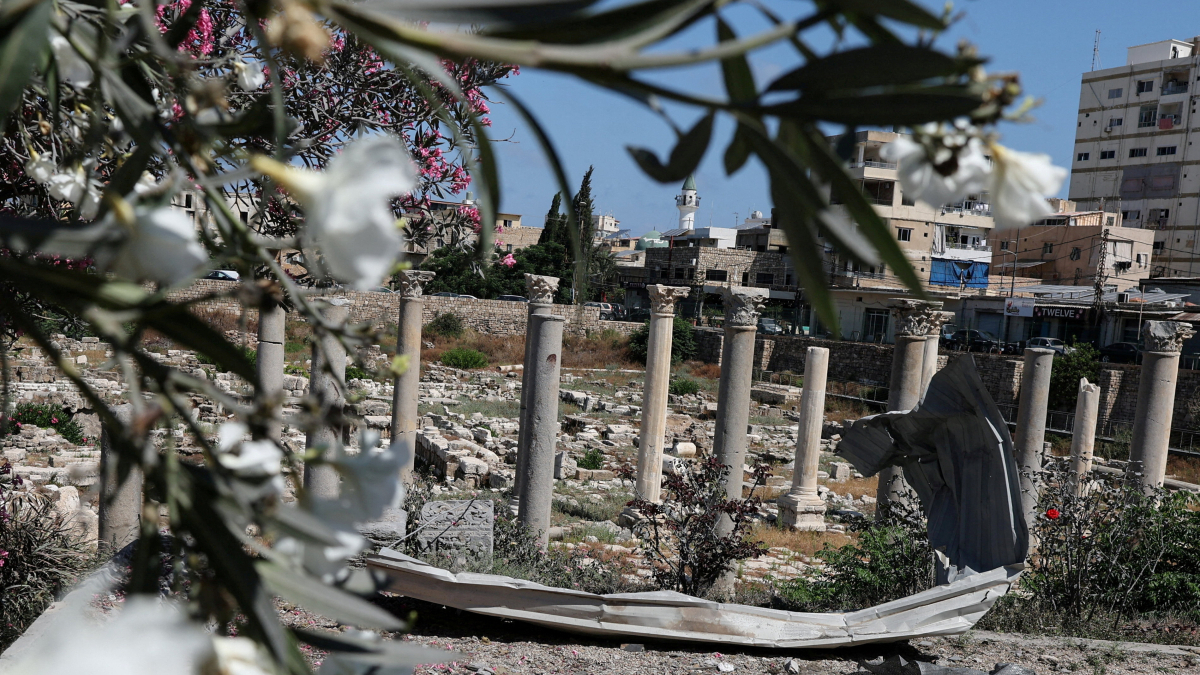
Among the damaged locations are the UNESCO-listed ruins of Tyre, where part of an ancient Roman column was blown away during the fighting. The historic Mamluk market in Nabatieh was also badly damaged, while officials fear strikes may have affected the Crusader castle in Tebnin.
Salamé said Lebanon's heritage goes far beyond ancient ruins.
"Heritage is not only Roman and Phoenician antiquities," he said. "Heritage is also historic buildings, archaeological sites, and buildings with a cultural function."
Tyre, one of the world's oldest continuously inhabited cities, has survived thousands of years of conflict. Residents now say parts of the city have been reduced to rubble.
Standing among the damaged ruins, antiquities official Adnan Istanbouli said: "Look at the damage that happened to it, it's as if it all exploded from underneath, as if an earthquake hit it."
UNESCO concerns
UNESCO has already voiced concern about damage to Tyre and other historic sites in southern Lebanon, including Beaufort Castle and the citadel in Chama.
Lebanon has asked the organisation to place Tyre on its list of World Heritage in Danger in the hope of securing greater international protection.
Israel's military said it does not deliberately target civilian infrastructure and only carries out strikes when there is a military necessity. It added that sensitive sites are taken into account during operational planning.
Salamé said he feared the destruction could permanently erase parts of Lebanon's shared history.
"There is something systematic: a systematic destruction of villages, hamlets, and entire towns," he said.
Read more:














What is your opinion on this topic?
Leave the first comment